Egg formation, incubation, host detection, royal variants and alternate reproductive routes.
Xenomorph Drone
CREATURES / XENOMORPH BIOLOGY
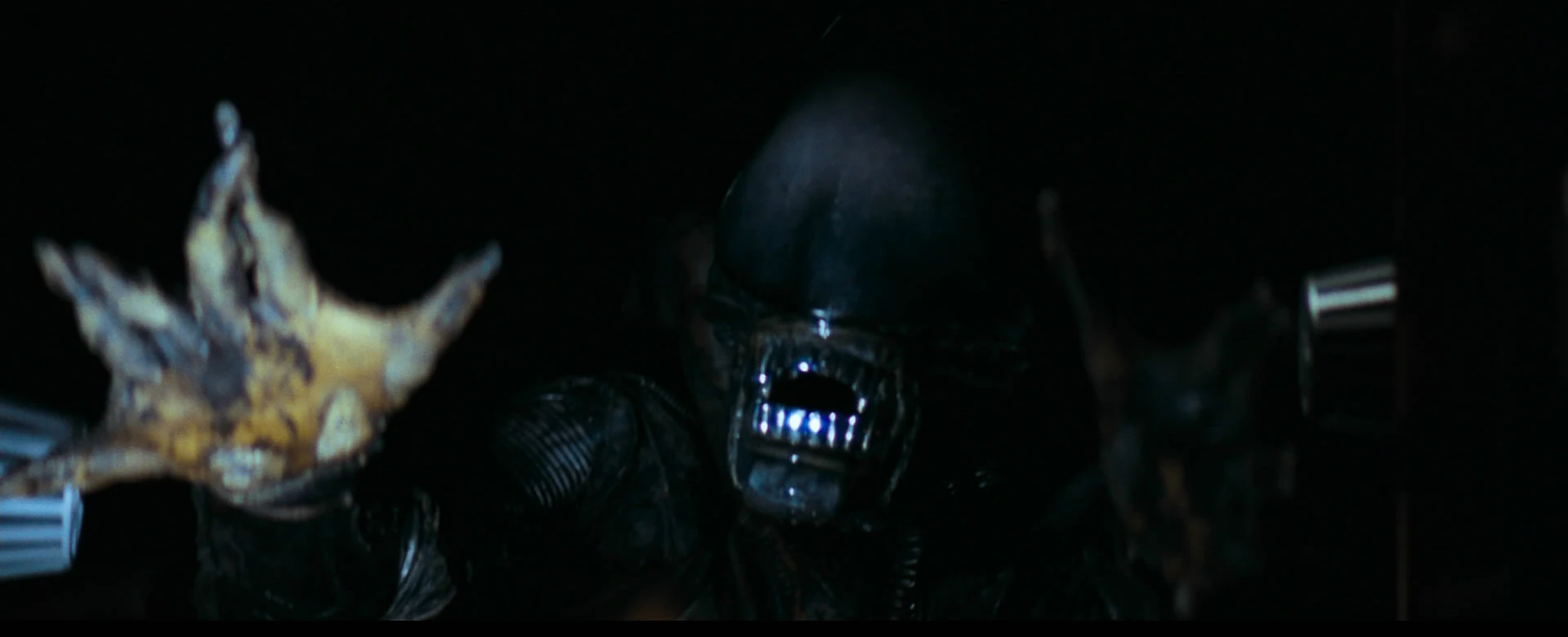
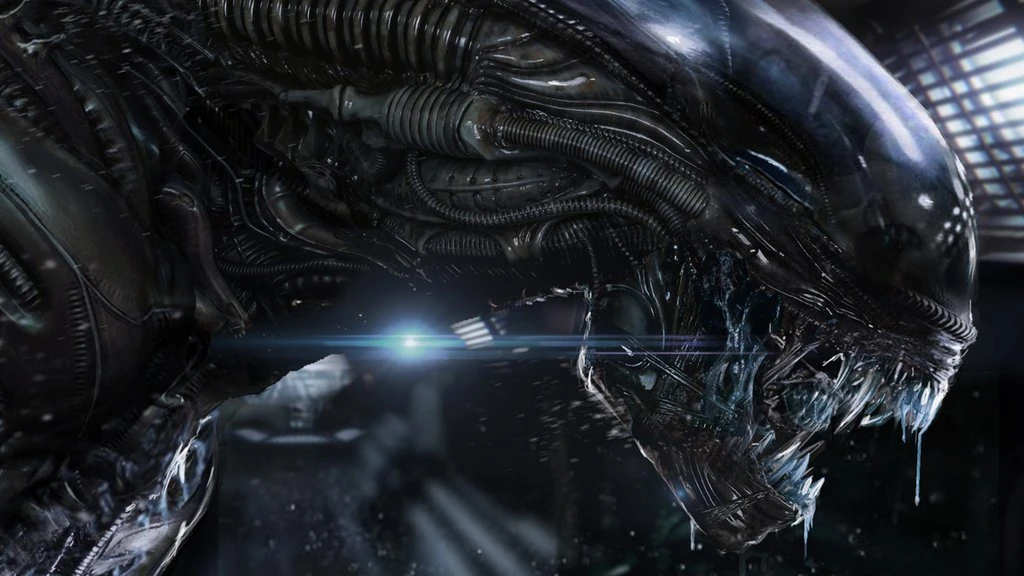
The Xenomorph Drone is a smooth-domed, bipedal creature typically born from a human host. Its elongated cranium, inner jaws, dorsal tubes and long tail are characteristic features. Its appearance varies from a humanoid stance to digitigrade legs, with differences in head shape and body proportions. These variations may reflect host-derived genetic assimilation (the DNA reflex), strain differences and other developmental influences.
Intelligent and stealthy, Drones hunt, capture hosts, defend their territory and can form the first members of a developing hive. In some licensed accounts, they undergo further metamorphosis into specialized hive forms as the colony grows. The 2019 ALIEN RPG describes this development under Queen pheromones.

SELECT A PROFILE
Explore the Drones
Explore Drone designs and variations across film, television, games and licensed material.
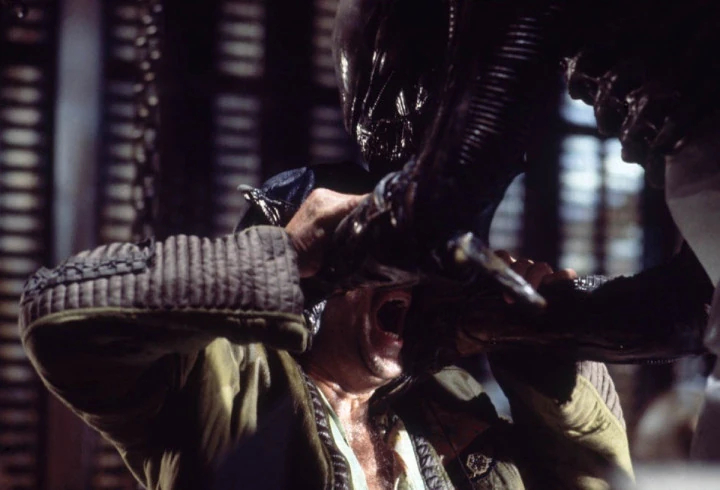
FILM STILL · Alien (1979)
1 / 3
SCREEN · 1979Alien (1979)
Big Chap / first Drone design
The original Nostromo adult has a smooth dome, slender torso and human-like legs.
- Designation
- Smooth-domed bipedal Drone
- Visual cue
- Smooth elongated dome, bipedal body
- Source status
- Original film design; later caste terminology
Source details
Alien (1979) introduces the adult, later nicknamed Big Chap.
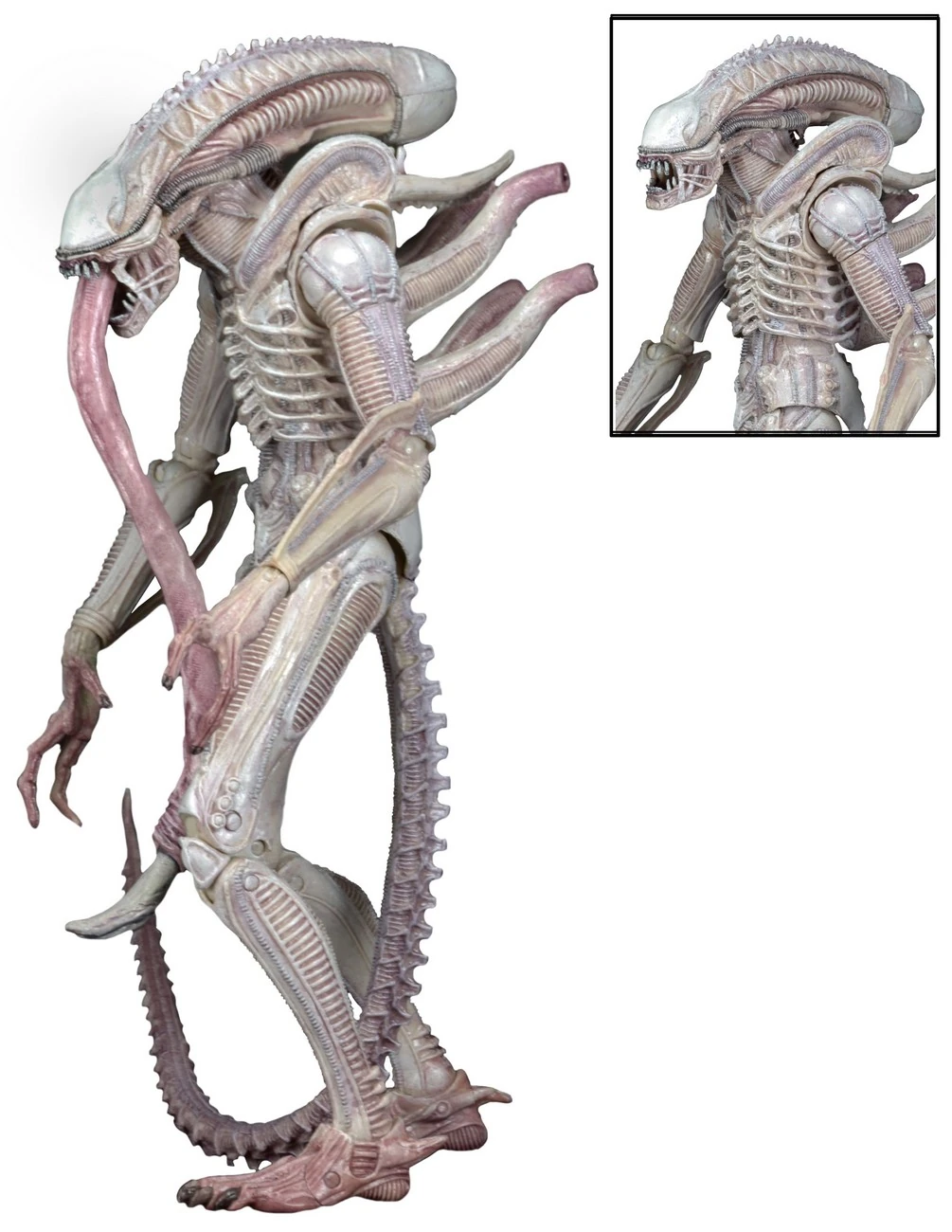
NECA Series 9 licensed collectible (2016) · later interpretation of the unfilmed worker
UNFILMED · 1983 / TOY · 2016Alien II treatment (1983) · NECA figure (2016)
Cameron's unfilmed worker Drone
A small albino hive worker with a secretion probe, described in Cameron's 1983 treatment.
- Designation
- Albino worker Drone
- Visual cue
- Small, pale worker; secretion probe in text
- Source status
- Unfilmed treatment; later licensed figure
Source details
NECA released a licensed interpretation in 2016.
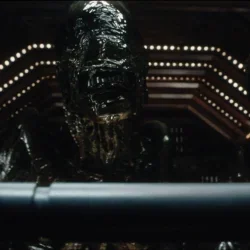
FILM STILL · Alien Resurrection (1997)
1 / 3
SCREEN · 1997Alien Resurrection (1997)
Auriga cloned Drone
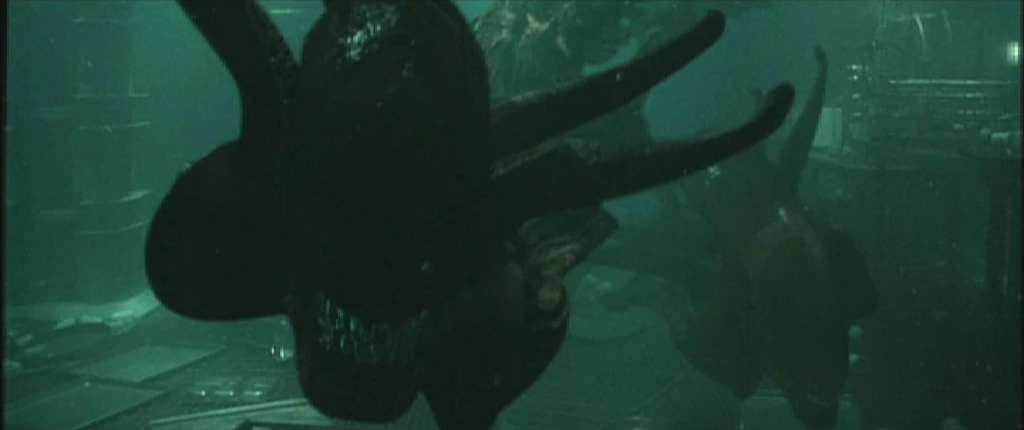
The cloned Auriga adults have revised smooth domes, altered limb proportions and pronounced swimming ability.
- Designation
- Smooth-domed bipedal Drone
- Visual cue
- Smooth tapered head, changed joint profile
- Source status
- Cloned adult Xenomorphs in Alien Resurrection (1997).
Source details
The adults swim through flooded corridors and escape confinement using corrosive blood.
Alien Drone
No image available.
GAME · 2001Aliens Versus Predator 2 (2001)
Alien Drone
The multiplayer Drone uses wall traversal, pouncing and melee combat.
- Designation
- Playable Alien Drone
- Visual cue
- Named playable adult; visual reference pending
- Source status
- GAME · 2001
Source details
The 2001 multiplayer demo includes the Alien Drone.
Hive Drone
No image available.
GAME · 2003Aliens versus Predator: Extinction (2003)
Hive Drone
Drones retrieve hosts and construct Hive Nodes; an upgrade adds acidic cyst spittle. Humans yield Warriors in this title.
- Designation
- Oswoc-hosted Drone
- Visual cue
- Host-specific strategy unit; visual reference pending
- Source status
- GAME · 2003
Source details
Game manual and contemporary review document hive roles and hosts.
Cystic Drone upgrade
No image available.
GAME · 2003Aliens versus Predator: Extinction (2003)
Cystic Drone upgrade
The upgrade adds a ranged cyst-filled acidic secretion; infected hosts yield tougher Aliens.
- Designation
- Upgraded Hive Drone
- Visual cue
- Acid-secreting upgrade; exact unit image pending
- Source status
- Game-specific upgraded unit
Source details
Original game manual, Alien unit descriptions.

FILM STILL · Alien vs. Predator (2004)
SCREEN · 2004Alien vs. Predator (2004)
Antarctic pyramid Drone
The Antarctic pyramid adults hunt humans and fight Predators. One individual, Grid, bears scars caused by a Predator net.
- Designation
- Smooth-domed bipedal Drone
- Visual cue
- Elongated dome, dorsal tubes, humanoid limbs
- Source status
- AVP film design; Grid is an individual
Source details
Alien vs. Predator (2004).
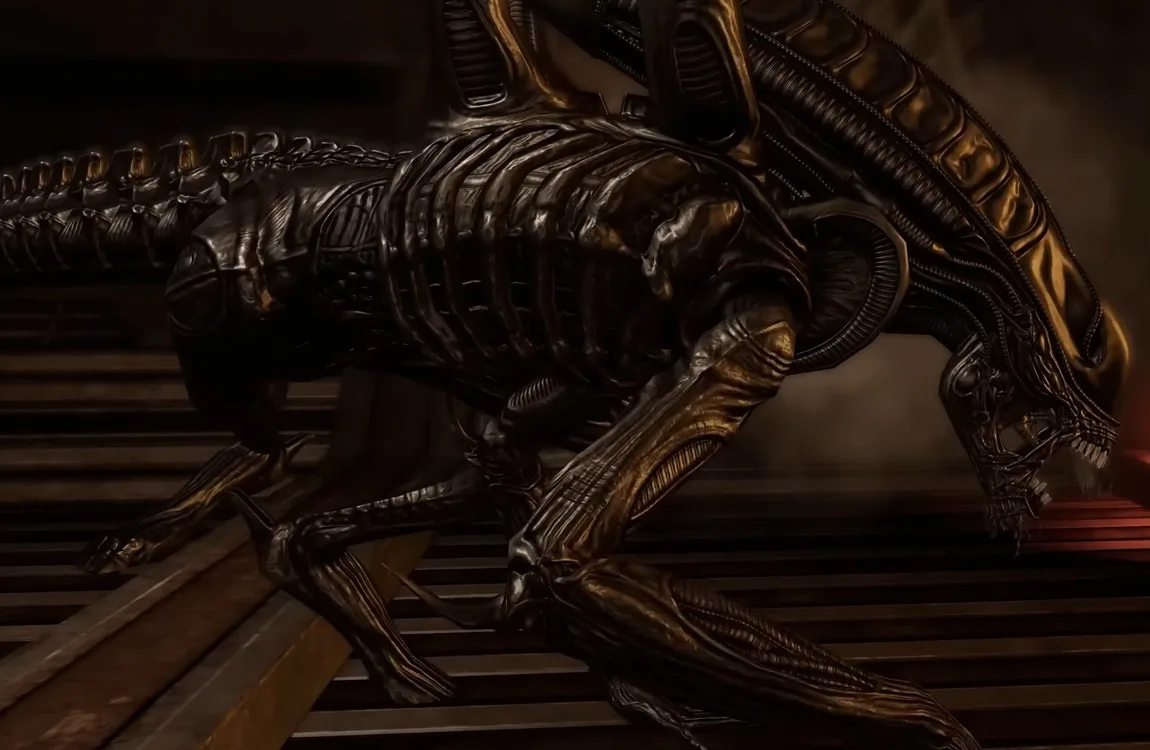
AVP (2010) · Specimen 6, screenshot identified by AvP Central
1 / 2
GAME · 2010Aliens vs. Predator (2010)
Specimen 6
Six escapes a research facility, frees the Matriarch and eventually develops into a Queen.
- Designation
- Individual playable Alien
- Visual cue
- Ridged adult in the campaign depiction; not the smooth-domed film convention
- Source status
- Individual playable Alien; also described as Warrior in secondary sources
Source details
Rebellion's Alien campaign and ending.
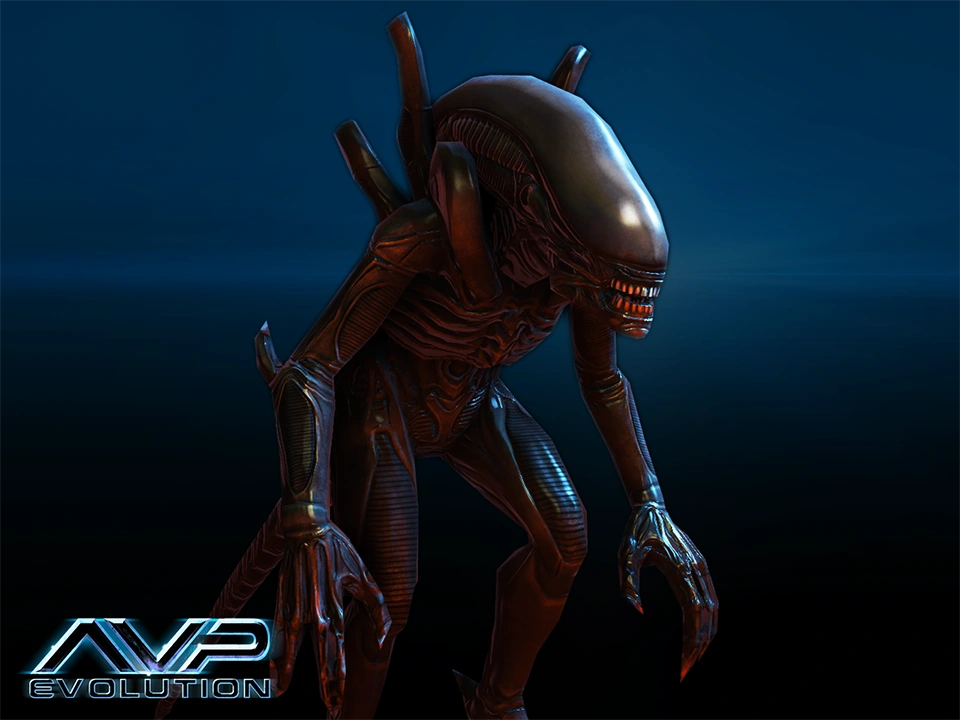
GAME IMAGE · AVP: Evolution (2013)
1 / 2
GAME · 2013AVP: Evolution (2013)
Evolution Drone
The mobile game's Alien campaign features a playable Drone and upgradeable abilities.
- Designation
- Smooth-domed playable Drone
- Visual cue
- Smooth dome, dorsal tubes, prominent hands
- Source status
- GAME · 2013
Source details
Angry Mob Games documents the Alien campaign.
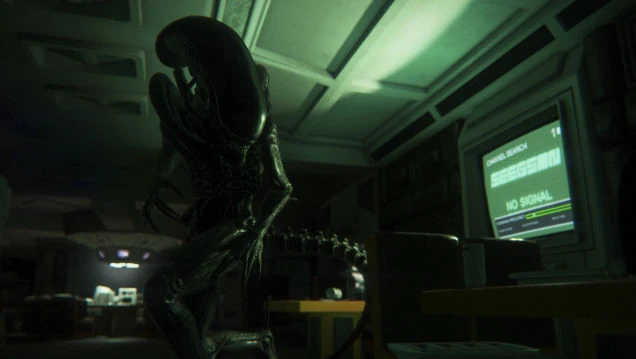
GAME IMAGE · Alien: Isolation (2014)
1 / 2
GAME · 2014Alien: Isolation (2014)
Sevastopol Drone
The Sevastopol Alien is a persistent, intelligent stalker. Its digitigrade leg design differs from the original Nostromo creature.
- Designation
- Smooth-domed bipedal Drone
- Visual cue
- Long digitigrade legs, smooth dome, dorsal tubes
- Source status
- GAME · 2014
Source details
Creative Assembly's design and game systems establish this depiction.
Stage IV Drone / Lurker
No image available.
RPG · 2019ALIEN RPG core rulebook (2019)
Stage IV Drone / Lurker
A stealthy Stage IV adult that may molt into a Soldier or Worker under Queen pheromones.
- Designation
- Stage IV Drone
- Visual cue
- Smooth dome; upright adult
- Source status
- RPG · 2019
Source details
Core rulebook pp. 308–312 describes staged development.
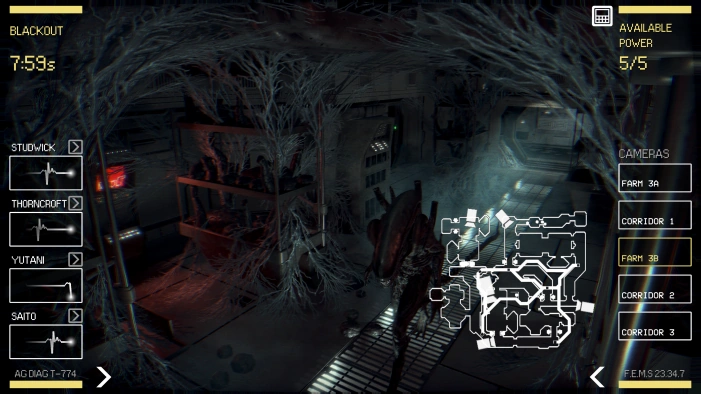
Alien: Blackout · gameplay screenshot
GAME · 2019Alien: Blackout (2019)
Mendel Station Drone
The station's Xenomorph hunts survivors while Amanda Ripley controls cameras and doors.
- Designation
- Smooth-domed adult Xenomorph
- Visual cue
- Bipedal station stalker
- Source status
- Game appearance; Drone terminology in secondary coverage
Source details
Alien: Blackout (2019).
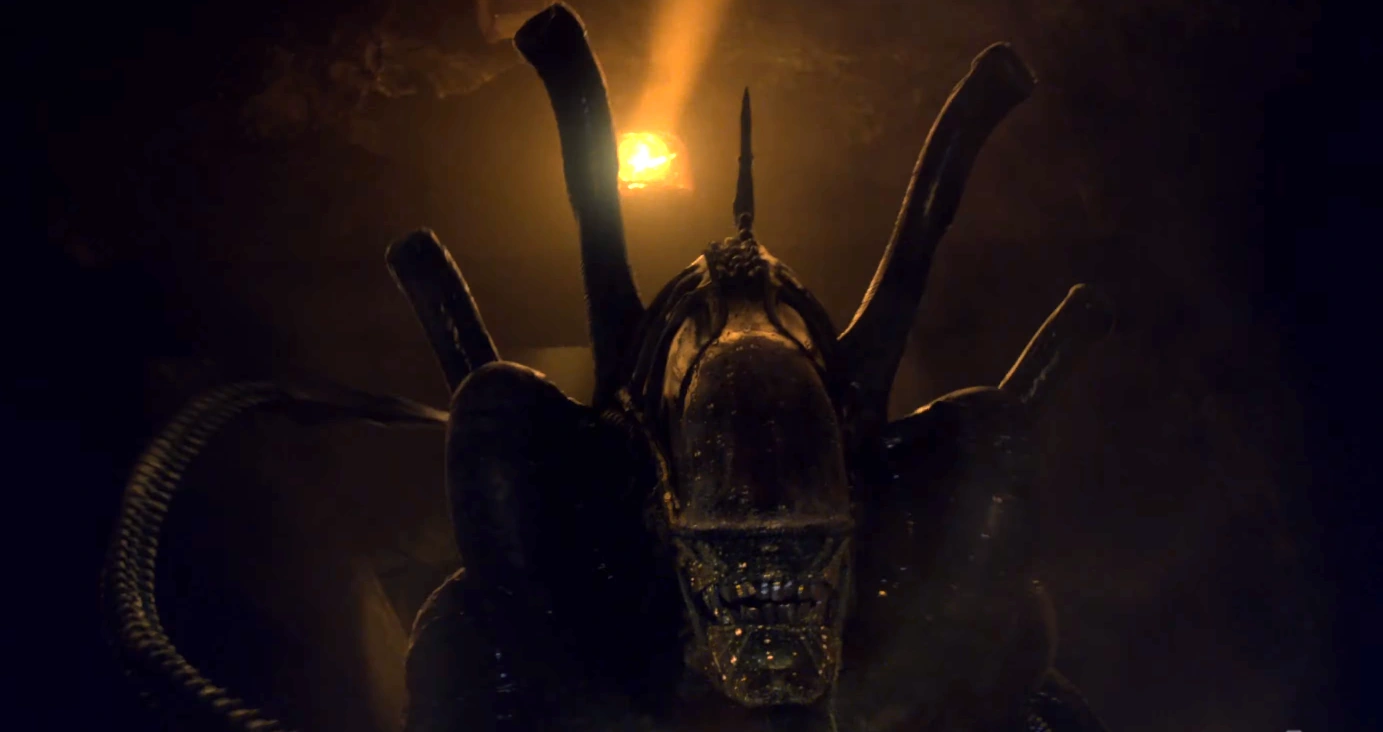
Alien: Ore (2019) · short-film still
SHORT FILM · 2019Alien: Ore (2019)
Bowen’s Landing mine adult
A mature Xenomorph threatens miners at Bowen’s Landing.
- Designation
- Adult Xenomorph, Drone-like morphology
- Visual cue
- Smooth frontal dome and prominent dorsal tubes
- Source status
- Anniversary short; visual classification
Source details
Official 40th anniversary short directed by the Spear Sisters.
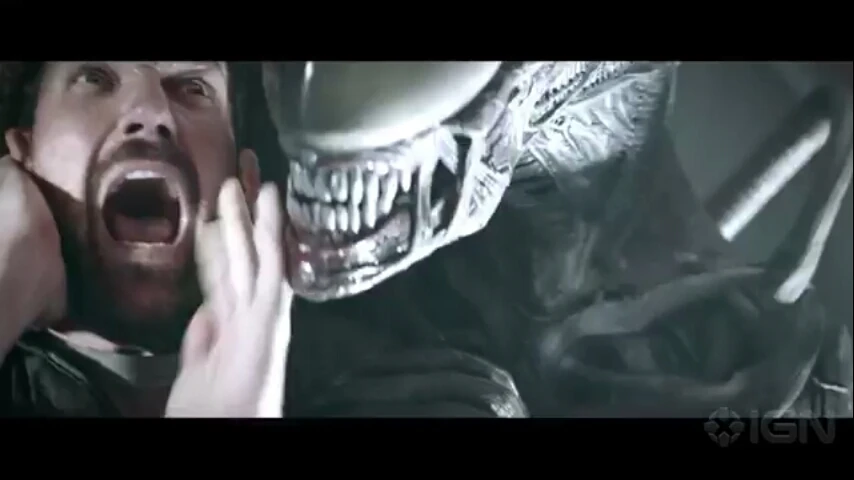
Alien: Harvest (2019) · short-film still
SHORT FILM · 2019Alien: Harvest (2019)
Harvester adult Xenomorph
An adult threatens survivors aboard a damaged deep-space harvesting vessel.
- Designation
- Adult Xenomorph, Drone-like morphology
- Visual cue
- Smooth elongated dome and prominent jaws
- Source status
- Anniversary short; visual classification
Source details
Official short directed by Benjamin Howdeshell.
Otranto adult Xenomorph
No image available.
SHORT FILM · 2019Alien: Alone (2019)
Otranto adult Xenomorph
The synthetic Hope encounters the offspring of a facehugger aboard the abandoned Otranto.
- Designation
- Adult Xenomorph; Drone in secondary coverage
- Visual cue
- Specific creature image pending
- Source status
- Anniversary short; separate depiction
Source details
Official short directed by Noah Miller; secondary coverage identifies the mature offspring as a Drone.
Biodrone XX121B
No image available.
Biodrone XX121B
Project Life Force engineered the Biodrone to arrest development and expire after six days. Some survive as Reborn.
- Designation
- Engineered Stage IV Biodrone
- Visual cue
- Resembles a normal Stage IV Drone
- Source status
- RPG · 2021
Source details
Licensed supplement pp. 175–176.
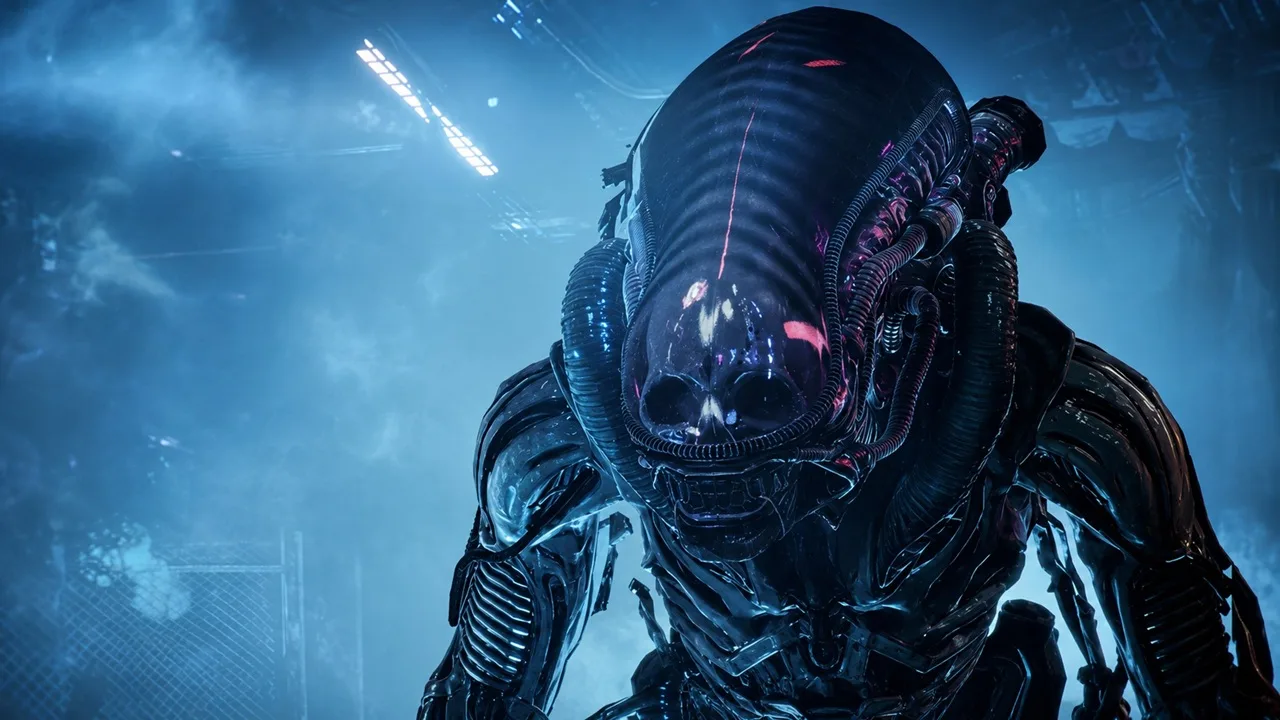
Fireteam Elite · secondary-source identification (AvP Central)
GAME · 2021Aliens: Fireteam Elite (2021)
Fireteam Elite Drone
An ambush Xenomorph that rushes Marines, grabs its prey and retreats through vents before returning.
- Designation
- Named Drone enemy
- Visual cue
- Elongated dome and prominent cranial markings
- Source status
- GAME · 2021
Source details
The Drone appears in Priority One; Monica is a named variant in Rescue.

Fireteam Elite (2021) · game image identified as Monica by Xenopedia
GAME · 2021 / NOVELAliens: Fireteam Elite; Aliens: Infiltrator (2021)
Monica / Subject Three
Monica is the named Drone encountered in Rescue, associated with Pala Station experiments in the prequel novel.
- Designation
- Named Drone individual
- Visual cue
- Dark dome with contrasting markings
- Source status
- Game encounter; novel phenotype reported by secondary sources
Source details
Rescue mission guide; novel details require direct passage confirmation.

Aliens: Aftermath #1 (2021) · comic panel
1 / 2
COMIC · 2021Aliens: Aftermath #1 (2021)
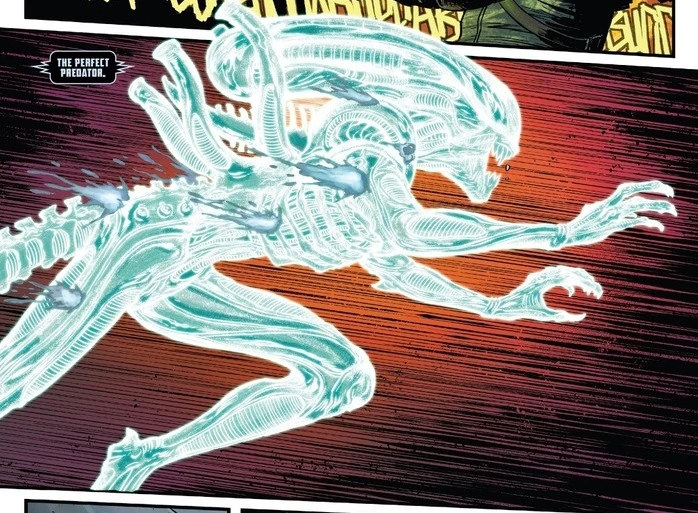
Irradiated Xenomorph
A glowing adult encountered among the remains of Hadley's Hope exhibits unusual cold-associated effects. The comic's depiction is a separate mutation, not a universal Drone trait.
- Designation
- Radiation-altered adult; Drone-like appearance
- Visual cue
- Luminous elongated dome and biomechanical body
- Source status
- Individual mutation; caste not explicitly established
Source details
Marvel one-shot (2021); archived panels and secondary analysis.
Alpha / R5823-26A
No image available.
COMIC · 2021Alien: Bloodlines (2021)
Alpha / R5823-26A
The Alpha is a distinctive research specimen linked to Gabriel Cruz and the outbreak aboard Epsilon Station. Secondary coverage describes goat-derived cranial features; the horned adult is not a standard Drone exemplar.
- Designation
- Unusual adult called a Drone in secondary accounts
- Visual cue
- Large horn-like head crest; not typical smooth dome
- Source status
- Individual hybrid morphology; classification attributed
Source details
Marvel Alien (2021) #1–6; AvP Central character analysis.
Subject Seven / white Alpha
No image available.
NOVEL · 2021Aliens: Infiltrator (2021)
Subject Seven / white Alpha
A separate Pala Station specimen developed after experiments with irradiated pathogen. Secondary accounts distinguish its pale appearance and hive-building behavior from Monica's striped adult.
- Designation
- Pathogen-altered adult; related Drone-like form
- Visual cue
- Reported pale body and smooth head
- Source status
- Named individual; morphology from secondary novel coverage
Source details
Weston Ochse's novel; direct passage confirmation pending.
Dark Descent Drone
No image available.
GAME · 2023Aliens: Dark Descent (2023)
Dark Descent Drone
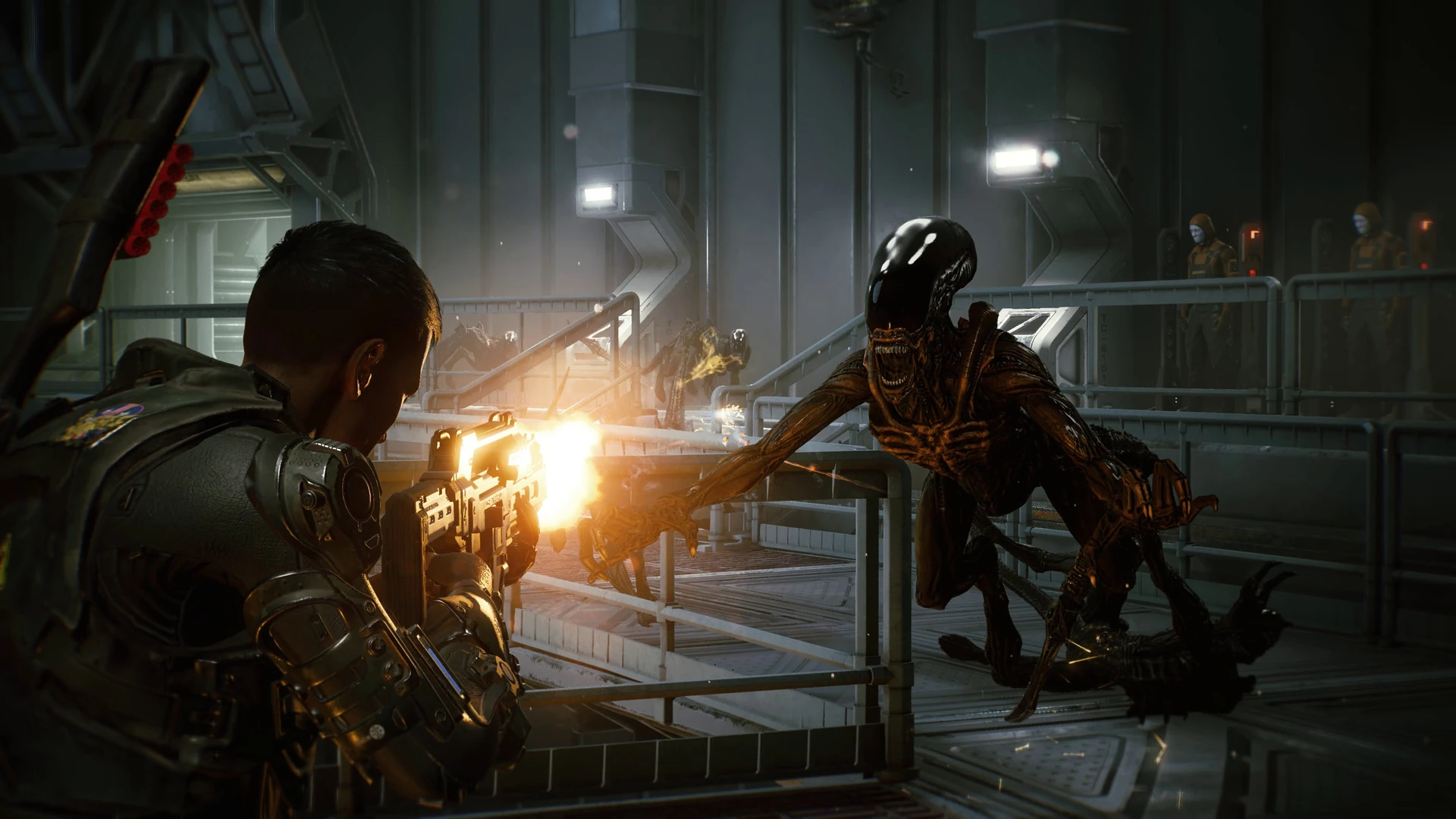
A patrolling Xenomorph that can trigger a hive-wide hunt when it detects Marines.
- Designation
- Named tactical Drone
- Visual cue
- Named adult enemy; visual reference pending
- Source status
- GAME · 2023
Source details
Drone enemy in Aliens: Dark Descent.

Dead by Daylight: Alien (2023) · official Behaviour Interactive character render
CROSSOVER · 2023Dead by Daylight: Alien (2023)
Dead by Daylight Xenomorph
The Killer pursues survivors through tunnels and adopts a low crawler posture with a tail attack.
- Designation
- Playable Xenomorph Killer
- Visual cue
- Smooth-domed default design; alternate outfits are cosmetic
- Source status
- Licensed crossover; alternate outfits are cosmetic
Source details
Behaviour Interactive Alien chapter.
FILM STILL · Alien: Romulus (2024)
SCREEN · 2024Alien: Romulus (2024)
Renaissance station Drone
The Renaissance station adults echo the original 1979 silhouette while introducing revised dome and cocoon-development details.
- Designation
- Smooth-domed bipedal Drone
- Visual cue
- Smooth elongated dome; practical/digital effects
- Source status
- Renaissance station adults, including Scorched.
Source details
Legacy Effects constructed articulated puppets, a translucent dome and an emergence cocoon.
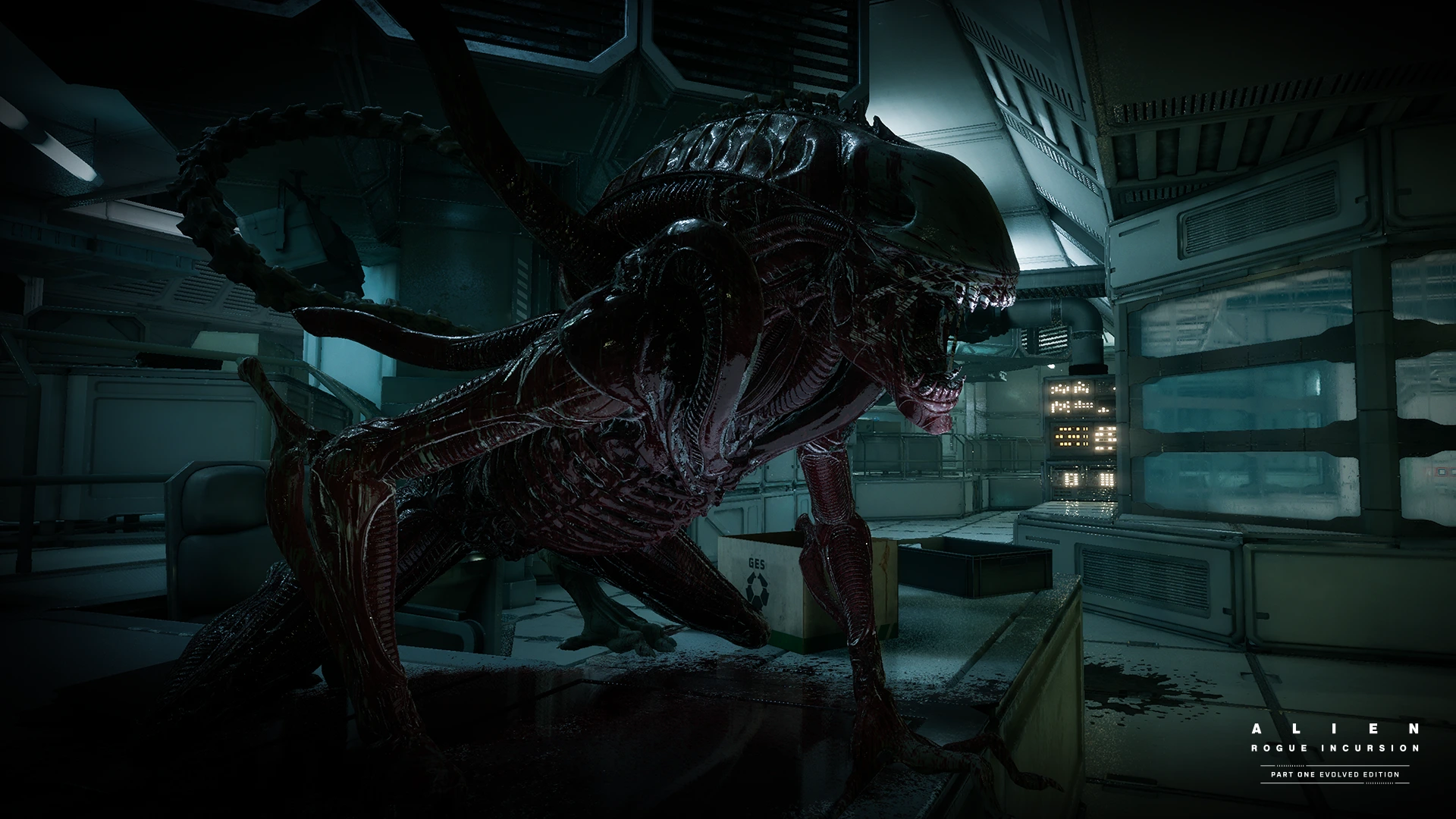
Rogue Incursion Evolved Edition (2025) · promotional screenshot
1 / 2
GAME · 2024–25Alien: Rogue Incursion (2024); Evolved Edition (2025)
Purdan adult Xenomorph
The game depicts mobile adults that climb and leap across the facility's surfaces while hunting Zula Hendricks. The Evolved Edition retains these encounters on conventional screens.
- Designation
- Adult Xenomorph; Drone-like game depiction
- Visual cue
- Smooth front of head, biomechanical torso; rear-head texture varies
- Source status
- Game depiction; exact enemy taxonomy not asserted
Source details
Survios developer interview and archived Evolved Edition screenshots.
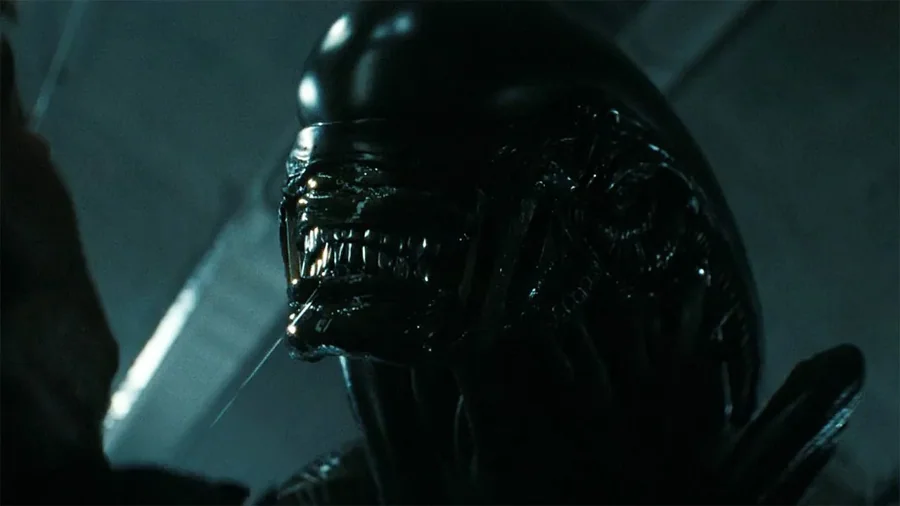
TELEVISION STILL · Alien: Earth (2025)
SCREEN · 2025Alien: Earth (2025)
Maginot adult Drone
The Maginot adult is a smooth-domed Drone. Effects and performer interviews distinguish it from the later adolescent.
- Designation
- Smooth-domed bipedal Drone
- Visual cue
- Smooth adult cranium; separate adolescent phase
- Source status
- Maginot adult and a separate adolescent form appear in the series.
Source details
Cameron Brown performed the Maginot adult; Jayde Rutene performed the adolescent.
Stage IV Drone — Evolved Edition
No image available.
RPG · 2025ALIEN RPG Evolved Edition (2025)
Stage IV Drone — Evolved Edition
The Evolved Edition retains Stage IV Drone, Scout and Stalker terminology. It is a revised ruleset rather than evidence of another physical caste in the films.
- Designation
- Stage IV Drone
- Visual cue
- Young adult; separate Scout and Stalker forms
- Source status
- Revised licensed ruleset
Source details
Free League Evolved Edition core rulebook, p. 217; publisher describes the revised edition.
Fireteam Elite 2 Drone
No image available.
GAME · 2026Aliens: Fireteam Elite 2 (2026)
Fireteam Elite 2 Drone
A mobile ambusher that rushes Marines and withdraws into vents after attacking.
- Designation
- Named mobile ambusher
- Visual cue
- Exact model reference pending
- Source status
- GAME · 2026
Source details
Appears in the Banshee Down mission.
Terminology and classification
Section titled “Terminology and classification”The term Drone describes the familiar smooth-domed adult and also has specific historical and licensed uses, including a hive laborer, maturation stage or game unit. The 1979 film depicts the original adult without naming its caste in dialogue. Big Chap is the nickname of that individual; XX121 appears as a designation in later licensed material.
Where the term originated: the 1983 treatment
Section titled “Where the term originated: the 1983 treatment”Cameron’s dated 21 September 1983 Alien II treatment contains an unusually explicit separation. While the larger Warriors move through a hive, a Drone tends a captive with its cocooning secretion. The creature is described as small and albino, and its inner appendage is an extruding probe, not the Warrior’s striking internal teeth. Other drones move eggs during an evacuation. 2
The same treatment includes more unfamiliar material: a Warrior’s abdominal structure opens to reveal an egg-injecting organ. Neither that sequence nor the pale worker appears as described in the 1986 theatrical film. The 26 February 1985 screenplay has Bishop compare a hypothetical alien colony with an insect queen tended by workers and protected by warriors. 2 32
Design history
Section titled “Design history”Select a year to read the design and production history of each film or television depiction. The illustrated profiles above provide the visual reference.
1979AlienGiger’s original adultDRONE
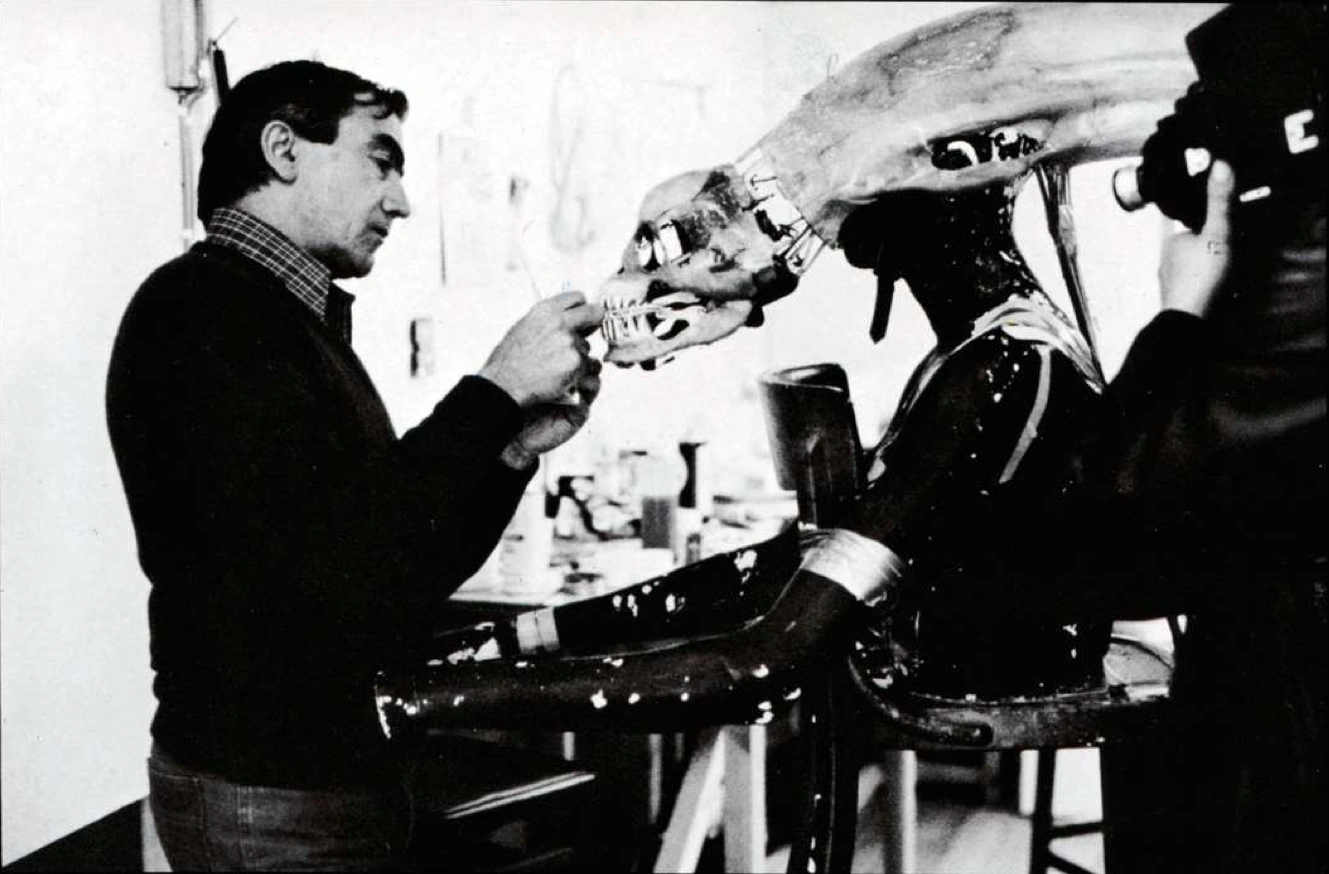
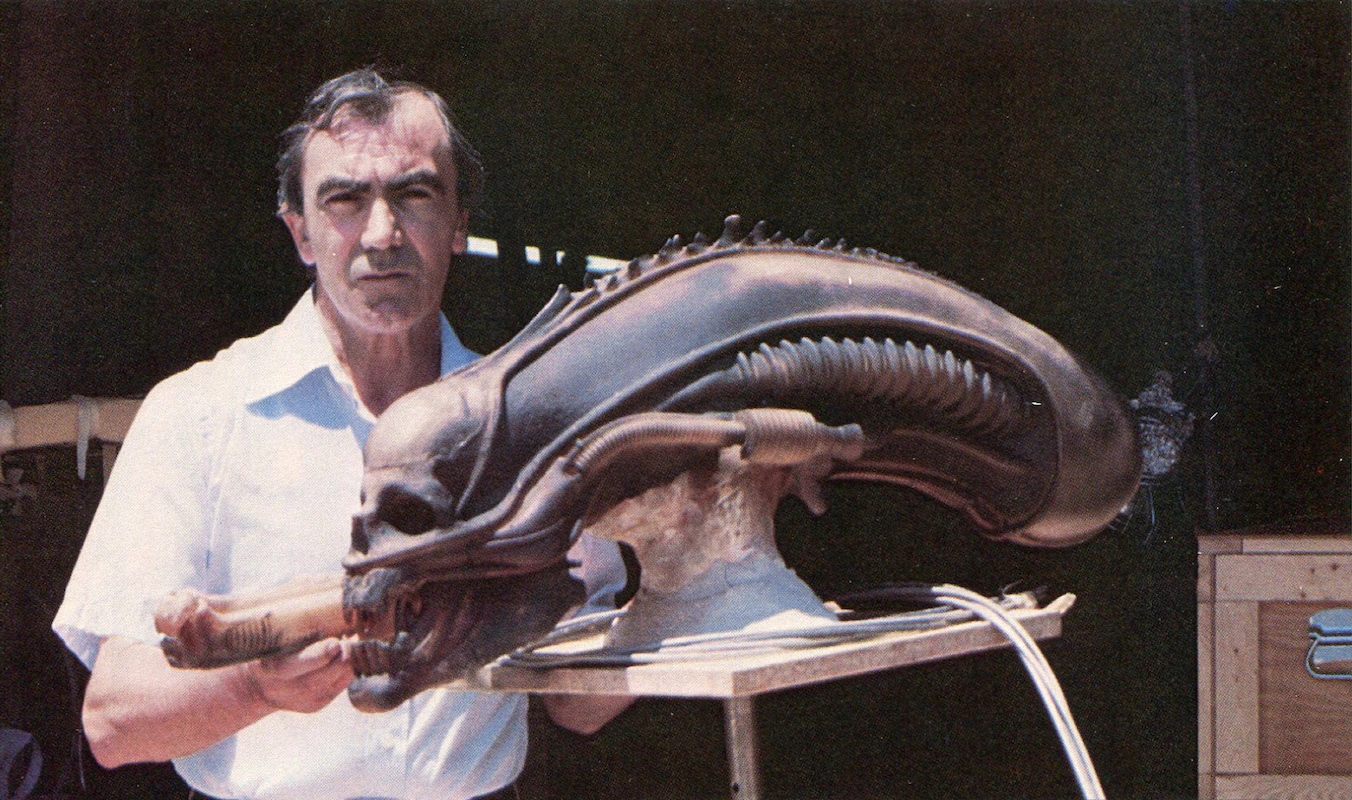
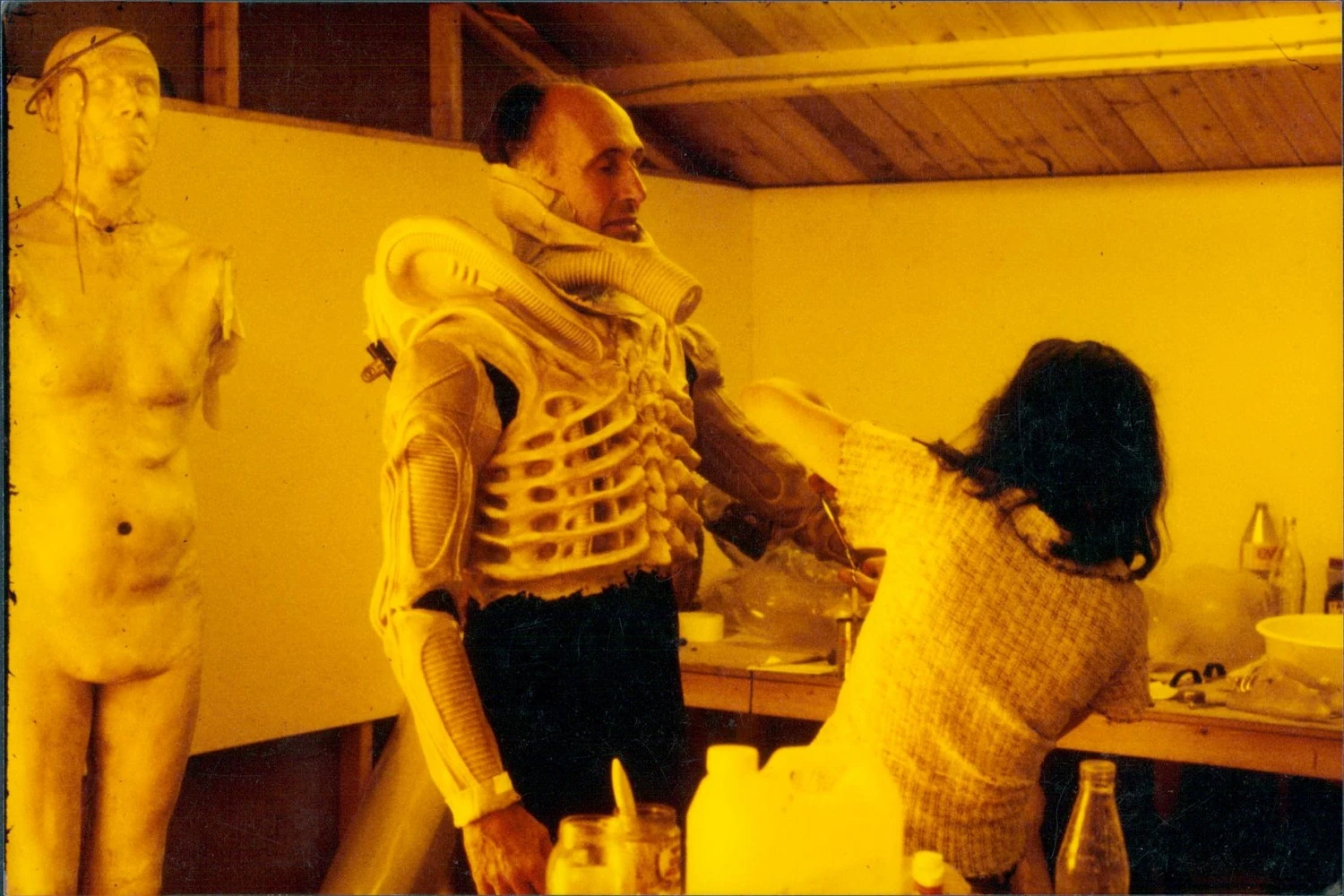
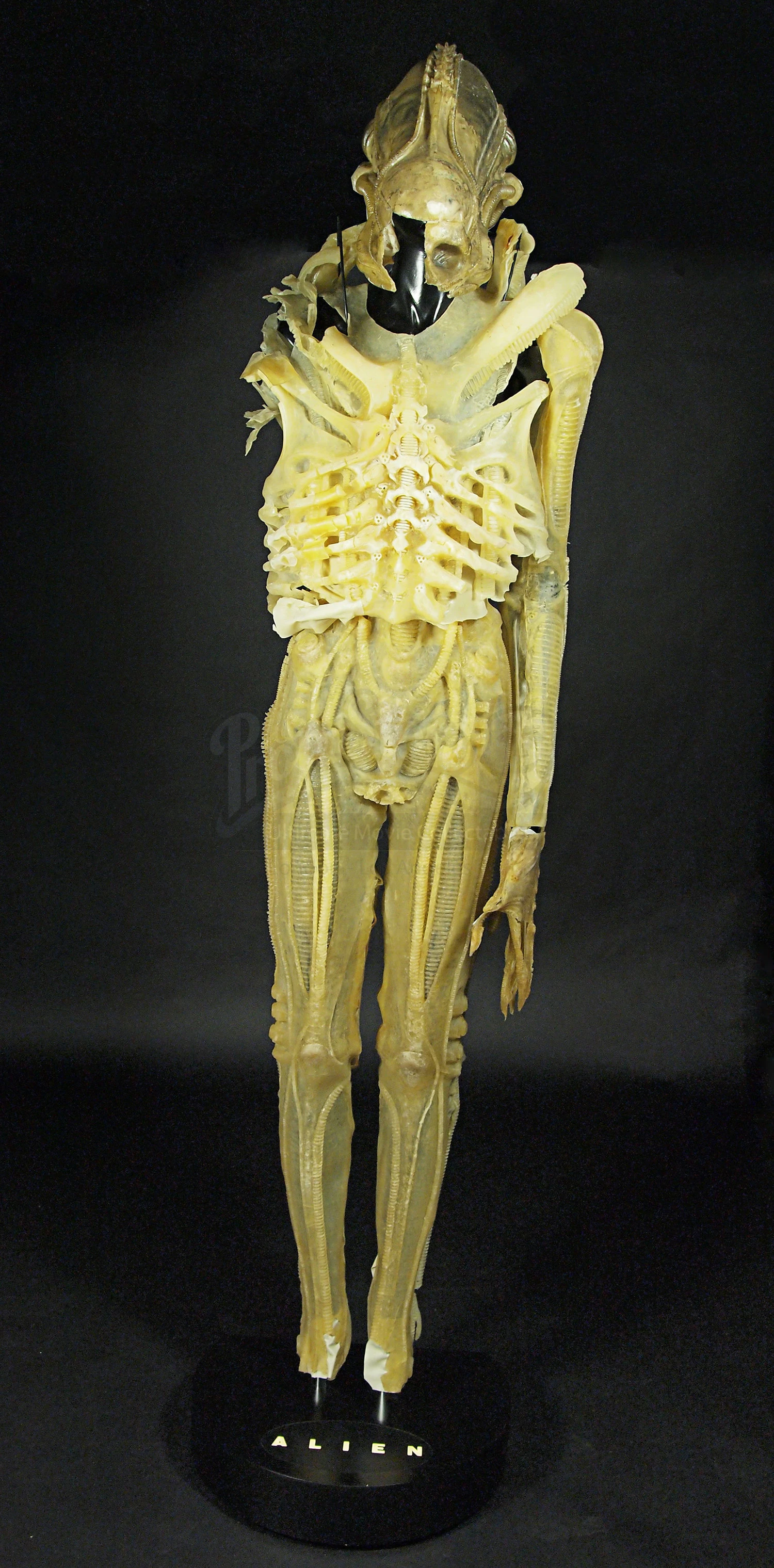
H. R. Giger’s biomechanical design joined a smooth elongated head with translucent surface details, a suggestion of human bone beneath the dome, projecting inner jaws, a narrow torso, ribbed surfaces, dorsal projections and a long tail. On screen it is a singular, largely concealed threat aboard the Nostromo. It stalks through dark industrial passageways and ventilation systems; the film reveals its anatomy only intermittently. 1 6
It kills Parker and Lambert but also leaves Brett and Dallas in altered states in a deleted cocoon sequence restored to the 2003 Director’s Cut (absent from the 1979 theatrical release). That sequence invites an alternative reproductive mechanism sometimes called eggmorphing. 1
1997Alien ResurrectionAuriga design and locomotionDRONE
The smooth-domed, principally bipedal cloned adults aboard the USM Auriga are Drones. Their film-specific look combines recognizable Xenomorph structures with revised head profiles, fleshier surfaces and more pronounced non-human movement, particularly when effects shift to digital animation. The creatures demonstrate underwater locomotion and a memorable escape sequence in which one is killed and its corrosive blood is used to damage confinement. 8 9
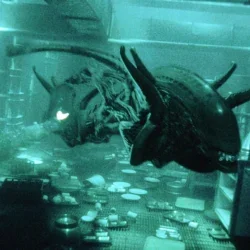
The redesigned legs and computer-animated movement give the Auriga adults a more animal-like stance than the original human-proportioned suit. 8 9
2004Alien vs. PredatorGrid and pyramid adultsDRONE
The Antarctic pyramid’s adult Xenomorphs provide another application of the familiar body template, with specific choreography against Predators. The smooth-domed, bipedal pyramid adults are catalogued as Drones, including the individual later known as Grid. Grid’s crisscross head injuries were left by a Predator net: individual battle damage, not a separate caste. 18
2019Alien: Isolation — Digital SeriesWEB SERIES
Fox and IGN released seven episodes on 28 February 2019, expanding the game story using cutscenes and new animation. The series follows Amanda Ripley’s encounter with the Sevastopol Xenomorph. 40
2019Alien 40th anniversary shortsOre, Harvest and AloneSHORT FILMS
The studio-associated 40th anniversary shorts offer additional adult Xenomorph depictions. Alien: Ore (the Spear Sisters) shows a mature Alien among miners at Bowen’s Landing, with a smooth frontal dome and pronounced dorsal tubes. Alien: Harvest (Benjamin Howdeshell) features an adult aboard a damaged deep-space harvesting vessel, with a smooth dome and conspicuous jaws. Alien: Alone (Noah Miller) follows the synthetic Hope aboard the abandoned Otranto; the mature offspring is described as a Drone in secondary coverage. These are separate short-film depictions, not newly established biological castes. 58
2024Alien: RomulusRenaissance adults and cocoon emergenceDRONE
The smooth-domed, bipedal adults aboard the Renaissance station are Drones and deliberately echo the original Xenomorph while combining a performer suit, animatronic puppets and other practical/digital effects. Published interviews with Legacy Effects describe the translucent dome, visible underlying skull, puppet articulation and construction of a cocoon from which an adult emerges. The film features the individual known as Scorched, as well as the recovered remains of the original Nostromo adult. 21
2025Alien: EarthMaginot and adolescentDRONE
The series provides further smooth-domed adult Drone appearances, alongside distinct juvenile/adolescent depictions and design development. Interviews distinguish the Maginot Xenomorph played by Cameron Brown from a later adolescent Xenomorph played by Jayde Rutene. 22
Biology and life cycle
Section titled “Biology and life cycle”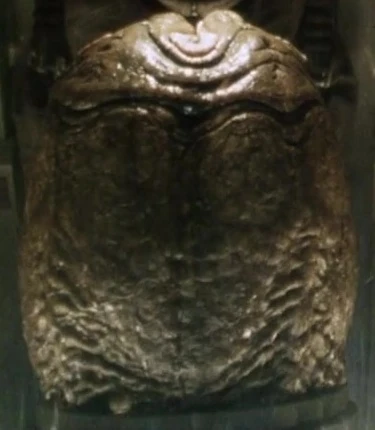 OvomorphEgg containing a facehugger
 FacehuggerHost implantation
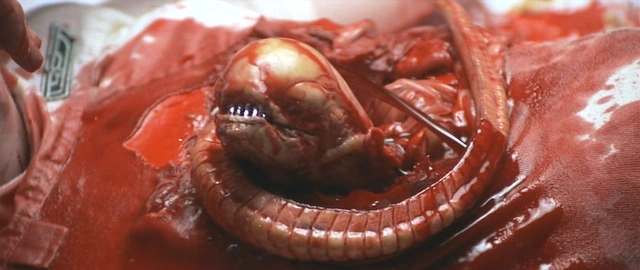 ChestbursterJuvenile emerges
- DroneMay remain in this form
- Possible paths
In the 2019 ALIEN RPG, Queen pheromones can induce a Drone to molt into a Soldier or Worker according to hive needs. Specimen 6 becomes a Queen in Aliens vs. Predator (2010), a separate individual case rather than a universal route. The Drone may also remain in its existing form. 33 25 46
Select a topic to explore the biology. Observations from released films, licensed interpretations and unresolved mechanisms are distinguished throughout.
01Reproduction, growth and molting
Early development. The egg, facehugger and chestburster are distinct life stages. In Alien, Kane remains unconscious during attachment, revives after the parasite detaches, and subsequently dies when the juvenile emerges. Brett later discovers discarded skin, indicating a molt during the rapid transition to adulthood. How the creature acquires sufficient material to grow so rapidly is not resolved by the film. 1
Chrysalis. Alien: Romulus shows the chestburster developing inside a wall-mounted cocoon before the larger creature emerges. This adds an observable intermediate phase to the older film sequence. It is a structure used for the Alien’s own development, unlike the resin restraining a captured host. Concept artist Dane Hallett discusses creating its hardened exterior in an interview. Whether every Drone passes through this phase is unknown. 21 54
Queenless reproduction. In the cocoon sequence restored for the 2003 Director’s Cut of Alien, Brett appears to be transforming into an egg-like organism, while Dallas is still alive. The 1979 theatrical version omits this material. The original RPG explicitly includes host-to-egg conversion (ovomorphing) as an alternative to eggs laid by a Queen. 1 33
Adult differentiation. In the RPG, the Drone can remain at Stage IV until Queen pheromones trigger further molting. This makes a young adult a developmental branch point, rather than a mandatory final caste. 33

02Anatomy, skeletal structure and locomotion
| Structure | Observations and interpretation |
|---|---|
| Cranium | The elongated dome conceals a skull-like structure in the original creature. Transparency, outline, and underlying detail differ among later designs. A skull-like eye socket is not evidence of a working eye. |
| Trunk | Narrow waist, rib-like surface structures and segmented spinal elements produce the characteristic biomechanical silhouette. The function of each visible structure is not established. |
| Dorsal tubes | Prominent projections emerge from the back. Their size and arrangement vary. Respiratory or nutrient-uptake functions have been suggested in expanded material, but the films do not identify their purpose. |
| Arms and hands | Long arms and grasping, clawed digits permit prey restraint and climbing. Finger arrangements vary across designs. |
| Legs and feet | The original adult has a more human-like leg profile; later versions exhibit more pronounced digitigrade forms. Locomotion can alternate between upright, crouched and quadrupedal movement. |
| Tail | Segmented, flexible appendage ending in a pointed or bladed tip. It can strike, pierce and manipulate objects or victims. |
| Mouth | Outer jaws open to expose an extendable inner jaw. Films show the second jaw striking at close range; exact muscular anatomy and pressure are unmeasured. |
The original RPG gives the Drone a height of 2.4 m and describes polarized silicon in the species’ protective tissues. These are licensed specifications, not measurements established for every screen specimen. 1 6 8 18 33 55
The Auriga sequences demonstrate that the adult body can operate in flooded environments. The limbs and tail also permit movement through complex industrial structures. The ability to traverse ceilings is particularly prominent in the AvP games; those mechanics do not establish the exact adhesive mechanism of the feet. 8 13 24
03Acid blood, armor and injury
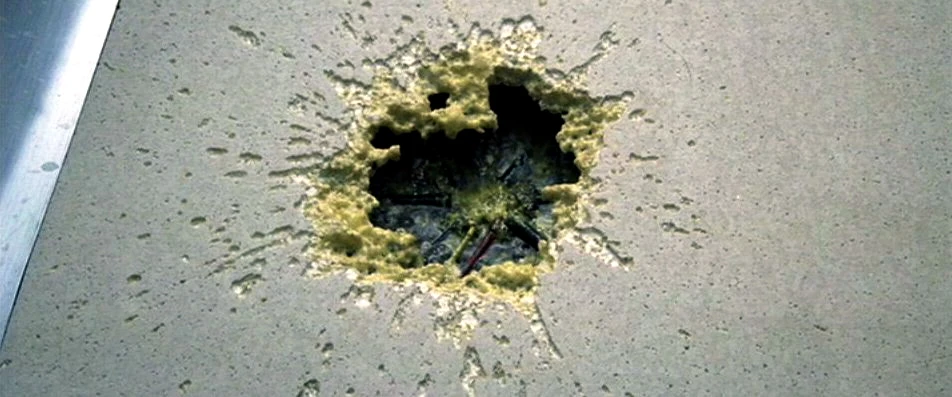
Corrosive circulatory fluid. The facehugger in Alien bleeds a fluid that penetrates successive metal decks. Adult Xenomorph blood in Aliens similarly injures nearby people and damages equipment. In Alien Resurrection, the two surviving prisoners deliberately exploit a third adult’s blood to escape their cell. This demonstrates an offensive application of a normally defensive trait, rather than a separate acid-spitting organ. 1 4 8
The creature’s tissues evidently tolerate its own internal fluid under ordinary conditions. The chemical identity, pH, precise circulation mechanism, and reason its own tissues resist corrosion remain uncertain. Corrosion of metal does not by itself identify a particular real-world acid. The RPG models injury-related acid splash and depletion of its corrosive effect over time; those rules are not laboratory measurements. 33
Protection and vulnerability. A hard exterior and considerable strength do not make the creature indestructible. The films depict adults injured by cutting, firearms, extreme heat or force. The original Drone is driven from the shuttle by the engine exhaust after being expelled into space; its immediate fate is revisited in Romulus. The 1986 Warriors can be killed with weapons, although their acid makes close combat dangerous. Neither the film scenes nor numerical armor ratings in games establish a universal penetration threshold. 1 4 21
04Secretions, cocooning and hive construction
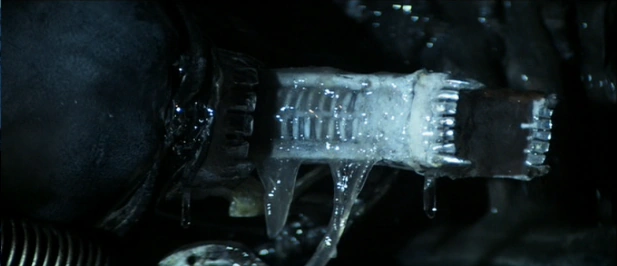
The adult’s wet-looking mouth and strings of saliva are conspicuous in the original film. Resin found in nests serves a distinct structural role, binding captives and modifying the environment. The exact relationship between oral secretions and construction resin is not demonstrated in Alien. The Hadley’s Hope hive in Aliens integrates organic-looking walls and chambers into the existing industrial complex; these surfaces also help conceal the defenders. 1 4
Cameron’s 1983 treatment gives a pale worker a specialized secretion probe and depicts workers transporting eggs. The finished film does not show that proposed worker. The original RPG assigns hive-building to the Worker caste, whose elongated oral structure secretes construction resin. 2 33
AvP: Extinction presents a different Drone: a labor unit bred from oswoc hosts that carries captives and establishes Hive Nodes. Its Cystic Drone upgrade adds a ranged acidic secretion. That is a game-specific ability, not evidence that all film Drones spit acid. 14 35 36
05Nervous system, senses and intelligence
Sensory perception. Adults detect and pursue prey despite lacking readily visible external eyes. The Nostromo creature locates crew members in a complex interior, while the Auriga adults navigate flooded corridors. These behaviors are consistent with effective perception in darkness, but do not identify the actual receptor organs, sensory ranges or wavelengths. Sight, hearing, smell, vibration detection and other mechanisms should be distinguished from observations of behavior. 1 8
Game interpretations. Creative Assembly’s developers describe the Alien: Isolation hunter as a largely unscripted AI capable of navigating its environment. The game’s sensory rules are a design implementation, not a definitive explanation of Xenomorph neuroanatomy. 23 48 56
Problem-solving. The Nostromo adult repeatedly uses concealment, waits in ambush and approaches prey from unexpected directions. The Auriga escape shows multiple individuals acting together and exploiting corrosive blood. Such observations support adaptive behavior; they do not prove a human-like language, telepathy or consciousness. 1 8
Hive communication. The RPG distinguishes the relatively independent Stage IV Drone from later hive-connected castes, and attributes unusual early-adult behavior partly to that independence. Queen pheromones provide its developmental trigger. This is a particular licensed interpretation of a hive mind, not an explanation stated by Ash in the original film. 33
06Host influence, inheritance and strain variation
The host-derived morphology commonly described as the DNA reflex provides one explanation for differences between Xenomorph individuals. Alien 3 provides a clear nonhuman-host comparison: its adult is more quadrupedal and lacks the original’s dorsal tubes. The theatrical cut uses a dog host, whereas the Assembly Cut uses an ox. That adult is catalogued separately as a Runner. 7
The cloned Auriga adults in Resurrection emerge from a research program that also produces a human–Alien genetic mixture in Ripley 8 and an unusual reproductive outcome in the Queen. They should not be treated as genetically identical to the Nostromo specimen merely because both have smooth domes. 8
In Extinction, host identity determines several initial forms: the oswoc gives rise to a Drone, while humans yield Warriors. This is a distinct model from the RPG’s pheromone-driven maturation. The existence of both models is not a contradiction within either work; it is a difference between licensed taxonomies. 33 36
The Alien: Earth production team identifies host DNA as a contributor to creature-design differences. Host inheritance, strain differences and production choices are therefore separate considerations when comparing anatomy. 37
The adults in Alien: Covenant (2017) provide another design comparison: elongated smooth head, lean limbs and a distinct developmental origin. They are often termed Protomorphs or Praetomorphs in discussion and are not treated as the ordinary Drone caste simply on the basis of a dome.
07Metabolism, nutrition and lifespan
The original film shows no sustained adult feeding sequence that would explain the rapid accumulation of mass. The discarded skin establishes molting, not the source of energy or nutrients. The adult is not shown consuming each victim it kills; some captured individuals appear in the restored cocoon scene instead. 1
Alan Dean Foster’s Alien novelization is reported to include evidence of disturbed food stores; the secondary discussion does not establish how much the adult consumed or its metabolic requirements. Expanded-media suggestions that dorsal tubes absorb hive nutrients likewise require the exact originating work before being treated as confirmed biological mechanisms. 55
The 2019 RPG explicitly assigns eating and resting to the independent Drone. A finite natural lifespan, metabolic rate, universal diet, and a requirement for silicon or metal ingestion remain unestablished across continuities. The original adult’s relatively passive behavior in the shuttle does not by itself prove that it was dying of old age. 1 33
08Respiration, temperature and environmental tolerance
Vacuum. The ending of Alien shows the adult remaining active outside the Narcissus shuttle before it is dislodged. Romulus adds the recovery of the original creature from a protective mass in space. This indicates unusual environmental persistence, but does not establish continuous conscious activity throughout the intervening years. 1 21
Water and atmosphere. The Auriga adults swim underwater in Resurrection. Neither that scene nor a short exposure to vacuum proves unlimited endurance in all environments. The original RPG specifies no observed respiratory requirement, cold immunity, radiation resistance and absence of a detectable thermal signature. These are setting-specific claims from its xenobiology and rules chapter, not quantitative results established by the films. 8 33
Heat. Fire is a recurring deterrent in the franchise; avoidance is not identical to instant death on contact. The outcome depends on the individual, exposure and work. Temperature limits, oxygen exchange, internal heat generation and recovery after extreme conditions remain open questions.
09Natural weapons and prey capture
Drones have several overlapping ways to restrain or kill prey: grasping limbs, claws, the tail and the extendable inner jaws. The original Alien’s attack on Brett illustrates the inner-jaw strike; in other scenes the adult abducts rather than immediately kills. The tail in Alien vs. Predator is used in close combat against Predators. 1 18
The RPG additionally assigns the Drone a tail barb associated with ovomorphing and a paralyzing venom in its attack mechanics. These provide a specific mechanism for capture in that setting; ordinary film tail strikes are not enough to establish a universal venom or its chemistry. 33
The Aliens board game rulebook (version 99.1.6, sections 1.6–1.7) models abduction and acid spray separately from direct killing. Alien: Fate of the Nostromo instead represents encounters primarily through loss of morale. Such rules document the adaptations’ portrayals of danger, not new anatomical discoveries. 57
Caste system and social role
Section titled “Caste system and social role”An independent Drone may hunt, secure hosts and initiate an infestation before a mature hive develops. In Free League’s original 2019 RPG taxonomy, the Queen’s signals can induce a Drone to molt into either a Soldier or a Worker. The Soldier develops a reinforced, ridged cranium and other combat adaptations; the Worker becomes smaller (1.2–1.8 m), paler and specialized for resin production. Later development through a Soldier into a Praetorian is treated separately from direct Drone differentiation. 33
The small albino Drone described in Cameron’s unfilmed 1983 treatment is already a worker, not necessarily a developmental stage equivalent to the RPG Drone. In AvP: Extinction, the Drone is a host-derived construction unit; the game’s separate Praetorian metamorphoses are not Drone transformations. 2 35 36
Appearances across media
Section titled “Appearances across media”Film and television appearances are covered in the design chronology. The following sections document games, tabletop releases, comics, novels and crossovers.
Licensed video games
Section titled “Licensed video games”Select a game to explore its Xenomorphs, abilities and gameplay.
1999Aliens versus PredatorPLAYABLE ALIEN
Rebellion’s first-person game features separate Alien, Predator and Colonial Marine campaigns. The playable Alien climbs walls and ceilings, moves rapidly through enclosed spaces and attacks with its claws and tail. Its ability to approach enemies from unusual angles makes vertical surfaces central to Alien gameplay. The Gold Edition also includes single-player Skirmish mode. 24 45
2001Aliens Versus Predator 2NAMED DRONE
Monolith’s sequel features a playable Alien Drone in multiplayer. Its abilities include wall and ceiling traversal, pouncing and close-range attacks. The Alien campaign begins with the facehugger and follows its growth through the chestburster phase into adulthood. Multiplayer offers several Alien classes with different strengths and movement abilities. 13

The contemporary multiplayer demo explicitly names the playable Alien Drone. This named game class takes precedence over applying the film-based smooth-dome convention to every multiplayer model. 65
2003Aliens versus Predator: ExtinctionHIVE DRONE
Drones develop from cattle-like oswoc hosts, while human hosts produce Warriors. The Drone retrieves prospective hosts and builds Hive Nodes, which establish hive territory. The Cystic Drone upgrade allows it to spit acidic, cyst-filled fluid. These abilities make the Drone important to the expansion and maintenance of the Alien faction’s colony. 35 36 14

2010Aliens vs. PredatorSPECIMEN 6
The Alien campaign follows Specimen 6, a Xenomorph raised in a Weyland-Yutani research facility. After escaping containment, Six frees the Matriarch and hunts Marines and Predators. Players use walls and ceilings to approach targets, employ stealth attacks and harvest humans for facehugger implantation. The story concludes with Six eventually developing into a Queen. 25 46
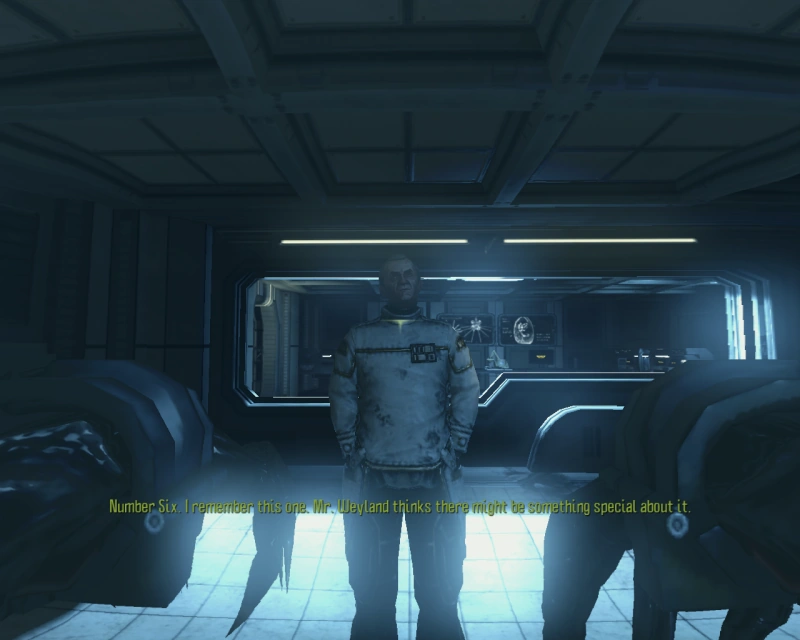
The adult depicted in the campaign has a ridged head and is also described as a Warrior in secondary accounts. The individual is included here because of its developmental relevance and differing terminology; the game does not establish that smooth-domed film Drones routinely become Queens. 64
2013AVP: EvolutionPLAYABLE DRONE
Angry Mob Games’ mobile action game features a playable Alien campaign. The Drone has a smooth elongated dome, pronounced dorsal tubes and a long tail. Players engage enemies in close combat and acquire upgrades that alter the creature’s abilities and appearance. 38
2013Aliens: Colonial MarinesENEMY TYPES
The game features Soldiers, Lurkers, Spitters and Crushers. The stealth-oriented Lurker uses speed, vents, wall traversal and pouncing to ambush Marines. Soldiers are more durable melee combatants, while Spitters attack at range with acid. Crushers use their heavily armored heads to charge opponents. Multiplayer allows players to control several Xenomorph classes and unlock additional attacks. 47
2014Alien: Isolation1979-INSPIRED
The Sevastopol Xenomorph stalks Amanda Ripley through the station’s corridors, rooms and ventilation network. Its unscripted AI searches for the player and investigates disturbances; articulated head and body animation allows it to inspect hiding places. Players can evade it by moving quietly, hiding or distracting it, and later use a flamethrower to drive it away. Its design draws heavily on the 1979 adult, with elongated digitigrade legs. 23 48
2019Alien: BlackoutSTATION STALKER
A Xenomorph stalks Amanda Ripley and survivors aboard Mendel Station. Amanda monitors security cameras, guides crew members through the facility and controls doors while managing limited electrical power. The creature moves between rooms and ventilation routes, forcing the player to balance surveillance and escape. 39
2021Aliens: Fireteam EliteAMBUSH DRONE
The Drone is an ambush enemy encountered during the Priority One campaign. It rushes a Marine, attempts to seize and injure them, then retreats through a vent before returning. The Rescue mission features a stronger named Drone, Monica, associated with the experiments described in Aliens: Infiltrator. 15 49
2023Aliens: Dark DescentTACTICAL DRONE
Drone Xenomorphs patrol infested locations on Lethe. Detection can trigger a hunt, during which the Marine squad is pursued and additional enemies converge on its position. The game’s escalating hive aggressiveness and Marine stress systems make prolonged encounters increasingly dangerous. Concealment and avoiding patrols are important parts of exploration. 16 50
2023Dead by Daylight: AlienCROSSOVER
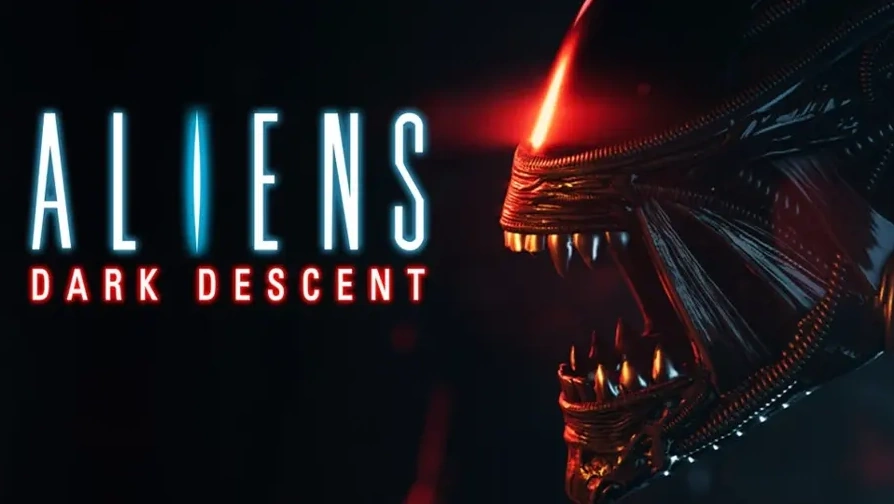
The Xenomorph appears as a playable Killer in the Alien chapter, alongside survivor Ellen Ripley and the Nostromo Wreckage map. Its power, Hidden Pursuit, enables rapid travel through underground tunnels and emergence at Control Stations. In Crawler Mode, the creature moves on all fours, reduces its Terror Radius and gains a tail attack capable of striking over dropped pallets and through windows. Survivors can deploy Remote Flame Turrets to temporarily disable its power. Its gameplay centers on stealth, tracking, rapid movement between objectives and pursuit. Alternate outfits include the Grid Xenomorph, Xenomorph Clone and Xenomorph Queen. 26 51
The developer’s character biography specifically reimagines the Nostromo creature entering the Fog after its expulsion into space. This is crossover-specific lore. 66
2024–25Alien: Rogue IncursionVR / EVOLVED
Survios’ action-horror game follows Zula Hendricks on Purdan. Xenomorphs use walls, ventilation routes and other surfaces to approach and attack the player. The developer implemented dynamic encounters and wall-jumping animation, with creature detection responding to the player’s movements and noise. Ammunition and medical supplies are limited. The 2025 Evolved Edition adapts the experience for conventional screens. 27 52
2026Aliens: Fireteam Elite 2AMBUSH DRONE
The sequel, released 25 August 2026, returns the Drone as a mobile ambusher. Drones emerge from hiding, rush and seize a Marine, then withdraw into vents before attacking again. The Banshee Down mission includes an early encounter with the returning creature. 17 53
An illustrated enemy roster identifies the returning Drone separately from new and returning enemy classes. See the labelled roster image for a secondary visual reference. 67
Tabletop, miniatures and role-playing games
Free League’s ALIEN The Roleplaying Game (2019 core rulebook, pp. 308–315) gives one of the clearest licensed developmental models. At Stage IV, Drones are smooth-headed, intelligent ambush adults, alongside Stalkers and Scouts (the latter usually quadrupedal). Under a Queen’s influence, the Drone can mature to a Stage V Soldier/Warrior—its dome loses the smooth surface as ridged armor develops—or to a smaller hive-tending, resin-spinning Worker. Stage V Sentries and later Stage VI forms have their own roles. 33
The 2021 Colonial Marines Operations Manual, pp. 175–176, gives an exceptional Biodrone XX121B created under Project Life Force. Its growth is arrested at Stage IV, and it is engineered not to develop a Queen or survive beyond approximately six days. Reproductive control fails because victims can still be converted into eggs by ovomorphing. Rare Reborn individuals survive the intended expiration. They resemble normal Stage IV Drones. 34
The Evolved Edition released 18 November 2025 revises the RPG. 12
Evolved Edition (2025). The revised core rulebook retains the Stage IV grouping of Drone, Scout and Stalker (p. 217). Free League describes the edition as an expanded revision compatible with earlier releases. The terminology is shared across editions; differences in individual rules or attacks require edition-specific comparison. 63
Comics
Dark Horse’s early Aliens stories follow the spread of Xenomorphs beyond the film settings. Earth War depicts the consequences of the infestation of Earth; Genocide introduces conflict between differently colored Xenomorph populations. Hive/Harvest explores royal jelly, while Rogue and Labyrinth depict experiments involving Xenomorph biology. Berserker follows specialized teams fighting infestations. Later series include Defiance, Dead Orbit, Resistance, Rescue and the adaptation of William Gibson’s Alien 3. Marvel began publishing new Alien comics in 2021 and collects earlier Dark Horse material in its Original Years editions. 28 29
Irradiated adult — Aliens: Aftermath (2021). Marvel’s one-shot depicts a luminous, radiation-altered adult in the ruins of Hadley’s Hope. The archived panels show the recognizable elongated head and dorsal tubes; the unusual cold-associated effects belong to this individual. The exact caste is not stated here. 60
Alpha — Alien: Bloodlines (2021). Marvel’s first six-issue Alien arc features a distinctive horn-crested specimen linked to Gabriel Cruz and Epsilon Station. Secondary coverage calls it a Drone with goat-derived traits; the creature is included for comparison without treating its atypical morphology as a standard caste definition. 61
Novels and alternative screenplays
William Gibson’s Alien 3. Pat Cadigan’s novelization of the unproduced screenplay features Xenomorph drones aboard the Sulaco. The hardcover appeared in 2021, followed by the paperback in 2022. 30
Alien: Isolation (2019). Keith R. A. DeCandido’s adaptation follows Amanda Ripley’s encounter with the Sevastopol Xenomorph and expands her personal history. 41
Aliens: Infiltrator (2021). Weston Ochse’s prequel to Fireteam Elite follows experiments at Pala Station. Secondary accounts describe Monica (Subject Three) as a striped, pathogen-altered Drone, distinct from the pale Subject Seven. Monica also appears in the game’s Rescue mission. 43 44 49
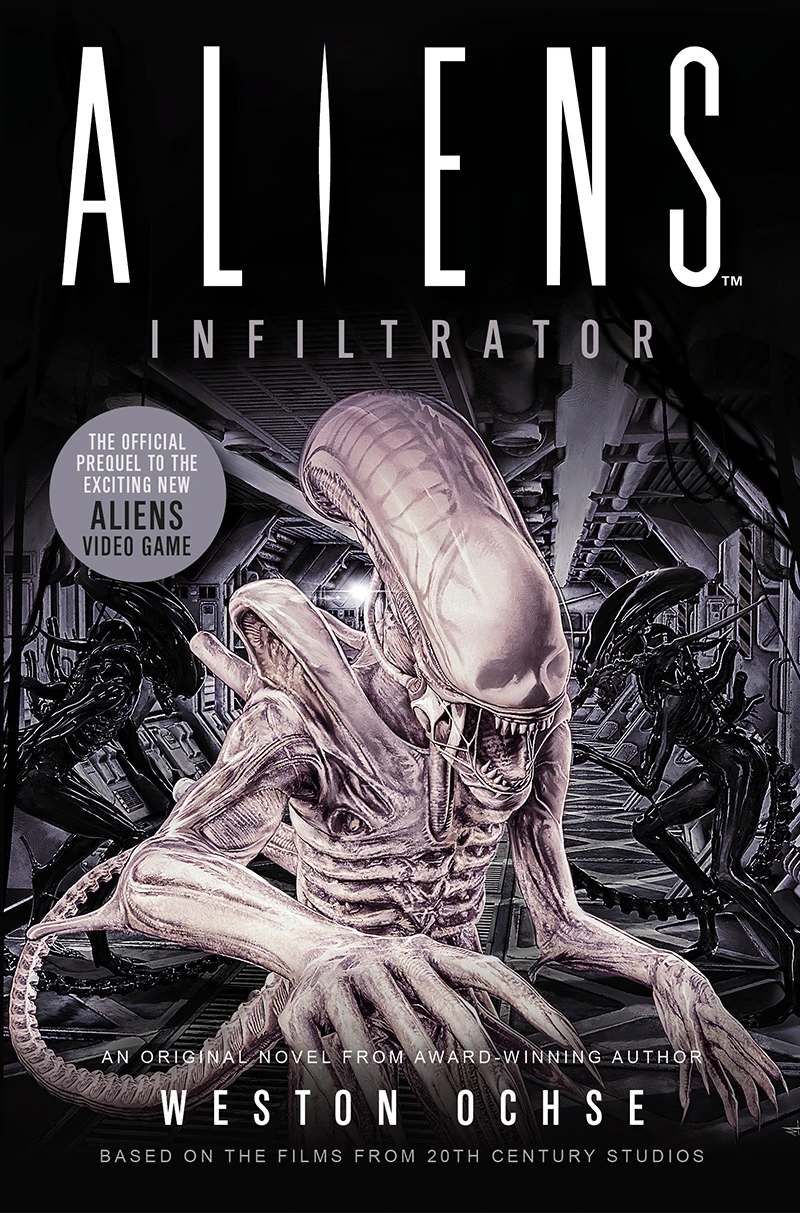
Subject Seven — Aliens: Infiltrator (2021). Secondary accounts describe the white Alpha as an adult with a pale body and a Drone-like head, produced by experiments involving irradiated pathogen. This is a distinct Pala Station specimen, not the 1983 albino worker or Monica. 62
Audiobooks and audio dramas
Audible produced full-cast audio dramas of Alien: Out of the Shadows (2016), Alien: River of Pain (2017), Alien: Sea of Sorrows (2018) and William Gibson’s unproduced Alien 3 (2019). These productions depict Xenomorph encounters through dialogue, creature sounds and environmental effects. 42
Crossovers, promotional forms and unofficial adaptations
The Alien vs. Predator crossover franchise features Xenomorphs as prey and rivals of the Yautja. Its games include playable Alien campaigns and hive-based strategy units. The 2023 Dead by Daylight: Alien chapter introduces a playable Xenomorph with alternative outfits based on several franchise designs. Dark Horse also published numerous Aliens versus Predator comic stories. 26 29
Production history, artistic influence and interpretation
Giger’s sculptures and illustrations established the biomechanical design. Later productions adapted it through new practical creature suits, digital effects, puppetry and game animation. ADI’s work on Resurrection, Creative Assembly’s AI-directed hunter, Legacy Effects’ Romulus pipeline and the workshop and performer contributions to Alien: Earth document this evolution. 6 9 21 22
Historical terminology: Stan Winston School titled a 2012 article about a 1986 Aliens hero puppet the making of a Drone, while the account also calls other production figures Warriors. The 1983 treatment and 1985 screenplay provide separate preproduction uses of the words. The differing terms appear in separate production documents. 2 32 31
NECA’s 2016 albino worker figure is a later licensed interpretation of the unfilmed 1983 treatment, not a surviving production artifact from the film.
Related records
Section titled “Related records”- Xenomorph Chestburster — juvenile development and emergence.
References
Section titled “References”Films, production documents, licensed publications and game references.
- Primary film: Alien (1979), dir. Ridley Scott. Theatrical film; later edition’s cocoon scene separately identified. Supplementary object record: Academy Museum, Alien headpiece.
- Primary unproduced treatment: James Cameron, Alien II, 21 September 1983. Explicit description of albino worker, secretion probe, egg-moving Drones, Warriors and an unfilmed egg-injection sequence.
- Development-history comparison: AvP Galaxy, “Favourite Scenes Never Seen”, documenting the abandoned worker and later draft mentions. Use with the original treatment.
- Primary film: Aliens (1986), dir. James Cameron; separate from early treatments. Smithsonian, final shooting script collection record.
- Production: Stan Winston School, Aliens 30th anniversary and creature effects.
- Production/design: American Cinematographer, “The Filming of Alien”, original film camera and design context.
- Primary film / editions: Alien 3 (1992), theatrical cut and Assembly Cut; AvP Galaxy, editions and production guide for an index to supporting material.
- Primary film: Alien Resurrection (1997), dir. Jean-Pierre Jeunet; Auriga escape and underwater scenes.
- Primary production interview: Alec Gillis and Tom Woodruff Jr., StudioADI interview, on effects and design choices.
- Secondary taxonomy guide: AVP Central, “Drone Xenomorph”. Research lead used for terminology comparison, not sole primary evidence.
- Licensed source and catalogue: Free League Publishing, ALIEN The Roleplaying Game (2019 original edition); ALIEN RPG Nexus species index for creature classification.
- Publisher and release: Free League, ALIEN RPG Evolved Edition Core Rulebook; publisher press release, 18 November 2025.
- Contemporary game reporting: GameSpot, Aliens Versus Predator 2 demo, 2001, explicitly identifying the playable Drone; AvP Galaxy class guide.
- Secondary mechanics overview: Aliens versus Predator: Extinction (2003); AvP Galaxy, Xenomorph types and Hive Node role.
- Licensed game: Aliens: Fireteam Elite (2021); 2021 roster announcement, six named enemy types; enemy guide.
- Licensed tactical game: Aliens: Dark Descent (2023); enemy guide; publisher support notes referring to a Drone.
- Developer/publisher and preview: Daybreak/Cold Iron, Aliens: Fireteam Elite 2 release, 25 August 2026; May 2026 IGN First enemy profile (syndicated), Drone “Mobile Ambusher”.
- Primary film: Alien vs. Predator (2004); AvP Galaxy, documented production stills including Grid.
- Primary film: Aliens vs. Predator: Requiem (2007), theatrical film; account of its Predator, Predalien and Xenomorph outbreak.
- Primary films: Prometheus (2012) and Alien: Covenant (2017); AvP Galaxy, Praetomorph comparison guide (secondary).
- Production interview: Stan Winston School, Legacy Effects artists and Alien: Romulus practical Xenomorph effects.
- Primary performer interview: Cameron Brown and Jayde Rutene on their Alien: Earth Xenomorph performances, September 2026.
- Developer interview: Creative Assembly, developing the Alien: Isolation hunter.
- Game and historical reporting: Aliens versus Predator (1999); AvP Galaxy, game and development overview.
- Developer interview: Alex Moore, Rebellion’s Aliens vs. Predator (2010) design interview.
- Official adaptation: Behaviour Interactive, Dead by Daylight: The Xenomorph; developer explanation of crawler, tunnels and tail mechanics.
- Licensed game: Alien: Rogue Incursion (2024) and Evolved Edition (2025); AvP Galaxy game catalogue for editions and publication leads.
- Publisher collections: Marvel, Aliens: The Original Years Omnibus, vol. 4, collecting earlier Dark Horse publications.
- Secondary bibliography: Indexed historical Aliens comic line bibliography; browse to publisher/issue originals before citing plot claims.
- Publisher catalogue: Titan Books / Penguin Random House, Alien 3: The Unproduced Screenplay by William Gibson, novelization by Pat Cadigan; dated editions and description mentioning “Xenomorph drones”.
- Effects studio retrospective and terminology exception: Stan Winston School, “ALIENS Movie – The Making of a Xenomorph Drone”, 2 April 2012; calls a 1986 hero puppet “Drone” while describing other 1986 action figures as Warriors. A retrospective production label, not film dialogue.
- Original preproduction screenplay: James Cameron, Aliens, 26 February 1985 screenplay, Bishop’s ant/termite queen analogy with worker and warrior vocabulary, clearly distinct from the unfilmed 1983 albino worker and finished film.
- Primary licensed rules: Free League Publishing, ALIEN The Roleplaying Game: Core Rulebook (2019), chapter “Alien Species,” printed pp. 297–315, species traits, reproduction and Stage IV Drone/Scout/Stalker and Stage V Soldier/Worker/Sentry. Publisher listing; searchable text reference for page checks (unofficial reproduction, not publication authorization).
- Primary licensed supplement: Free League Publishing, ALIEN RPG Colonial Marines Operations Manual (2021), printed pp. 175–176, “Xenomorph XX121 Aberrant Types” and “Biodrone Xenomorph XX121B.” Licensed retailer catalogue. The text supplies Project Life Force, arrested Stage IV, six-day mortality, ovomorphing and Reborn cases.
- Original game manual: Aliens versus Predator: Extinction (2003) PlayStation 2 manual, game controls, Alien Drone Hive Node creation and related unit mechanics; compare the detailed in-game bestiary and upgrade descriptions 14.
- Contemporary gameplay review: GameSpot, Aliens versus Predator: Extinction review (2003), specifically noting the oswoc-hosted Drone versus human-hosted Warrior in that game’s host-to-unit rules.
- Host influence: Alien: Earth production team interview (2025); DNA Reflex terminology overview (secondary).
- Game developer: Angry Mob Games, AVP: Evolution; AVP Galaxy game record (secondary).
- Game announcement: GameSpot, developer description of Alien: Blackout; AVP Central, secondary game overview.
- Digital series: IGN, official launch trailer; GameSpot, seven-episode release.
- Publisher: Titan Books, official Alien tie-in novels.
- Audio publisher: Audible Original Dramas catalog; Alien audio catalog.
- Publisher: Titan Books, Aliens: Infiltrator.
- Secondary research: AVP Central, Monica / Subject Three; novel creature overview.
- Game publisher: Aliens versus Predator Classic 2000.
- Game overview: AvP Central, Alien campaign and Specimen 6.
- Multiplayer preview: GameSpot, Colonial Marines creature classes.
- Developer interview: Creative Assembly, Alien AI and animation.
- Gameplay guide: Fireteam Elite, Rescue mission and Monica.
- Game review: Dark Descent patrols and detection.
- Official game: Behaviour Interactive, Alien outfits.
- Developer interview: Survios, creature AI.
- Gameplay guide: Fireteam Elite 2, Banshee Down.
- Production interview: Dane Hallett, Alien: Romulus creature design interview, including the chrysalis.
- Secondary biology overview: Space.com, Xenomorph life cycle and feeding discussion; novelization and dorsal-tube claims remain leads pending verification in their original works.
- Developer presentation: Creative Assembly, Building Fear in Alien: Isolation, GDC Vault; sensory and AI design.
- Tabletop rules in research collection: ALIENS Board Game, rulebook version 99.1.6, sections 1.6–1.7; Ravensburger, Alien: Fate of the Nostromo, rulebook pp. 2–7. Gameplay abstractions, not independent anatomical evidence.
- Short films: Alien Anthology official channel, 40th Anniversary Shorts (2019), Ore, Harvest, Alone; Xenopedia, Alone (secondary caste terminology).
- Original game documentation: Electronic Arts, Aliens versus Predator: Extinction manual (2003), Alien unit descriptions and Drone upgrade.
- Comic and analysis: Marvel, Aliens: Aftermath #1 (2021); AvP Central, irradiated Xenomorph (secondary).
- Comic and analysis: Marvel, Alien Vol. 1: Bloodlines (2021); AvP Central, Alpha Xenomorph (secondary).
- Novel analysis: AvP Central, Subject Seven, discussing Aliens: Infiltrator (2021); original novel passage not verified.
- RPG: Free League, ALIEN RPG Evolved Edition (2025), core rules p. 217; publisher edition overview.
- Game analysis: AvP Central, Specimen 6; Aliens vs. Predator (2010) campaign.
- Contemporary demo announcement: Shacknews, AvP2 Multiplayer Demo (2001).
- Developer: Behaviour Interactive, The Xenomorph character profile (2023).
- Secondary game roster: AvP Central, Fireteam Elite 2 Xenomorph Types (2026).
We use optional analytics cookies to understand which pages are useful. Privacy policy