Conventional egg production, royal development and reproductive variants.
Xenomorph Egg (Ovomorph)
CREATURES / XENOMORPH BIOLOGY
The Xenomorph Egg, or Ovomorph, is an organic capsule that stores and releases a Facehugger. Its leathery walls, responsive opening and fleshy petals make it one of the most recognizable stages of the Alien life cycle.
Queens produce Eggs in developed hives, while alternate editions and licensed accounts describe conversion of hosts into Eggs, royal variants and experimental reproduction. These different accounts should be examined in their own contexts.
SELECT A PROFILE
Explore the Eggs
Explore the original Egg, royal and experimental forms, alternate designs and related reproductive structures.
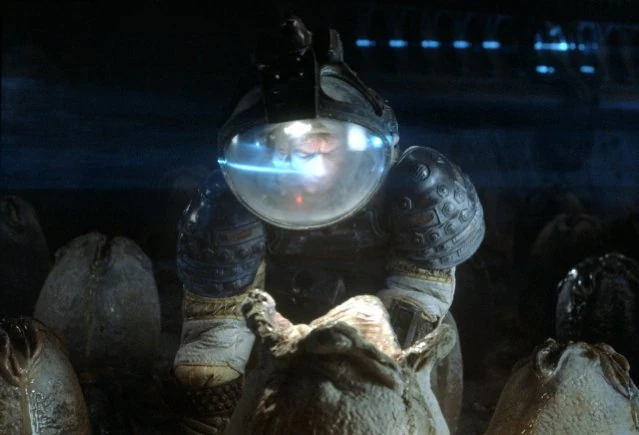
Alien (1979) · film frame
1 / 4
FILM · 1979Alien
Derelict Ovomorph
The cache beneath the Derelict contains viable parasites. One Egg opens before Kane is attacked.
- Designation
- Standard Egg
- Visual cue
- Leathery shell; four opening petals
- Source status
- Released film
Source details
The film establishes responsive opening and a Facehugger, but not the cache's exact age or producer.

H. R. Giger · early design artwork
CONCEPT ARTAlien production
Early Egg and parasite
Early development explores a different opening and parasite arrangement.
- Designation
- Early spore pod / Egg
- Visual cue
- Enclosed parasite and slit design exploration
- Source status
- Preproduction artwork
Source details
Giger's art is not a separate filmed variant.
Host-derived Egg
No image available.
DELETED / RESTOREDAlien: Director's Cut
Host-derived Egg
Brett appears to be transforming; Dallas remains alive in the cocoon scene.
- Designation
- Eggmorphing
- Visual cue
- Host conversion into egg-like tissue
- Source status
- Restored footage and later interpretation
Source details
No completed viable hatch is shown in this sequence.
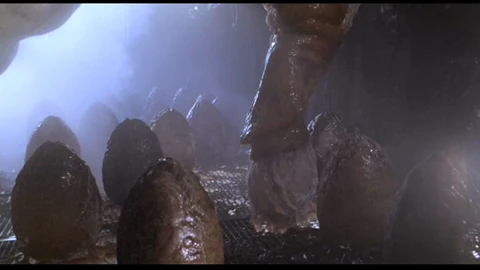
Aliens (1986) · film frame
1 / 2
Unexplained Sulaco Egg
No image available.
FILM · 1992Alien 3
Unexplained Sulaco Egg
The opening presents an Egg aboard the ship without revealing how it arrived.
- Designation
- Unexplained Egg
- Visual cue
- Attached in an unusual orientation
- Source status
- Released film; origin unresolved
Source details
Emergency Egg is a speculative explanation, not a confirmed film caste.
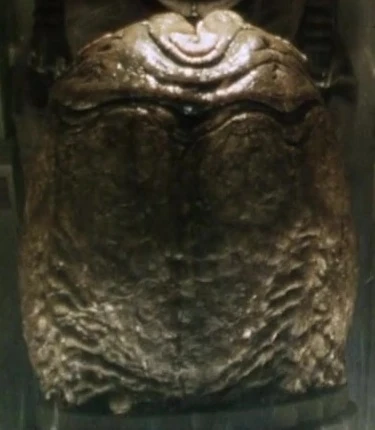
Alien Resurrection (1997) · film image
FILM · 1997Alien Resurrection
Cloned Queen's Egg
The Auriga Queen produces Eggs following the cloning program.
- Designation
- Cloned-lineage Egg
- Visual cue
- Brown fleshy surface and folded crown
- Source status
- Released film
Source details
The Queen's later live birth is a distinct reproductive event.
Pyramid Egg
No image available.
CROSSOVER · 2004Alien vs. Predator
Pyramid Egg
Captive Queen production supports Predator hunting rituals.
- Designation
- Queen-produced Egg
- Visual cue
- Stored and mechanically transported
- Source status
- Released crossover film
Source details
The pyramid's machinery is separate from Egg biology.
David's experimental Egg
No image available.
FILM · 2017Alien: Covenant
David's experimental Egg
David presents Oram with a viable Egg in his laboratory.
- Designation
- Experimental Egg / Praetomorph Egg in later terminology
- Visual cue
- Rounded form and pronounced petals
- Source status
- Released film; ancestry unresolved
Source details
No Queen is shown producing it; the film does not resolve the Derelict cache's origin.
Miniature stored specimens
No image available.
RELATED · 2017Alien: Covenant
Miniature stored specimens
David places two specimens alongside the colonists' embryos.
- Designation
- Miniature egg-like specimens
- Visual cue
- Small capsules regurgitated by David
- Source status
- Released film; viability and development unclear
Source details
They are not demonstrated to grow into full-sized Eggs on screen.
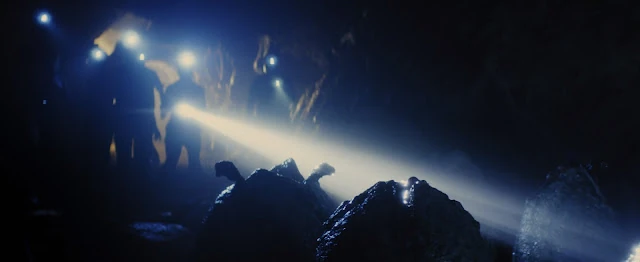
Alien: Ore (2019) · short-film frame
SHORT FILM · 2019Alien: Ore
Mining colony Eggs
The miners discover evidence of an infestation underground.
- Designation
- Egg cache
- Visual cue
- Dark clustered Egg forms
- Source status
- Licensed short film
Source details
The scene is preserved in the archive.
The Queen's Egg
No image available.
RPG · 2019 / 2025ALIEN RPG
The Queen's Egg
The rulebooks distinguish the Queen's Egg from an ordinary Ovomorph.
- Designation
- Queen's Egg
- Visual cue
- Royal reproductive variant; different game values
- Source status
- Licensed edition-specific rules
Source details
The royal Facehugger is a separate organism, not an illustration of the Egg.

Alien: Romulus (2024) · comic panel, synthesized ovomorph
COMIC · 2024Alien: Romulus
Synthesized Ovomorph
A scientist describes synthesizing the creature's basic ovomorph form from DNA.
- Designation
- Laboratory-synthesized ovomorph
- Visual cue
- Irregular tissue in a shallow container
- Source status
- Licensed prequel comic panel
Source details
The panel establishes synthesis, not a normal Queen-laid Egg.
Maginot Egg specimens
No image available.
TV · 2025Alien: Earth
Maginot Egg specimens
The recovered Maginot cargo includes Eggs that react to nearby people and are examined by Prodigy.
- Designation
- Collected Ovomorphs
- Visual cue
- Contained specimens and examined Eggs
- Source status
- Released television
Source details
Season 1 episodes and production images provide evidence.
Pink Egg
No image available.
COMIC · 1997Aliens: Kidnapped
Pink Egg
The story associates a pink Egg with an unusual black parasite-derived creature.
- Designation
- Unusual Egg
- Visual cue
- Pink coloration; unusual offspring
- Source status
- Secondary comic account; panel pending
Source details
Color and outcome belong to this story, not a general pink caste.
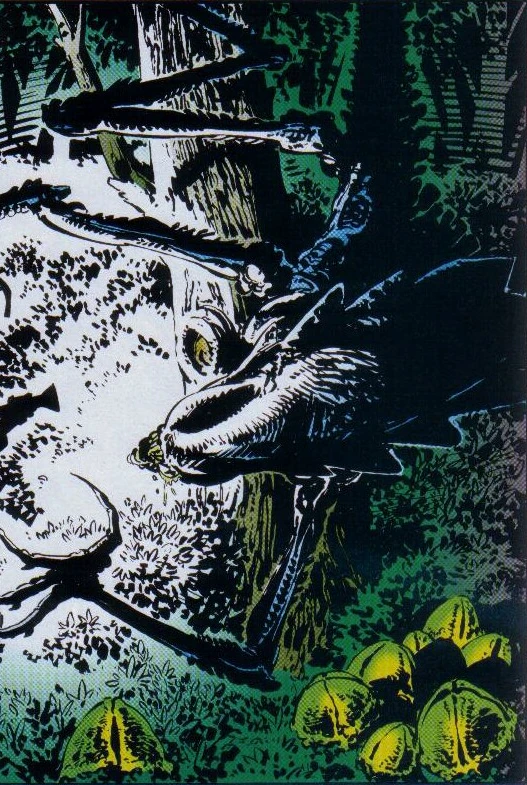
Aliens: Earth Angel · archived comic panel; exact page unconfirmed
COMICAliens: Earth Angel
Earth Angel Eggs
Egg-like forms appear beside a creature in the archived panel.
- Designation
- Comic Egg depiction
- Visual cue
- Yellow-green forms with slit-like markings
- Source status
- Archived comic panel; page pending
Source details
Visual evidence is retained without claiming an unverified new reproductive class.
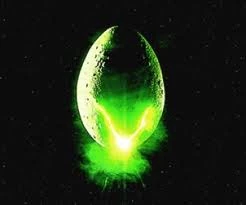
Alien (1979) · advertising motif, not film morphology
ADVERTISING · 1979Alien poster
Promotional Egg
The famous theatrical advertising image differs from the leathery film prop.
- Designation
- Advertising image
- Visual cue
- Cracked shell with green light
- Source status
- Real-world artwork, not an in-universe organism
Source details
Its graphic silhouette is not evidence of a separate biological variant.
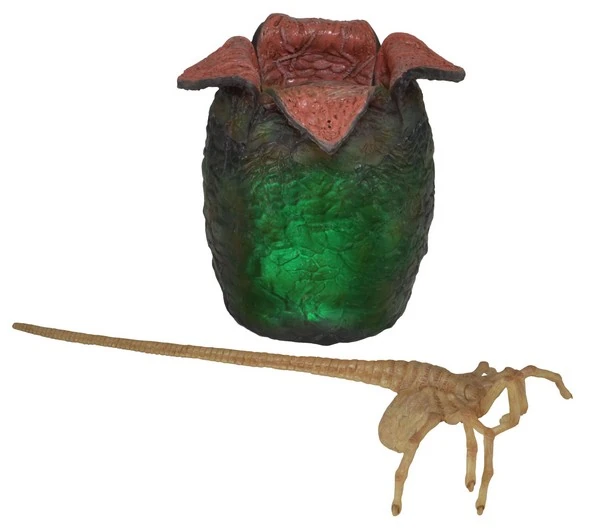
NECA · licensed collectible
MERCHANDISENECA Aliens
Light-up Egg
The model reproduces the Egg and launching Facehugger motif.
- Designation
- Collectible model
- Visual cue
- Opening petals and green illumination
- Source status
- Licensed product
Source details
Toy lighting is not evidence that filmed Eggs glow green.
Terminology and classification
Section titled “Terminology and classification”The Egg, commonly called an Ovomorph in licensed reference material and the ALIEN RPG, is the first conventional life stage of the Xenomorph. Unlike an ordinary hard-shelled egg, its organic enclosure opens to release a developed Facehugger. The 1979 film establishes the visual design and host encounter; the terminology and detailed biological framework are elaborated by subsequent works. 1 17
Dan O’Bannon’s early development terminology includes a spore pod. This should not be confused with the spore-producing sacs in Alien: Covenant. The familiar four-petaled Ovomorph, a royal Egg containing a specialized parasite, a genetically synthesized capsule and a hybrid birth sac may share a visual motif without sharing a single reproductive mechanism. 7 12 18 25
| Attribute | Reference |
|---|---|
| First released appearance | Alien (1979) |
| Function | Stores and releases the Facehugger |
| Ordinary producer | Queen in the hive-based route |
| Alternate formation | Host conversion in the restored cocoon interpretation and licensed RPG |
| External morphology | Leathery capsule, opening petals |
| Mobility | Normally stationary on screen; unusual licensed examples require source-specific examination |
| Lifespan | Exact upper limit not established by the films |
Design history
Section titled “Design history”Select a film or television record. The illustrated profiles provide identified visuals; later variants are not substituted for missing original images.
1979Alien — Derelict cacheFILM
Kane descends beneath the Space Jockey chamber and discovers many upright, organic capsules. A layer of blue light hangs over the cache. A specimen reacts to his presence, its crown opens and the enclosed Facehugger attacks. This is the first released depiction of the Egg and establishes its primary narrative function as a dormant threat rather than an inert shell. 1
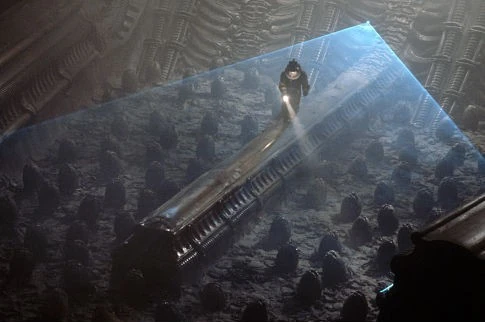
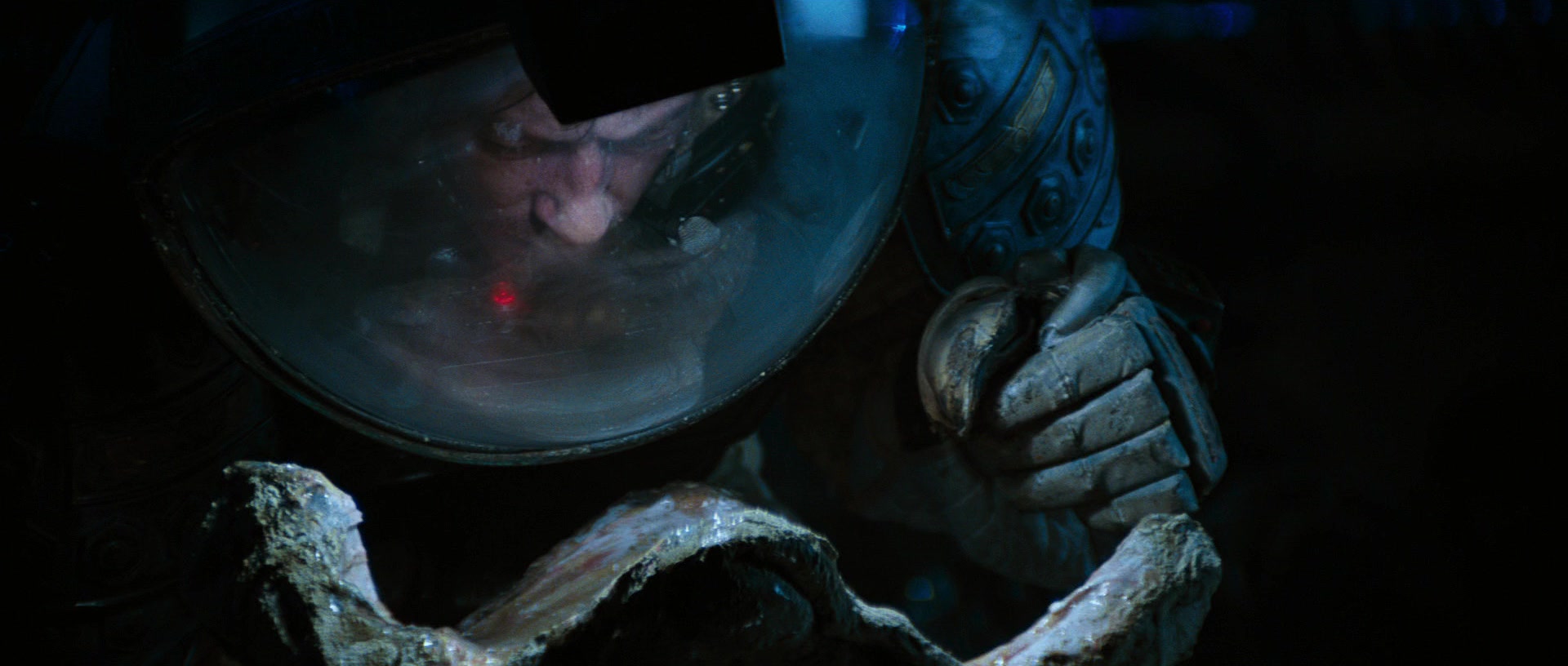
The ship’s ancient appearance and the viable parasite invite questions about longevity, but the sequence supplies no date of egg production. It also shows no Queen. The chamber may be described as an Egg cache; its original purpose is not explicitly established.
1986Aliens — hive productionFILM
The Hadley’s Hope hive changes the context of the Eggs. Ripley discovers a large egg-laying organism surrounded by capsules. The egg-producing structure is physically connected to the Queen, while adult Warriors occupy the colony. This establishes Queen-based production in the released sequel, without explaining how the first Queen formed or what produced the original Derelict cache. 3
The attack on the nursery triggers a confrontation with the Queen. The Eggs become both a biological resource and a point of leverage in the film’s depiction of the hive. Cameron’s earlier treatment includes smaller workers transporting Eggs; the specific unfilmed worker caste must not be inferred from the photographed Warriors. 34
1992Alien 3 — Sulaco EggFILM / EDITIONS
The opening depicts an Egg in an unfamiliar position aboard the Sulaco. The ensuing emergency and escape-pod launch lead to the Fiorina 161 infestation. Ripley carries a Queen embryo while a separate adult develops from a dog in the theatrical cut or an ox in the Assembly Cut. The film never shows the Egg being deposited, nor establishes whether it contained an ordinary or royal Facehugger by a direct examination of its contents. 4
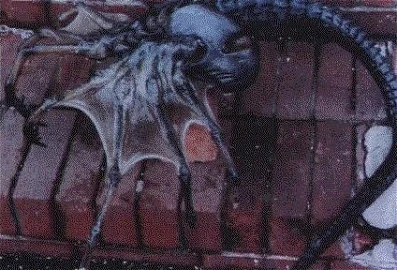
The production record identifies the opening Egg as a static prop added late in production. That explains a real-world decision, not an in-universe transport mechanism. The webbed royal Facehugger is a related design, not proof of the speculative Emergency Egg theory. 14
1997Alien Resurrection — AurigaFILM
The military cloning program recovers a Queen from Ripley 8 and uses her Eggs to infest captive hosts. These specimens belong to an altered lineage, whose development is affected by genetic exchange during cloning. Their brown folded exterior and fleshy appearance differ from some earlier props. 5
The Queen later gives birth to the Newborn through an abnormal reproductive route. This is separate from the earlier Eggs and should not be treated as the ordinary final stage of an Ovomorph.
2004Alien vs. Predator — AntarcticaCROSSOVER
A Queen is held captive beneath the pyramid and periodically awakened to supply Eggs for a Predator ritual. The pyramid’s mechanisms convey them toward sacrificial hosts. Facehuggers then implant humans and generate a new infestation. This is an example of artificial organization of an otherwise familiar life cycle, not evidence that Eggs naturally travel through mechanical passageways. 6
2017Alien: Covenant — experimental lineageFILM
David’s laboratory contains several large Eggs. He leads Oram to a specimen that opens and releases a Facehugger. The sequence links the Eggs to David’s work with the pathogen and other organisms, but does not photograph the complete manufacturing or reproductive process. Later reference works sometimes call the resulting lineage Praetomorph or Protomorph; those labels are not dialogue establishing a formal Egg caste. 7 23
The production team constructed opening Egg props and a mechanism that suggested movement beneath the surface. The rounded proportions and pronounced opening differ from the 1979 design, while retaining recognizable visual continuity. 15
The small specimens David stores at the end and the spore-producing sacs found outdoors are discussed separately below.
2019Alien: Ore — mining colonySHORT FILM
The anniversary short depicts miners confronting an infestation beneath their workplace. The archived frame shows a cluster of Eggs in the dark environment. The discovery reprises the hidden-cache threat from the original film in an industrial colony context. The short does not establish a newly named Egg subtype. 8
2024Alien: Romulus — artificial reproductionFILM
The Renaissance research station contains laboratory-produced Facehuggers associated with research into the recovered Nostromo organism. The movie does not depict a conventional Queen laying the station’s Eggs. The licensed prequel comic provides additional context through an explicitly described synthetic ovomorph; these are distinct pieces of evidence. 9 25
The Offspring emerges from an unusual birth sac after a human pregnancy is altered by the experimental compound. Its origin and contents distinguish that sac from a standard capsule containing a Facehugger. 9 33
2025Alien: Earth — Maginot specimensTELEVISION
Season one depicts Eggs collected by the Maginot and recovered following its crash. In the third episode, Morrow’s approach triggers an opening, while Prodigy’s laboratory investigation includes extracting a Facehugger and examining the embryo associated with it. The series extends direct examination of the reproductive stages, but does not provide universal limits for Egg lifespan or sensing. 10 31
Production photographs document Second Skin Studio’s Egg effects and dissection work. They are a priority for further locally archived illustrations. 32
Biology and life cycle
Section titled “Biology and life cycle”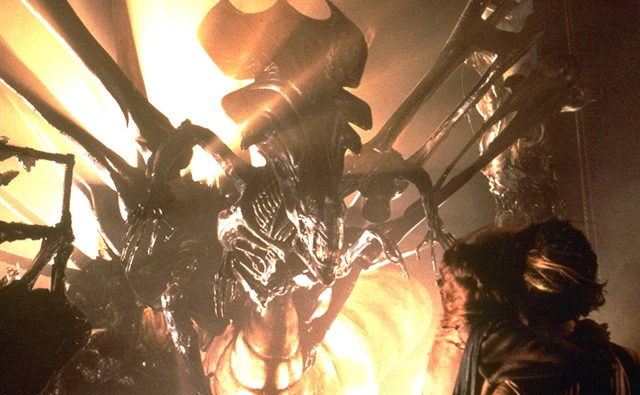 QueenReproductive adult
 OvomorphIncubates Facehugger
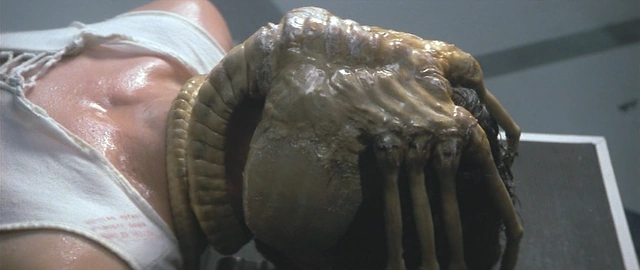 FacehuggerImplantation
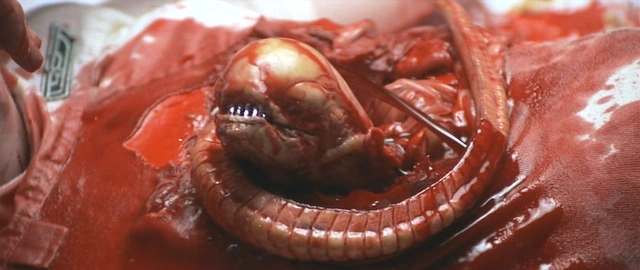 ChestbursterJuvenile emerges
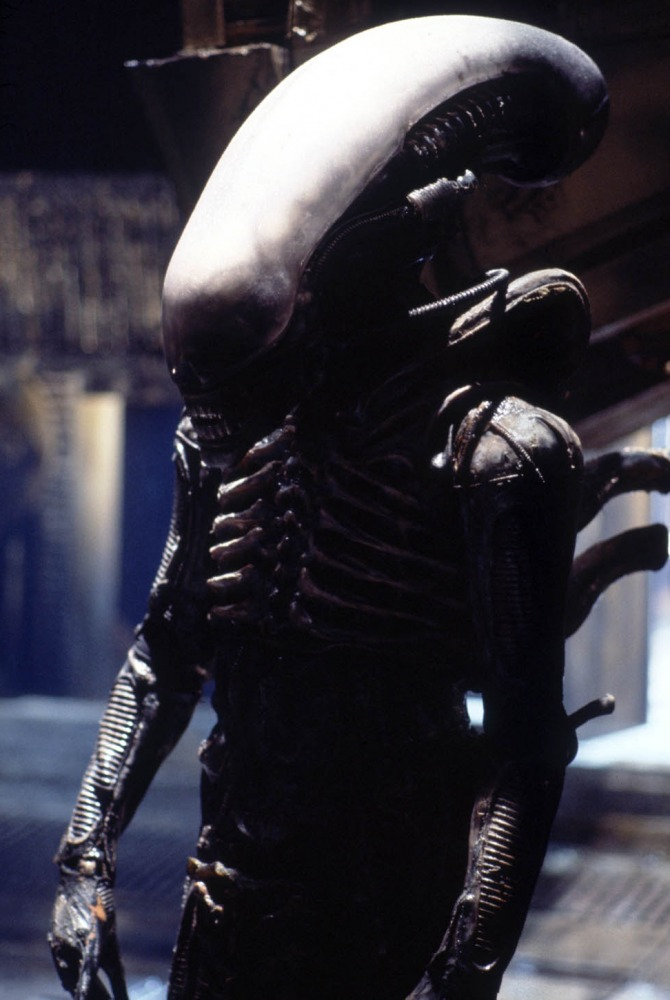 AdultPossible form
The conventional Egg route begins with a Queen. A separate route in the 2003 Director’s Cut interpretation and licensed RPG involves conversion of a host into an Egg by an adult. The diagram illustrates a reproductive sequence rather than a mandatory adult caste progression.
01Anatomy and external morphology
A typical Ovomorph has a rounded base, upright leathery capsule and a crown that separates into four fleshy petals. The surface is irregular rather than a brittle mineral shell. The opening leads to an interior occupied by a parasite and supporting tissue. 1 3
| Feature | What the evidence supports |
|---|---|
| Outer wall | Flexible organic-looking shell; thickness and composition are not quantified by the films. |
| Crown | Four petals on the familiar filmed Egg; earlier production artwork explored other openings. |
| Interior | Living-looking material and a Facehugger awaiting release. |
| Base | Supports or attaches the capsule; some licensed works depict root-like structures. |
| Size | Varies with design and depiction; a prop measurement is not automatically an in-universe constant. |
The Egg is not the same organism or life-stage description as the emerging Facehugger. The films do not resolve the degree of independent awareness of the enclosing tissue.
02Formation and Queen production
In the Queen-based route, the reproductive adult produces Eggs that accumulate within a protected area. The worker/Warrior distinction in Cameron’s treatment and the later RPG’s castes elaborate the organization of this process. The released films show the Queen and hive but no exact universal egg-laying rate. 3 34 17
The alternative host conversion route is documented separately. The Queen’s reproductive organ is not itself an Egg, and the resin surrounding captured hosts is not automatically undergoing conversion into Ovomorph tissue.
03Incubation and internal parasite
The capsule holds a Facehugger, which is already sufficiently developed to emerge and seek a host. The moving contents of the 1979 hero prop establish the visual impression of living tissue before emergence. The parasite then becomes the active host-implanting stage. 1 12
How the enclosed organism is fed, how waste is handled, whether it remains metabolically active continuously, and what makes an individual Egg viable are unresolved in the films. The 2019 RPG provides a licensed interpretation of the capsule as a distinct stage. 17 18
04Host detection and activation
In the original film the Egg reacts as Kane investigates it. The hive encounter in Aliens demonstrates further opening threats near humans, and Alien: Earth revisits proximity-associated activation. These examples support sensitivity to the nearby environment. They do not isolate body heat, carbon dioxide, vibration, touch or an exclusive chemical receptor as the trigger. 1 3 10
The RPG translates this behavior into proximity and stress-related game rules. Such rules should be presented as encounter mechanics rather than measurements of a biological detection radius. 17 18 19
05Opening and Facehugger emergence
The crown separates before the parasite emerges. The 1979 film alternates close views of the opening and the interior with the sudden attack; the four-petal design makes the transition recognizable across later works. A hatched Egg is not necessarily proof of an ongoing infestation unless viable parasites or adult activity are established. 1
The hero Egg’s coordinated petal movement was accomplished by mechanical effects. That production method explains the visual action but does not supply a biological muscle or pressure model. 11 12
06Dormancy and environmental survival
The Derelict is presented as aged and abandoned, while its cache remains dangerous. That contrast is strong evidence of persistence in the story, but its precise interval is unknown. The Antarctic Queen’s prolonged captivity is evidence about that Queen, not the age of each newly laid Egg. 1 6
Films and games show Eggs in humid hives, laboratories and cargo spaces. No consistent screen experiment establishes the minimum atmosphere, temperature range or maximum viable lifespan. Avoid attributing an exact age to the Derelict’s Eggs solely from the age of the spacecraft.
07Durability, acid and destruction
In Aliens Ripley destroys Eggs with fire. The film establishes vulnerability to intense heat, but does not quantify a temperature threshold. The corrosive blood of Facehuggers and adults is documented separately; it should not automatically be assigned identical potency in the Egg wall. 1 3
The original RPG assigns the two Egg profiles acid-splash values and different armor. This is useful licensed evidence but not a measured real-world acid concentration or an established film-wide defensive ability. 18 19
08Ordinary and royal reproduction
The 2019 core rulebook distinguishes an Ovomorph and the Queen’s Egg, and ordinary and royal Facehuggers. A royal parasite is associated with Queen development and, in the rulebook’s model, may carry a second embryo for a protective adult. The exact Sulaco infection sequence is not thereby proven. 17 18
This prop illustrates the related Facehugger stage rather than an identified royal Egg. The ordinary Egg’s external shape alone cannot establish royal contents.
09Eggmorphing and queenless reproduction
The restored cocoon sequence in the 2003 Director’s Cut shows Brett transformed into an egg-like form and Dallas still alive nearby. The scene was absent from the original theatrical release. No completed hatch is shown, so its reproductive implications should be distinguished from directly observed successful Egg production. 2
The 2019 RPG formalizes host-to-Egg conversion as ovomorphing. Its later Evolved Edition retains a specific description of an isolated Drone initiating conversion. The 2021 Colonial Marines supplement describes a Biodrone whose inability to develop a Queen fails to prevent reproduction through ovomorphing. 17 18 19 21
This model is distinct from ordinary resin cocooning: restraining a living host for a Facehugger does not, by itself, prove the host is being turned into an Egg.
10Hive coordination and the blue layer
The blue plane over the Derelict cache is visible when Kane enters it. Its story function is not conclusively explained. Alarm, environmental preservation and sensing-field hypotheses are possible readings, not established technologies. The museum account identifies the light effect with lasers borrowed during production. 1 11
The Queen’s apparent coordination with hive adults in Aliens does not establish a universal communication mechanism between every Egg. Chemical coordination and hive networks in licensed rules must be attributed to those rules.
11Genetics, cloning and synthetic forms
The Auriga cloning program, David’s experiments and the Renaissance synthesis represent three different contexts for altered reproduction. A visually similar Egg does not prove that its genome, origin or resulting organism is identical to the Derelict lineage. 5 7 9 25
The comic panel explicitly identifies a synthesized basic ovomorph. It does not establish that every laboratory-produced Facehugger must be produced by a full-sized conventional Egg.
Variants and related forms
Section titled “Variants and related forms”Select a documented variant or related structure. Unverified comic terminology is explicitly marked as a research lead.
1997Pink Egg — KidnappedCOMIC LEAD
A secondary account of the Dark Horse comic identifies an unusually colored Egg and a resulting black organism associated with abnormal development and harmful effects on victims. The unusual color belongs to the Egg, not a demonstrated pink adult caste. Exact issue and panel verification remains necessary before assigning a standardized biological name such as Bodyburster or Goreburster. 23 27
1990sEarth Angel EggsCOMIC
The archived panel depicts yellow-green egg-like forms with dark slit-like markings. It is visual evidence of a comic depiction, but the original page and surrounding narrative need checking before identifying the shapes as a distinct reproductive subtype. 35
2024Synthesized Renaissance OvomorphCOMIC
The panel’s dialogue describes a scientist synthesizing a basic ovomorph from DNA. The depicted irregular specimen differs from a fully developed upright capsule. This is stronger direct evidence for laboratory synthesis than a speculative inference from the film alone. The exact production method and final viability require the complete comic context. 25 26
2017Miniature Covenant specimensRELATED
David regurgitates two small egg-like objects and stores them with the colonists’ embryos. The final shot leaves their future development unresolved. They should not be called a confirmed Emergency Egg caste, and their small size does not establish the mature size of the lineage. 7
2017Neomorph spore sacsRELATED
The dark sacs in Covenant release airborne particles rather than a recognizable Facehugger. The subsequent infection produces Neomorphs. This mechanism is fundamentally different from the conventional Ovomorph route, even though the sacs perform an analogous reproductive function. 7
2024Offspring birth sacRELATED
The altered human pregnancy in Romulus results in a sac containing the Offspring rather than a Facehugger. It represents the outcome of an exceptional hybridization event. The sac’s corrosive contents are not a demonstration of the acidity of every standard Egg. 9
VARIOUSOther licensed Egg formsRESEARCH LEADS
The following secondary-source leads warrant inspection in their original editions: the White Hybrid Egg in Deadliest of the Species, the Icarus Egg in Marvel’s Icarus storyline, the Queen Mother birth structure in Genocide, diseased or root-bearing Eggs in Labyrinth, and the android-associated Egg in William Gibson’s unproduced Alien 3 story and comic adaptation. 23
Each may describe a different organism, anomaly or narrative continuity. The early screenplay adaptation also depicts a pyramid cache using a design distinct from the 1979 production. Original Screenplay comic record. A generic image of a normal Egg would misrepresent these entries.
Caste system and social role
Section titled “Caste system and social role”Eggs provide the transition from the reproductive adult to the host-seeking parasite. They are typically deposited in a protected cache or hive, where defenders and host-capture behavior support propagation. In the films, the Egg’s position in the cycle is clear; its relationship to royal hierarchy is not completely explained. 1 3
| Source | Reproductive model | Scope |
|---|---|---|
| Alien (1979) | Viable cache, producer unseen | Released film |
| Alien Director’s Cut (2003) | Host conversion suggested | Restored sequence |
| Aliens (1986) | Queen lays Eggs | Released film |
| Alien 3 (1992) | Unexplained Egg and royal embryo | Released film, disputed origin |
| Alien Resurrection (1997) | Cloned Queen, later hybrid birth | Exceptional experiment |
| Alien: Covenant (2017) | Experimental Eggs and separate spore lineage | Released film, ancestry unresolved |
| ALIEN RPG (2019 / 2025) | Ordinary and Queen’s Egg, ovomorphing | Licensed edition-specific rules |
| Alien: Romulus (2024 comic) | Synthetic basic ovomorph | Licensed laboratory reproduction |
Appearances across media
Section titled “Appearances across media”The screen chronology appears in design history.
Licensed video games
Section titled “Licensed video games”2001Aliens versus Predator 2GAME
The Alien campaign begins with the Facehugger stage emerging from an Egg. This gives the player a perspective usually withheld from film audiences. The player’s movement and infection objectives are game mechanics, not a complete simulation of the capsule’s development. 39
2003Aliens versus Predator: ExtinctionGAME
The Queen and Eggs become colony production resources. Hosts are required for expanding the Alien faction; the player manages reproductive units and deployment of Facehuggers. Unit classifications are specific to the strategy game’s rules, including its host-dependent Drone and Warrior roles. 28 40
2014Alien: IsolationGAME
Sevastopol contains an established infestation and Eggs in the hive region. Facehuggers represent an independent threat during the encounter sequence. A developer interview establishes that a Queen was deliberately implied rather than included as a boss. The presence of Eggs therefore does not give a photographed Queen profile or prove a particular succession model. 29 37
2021Aliens: Fireteam EliteGAME
Eggs and emerging parasites appear as hazards during hive encounters. The shooter abstracts hatching and destruction into combat mechanics; its damage values and environmental placement should not be interpreted as universal biological limits. 38
2023Aliens: Dark DescentGAME
The tactical game treats Egg and Facehugger threats as part of managing the infestation during squad operations. Its detection and encounter systems provide a source-specific gameplay model. Enemy imagery and exact mission appearances remain priorities for direct game capture. 30
Tabletop and role-playing games
The 2019 ALIEN RPG classifies the Egg as Stage I. Its original rules distinguish two profiles, and the revised Evolved Edition changes their armor treatment. The following values are rule mechanics, not measurements of physical strength. 17 18 19 20
| Edition and profile | Speed | Health | Armor | Acid splash |
|---|---|---|---|---|
| 2019 Ovomorph | 0 | 2 | 2 (0 vs fire) | 4 |
| 2019 Queen’s Egg | 0 | 3 | 3 (1 vs fire) | 5 |
| 2025 Ovomorph | 0 | 2 | 0 | 4 |
| 2025 Queen’s Egg | 0 | 3 | 1 (0 vs fire) | 5 |
Both editions retain an ordinary and royal distinction. The original Aliens board game also represents Egg opening and parasite release as encounter mechanics. 36
The edition comparison relies on available reproduced rulebook text; the final printed pagination and complete 2025 rules should be cross-checked before extending the comparison to every caste.
Comics and alternate screenplays
Licensed comics expand the Egg’s morphology, reproduction and genetic variation. The Egg records for Kidnapped, Earth Angel and Romulus are discussed above. The original screenplay comic adapts early script material rather than reproducing the released film exactly. The Gibson Alien 3 draft and related comic represent a separate sequel continuity.
Further issue-level examination is needed for Genocide, Labyrinth, Deadliest of the Species and Marvel’s Icarus storyline. The source register retains those leads without treating a fan-assigned variant name as dialogue from an original publication. 23 25 27 35
Novels and audio adaptations
The film novelizations provide alternate prose descriptions of the Derelict and colony Eggs, while later licensed fiction expands reproductive anomalies. Alien: Prototype is a research priority for an experimental Egg and the resulting outbreak; Labyrinth and the novel adaptation warrant examination for root-like structures. These titles need edition-specific passages before anatomical claims or quotations can be attributed to them. 23
Additional game appearance register
Alien Trilogy, arcade adaptations, older home-computer games and handheld releases merit a dedicated sprite and level audit. A game that includes Facehuggers does not necessarily include a distinct visible Egg in every version. No unverified screenshots are used as substitutes.
Contradictions and unresolved questions
Section titled “Contradictions and unresolved questions”| Question | Evidence and limits |
|---|---|
| Where did the Sulaco Egg originate? | The opening of Alien 3 supplies no transport scene. A hidden Queen-laid Egg, adult transport and other explanations are hypotheses. The Emergency Egg label is speculative in this context. |
| Are Queens necessary? | The released sequel establishes Queen production. The restored cocoon sequence and licensed ovomorphing provide alternative models, not an obligatory replacement of the hive route. |
| What is the blue layer? | A visible cinematic effect with documented laser production history; its exact story function is unresolved. |
| How long can an Egg survive? | The Derelict cache remains viable, but no absolute production date or universal lifespan is supplied. |
| Did David invent the species? | Covenant depicts experimental organisms and Eggs. It does not establish the exact ancestry or date of the original Derelict cache. |
| Can Eggs move independently? | Screen Eggs are generally stationary. Root-like structures in licensed stories need separate verification rather than an inference that the Sulaco Egg crawled into place. |
Production history
Section titled “Production history”Giger’s early design
Section titled “Giger’s early design”Early designs explored a slit opening and a curled parasite inside the capsule. The production changed the familiar hero Egg to an opening with four petals. The design history also records earlier background forms, so a variation in an out-of-focus prop need not represent a separate species. The abandoned separate Egg silo and early pyramid concept are part of the film’s development, not proof of a filmed structure outside the Derelict. 12
Practical effects and surviving artifacts
Section titled “Practical effects and surviving artifacts”The Science and Industry Museum identifies 130 Eggs manufactured for the original film. Most were stationary background objects; the opening hero Egg was mechanically articulated. The museum’s preserved prop retains residues from the finish used to simulate a wet living surface. Scott himself manipulated the interior effect with a gloved hand. The effects history also records animal tissue and inverted photography for some inserts. 11 12
The sequel used miniature Eggs to populate a reduced-scale chamber set, alongside larger effects objects. The opening Egg of Alien 3 was added late as a static model. Later Covenant effects returned to articulated opening props and simulated movement underneath their surface. The dimensions and mechanisms of those models are production evidence, not biological rules. 13 14 15
Advertising, promotional artifacts and merchandise
The cracked, green-lit Egg in the 1979 advertising campaign does not match the film’s fleshy opening mechanism. It belongs to the film’s graphic identity. The Smithsonian’s curator subsequently reassessed an Egg donated as a franchise artifact and distinguished it from the original production attribution. 16
Licensed models reproduce the opening and parasite emergence in various forms. The NECA light-up collectible’s lighting and mechanical behavior are features of the product, not evidence of additional biological abilities.
Related records
Section titled “Related records”- Xenomorph Chestburster — juvenile development and emergence.
References
Section titled “References”Released works, museum research, production testimony, edition-specific licensed rules and separately identified secondary leads.
- Film: Alien (1979), dir. Ridley Scott; Derelict chamber, Kane’s encounter and infestation.
- Film edition: Alien: Director’s Cut (2003), restored Nostromo cocoon scene.
- Film: Aliens (1986), dir. James Cameron; Hadley’s Hope egg chamber, Queen and hive.
- Film and editions: Alien 3 (1992), theatrical and Assembly Cut; opening Egg and royal embryo.
- Film: Alien Resurrection (1997), dir. Jean-Pierre Jeunet; cloning program and Auriga Eggs.
- Crossover film: Alien vs. Predator (2004), dir. Paul W. S. Anderson; Antarctic Queen and Egg transport.
- Film: Alien: Covenant (2017), dir. Ridley Scott; David’s laboratory, spore sacs and closing sequence.
- Short film: Alien: Ore (2019), dir. Kailey and Sam Spear; mining colony infestation.
- Film: Alien: Romulus (2024), dir. Fede Álvarez; research-derived Facehuggers and hybrid birth.
- Television: Alien: Earth (2025), season 1, episodes 2–5; Maginot cargo and laboratory examination.
- Museum conservation account: Lewis Pollard, FAQs about our Alien egg, Science and Industry Museum (2020).
- Production history: Monster Legacy, StarBeast — Alien, the Egg and the Facehugger; interviews and design development.
- Production history: Monster Legacy, StarBeast — Aliens; egg chamber miniatures and practical effects.
- Production history: Monster Legacy, StarBeast — Alien³, the Dragon; late-added static opening Egg and royal Facehugger.
- Production history: Monster Legacy, StarBeast — Alien: Covenant; effects maker testimony about Eggs.
- Museum artifact research: Smithsonian Magazine, curator reassesses the provenance of a promotional Alien Egg (2023).
- Licensed RPG: Free League, ALIEN The Roleplaying Game, 2019 core rulebook, printed pp. 300–302; Stage I and Stage II. Publisher.
- Rulebook cross-check: 2019 core rulebook chapter 11, reproduced pages 301–350; ordinary and Queen’s Egg statistics.
- Licensed revised RPG: ALIEN RPG Evolved Edition (2025), reproduced chapter pages 201–250; Stage I and updated armor values.
- Official publisher: Evolved Edition core rulebook publication record.
- Licensed supplement: Free League, Colonial Marines Operations Manual (2021), printed pp. 175–176, Biodrone XX121B; Project Life Force and retained ovomorphing.
- Secondary overview: AvP Galaxy, Alien Egg / Ovomorph; film comparisons and variant research leads.
- Secondary variant index: AvP Central, Xenomorph Egg guide; unusual Egg forms, with issue-level confirmation required where indicated.
- Secondary research: AvP Central, Eggmorphing; deleted scene and licensed examples, distinguished from universal claims.
- Primary comic panel: Marvel, Alien: Romulus (2024), one-shot; archived panel explicitly identifies a laboratory-synthesized ovomorph. Exact printed page pending.
- Comic publication index: Marvel A to Z comics series, Alien: Romulus (2024).
- Secondary comic account: AvP Central, Aliens: Kidnapped; Pink Egg and resulting black organism.
- Primary game manual: Aliens versus Predator: Extinction (2003), original instruction manual; hive and Egg production mechanics.
- Game developer interview: Gary Napper, Creative Assembly post-launch interview; implied Queen in Alien: Isolation.
- Game reference: Aliens: Dark Descent enemy register, AvP Galaxy.
- Television episode coverage: Alien: Earth, Metamorphosis and Observation; recovered Eggs and extracted embryo.
- Production gallery: Alien: Earth behind-the-scenes images; Second Skin Studio Egg and dissection effects.
- Production history: Monster Legacy, StarBeast — Alien: Romulus; creature effects and cocoon concept development.
- Original treatment: James Cameron, Alien II, 21 September 1983; Queen and egg-moving workers.
- Primary licensed comic: Dark Horse, Aliens: Earth Angel; archived comic image of eggs. Exact issue/page citation remains unresolved.
- Licensed tabletop rules: Aliens original board-game rules; Queen chamber encounter and Egg opening mechanics.
- Licensed game: Creative Assembly, Alien: Isolation (2014); Sevastopol infestation and Egg encounters.
- Licensed game: Cold Iron Studios, Aliens: Fireteam Elite (2021); hive Egg hazards.
- Licensed game: Monolith, Aliens versus Predator 2 (2001); Alien campaign begins with a Facehugger emerging from an Egg.
- Licensed game reference: Extinction Alien unit guide; secondary reference for Queen and Eggs.
We use optional analytics cookies to understand which pages are useful. Privacy policy