Egg formation, incubation, host detection, royal variants and alternate reproductive routes.
Xenomorph Queen
CREATURES / XENOMORPH BIOLOGY
The Xenomorph Queen is a large reproductive adult distinguished by her expansive cranial crest, two pairs of arms, powerful tail and egg-laying apparatus. First depicted in Aliens (1986), she occupies the heart of a developed hive, producing eggs and directing or responding to its defenders.
A Queen can abandon her egg sac and become a formidable mobile opponent. Licensed works describe royal embryos, adult metamorphosis, rival monarchs and higher royal forms. These accounts differ across continuities and do not establish a single universal developmental route.
SELECT A PROFILE
Explore the Queens
Explore royal organisms, reproductive forms, game monarchs, unfilmed designs and licensed visual interpretations. Each profile identifies its source and evidence status.
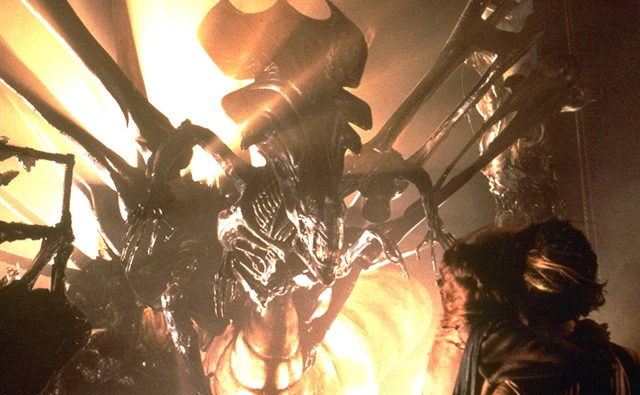
Aliens (1986) · film still
1 / 5
FILM · 1986Aliens (1986)
Hadley's Hope Queen
The original screen Queen tends the LV-426 hive. She detaches from the egg sac and confronts Ripley aboard the Sulaco.
- Designation
- Reproductive adult Queen
- Visual cue
- Wide crest, two pairs of arms, egg-laying apparatus
- Source status
- Released film
Source details
The theatrical film and Winston Studio production account establish this design.
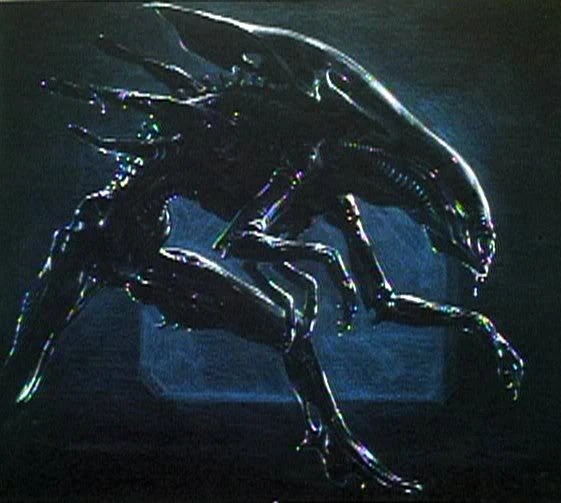
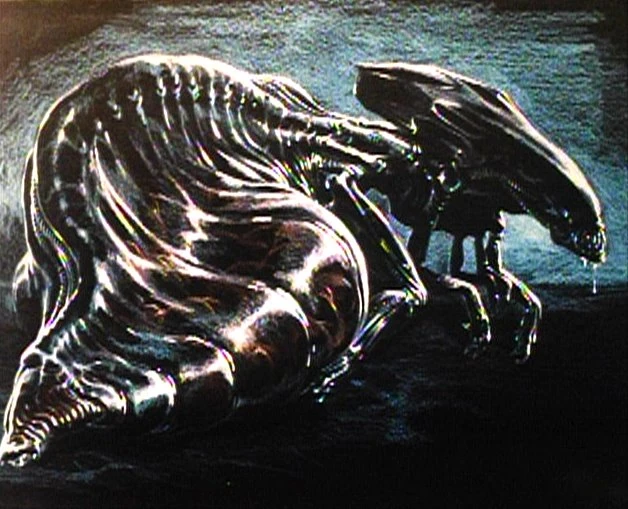
James Cameron · early Aliens design concept
1 / 2
UNFILMED · 1983Alien II treatment (1983)
Cameron's treatment Queen
Cameron's treatment establishes the egg-producing mother and a distinct worker/Warrior division.
- Designation
- Queen in draft narrative
- Visual cue
- Egg sac, large reproductive adult
- Source status
- Unfilmed narrative; later preproduction artwork
Source details
The paintings in this gallery are later Aliens preproduction designs, not illustrations dated to the 1983 treatment.
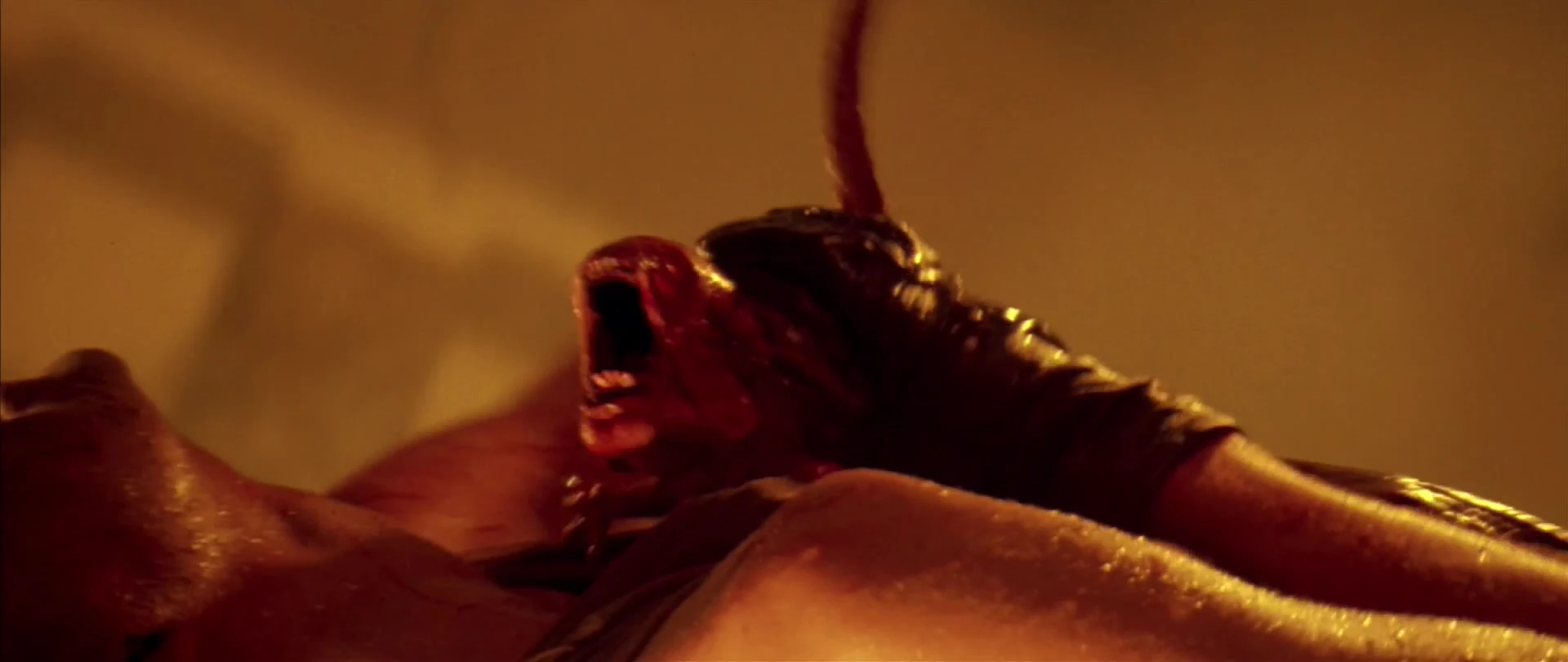
Alien 3 (1992) · theatrical ending; royal juvenile, not a scan of the embryo
FILM · 1992Alien 3 (1992)
Ripley's Queen embryo
Ripley carries an immature Queen. The theatrical and Assembly Cut endings differ in whether it emerges.
- Designation
- Royal embryo / Queen chestburster
- Visual cue
- Immature royal organism
- Source status
- Released film; alternate endings
Source details
The theatrical ending shows the royal juvenile emerging during Ripley's fall; the Assembly Cut omits this emergence. The Royal Facehugger is a separate organism.
Cloned Auriga Queen
No image available.
FILM · 1997Alien Resurrection (1997)
Cloned Auriga Queen
Cloning Ripley recovers the Queen, whose altered genetics result in a second reproductive route and the Newborn.
- Designation
- Cloned Queen
- Visual cue
- Secondary live-birth reproductive system
- Source status
- Released film
Source details
The film presents genetic mixing as exceptional. ADI artists describe reuse of the original head.
Queen Mother
No image available.
COMICS · 1990Aliens: Earth War / Female War
Queen Mother
The Earth War story brings a Queen Mother into a strategy against the infestation on Earth.
- Designation
- Queen Mother
- Visual cue
- Royal organism associated with alien homeworld
- Source status
- Licensed comics and prose adaptation
Source details
Marvel's collected-edition synopsis explicitly identifies the Queen Mother; panel-specific anatomy remains to be checked.
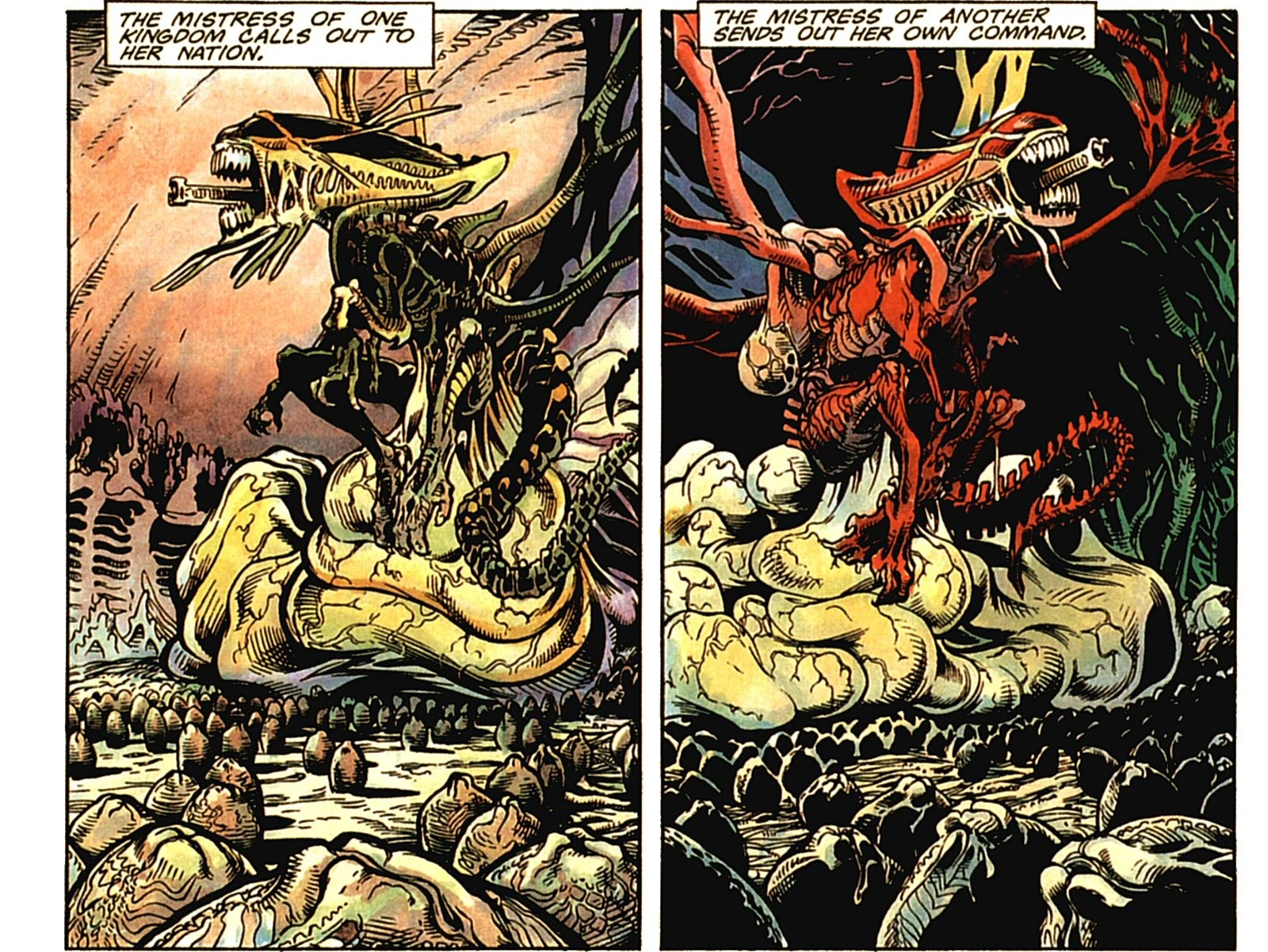
Aliens: Genocide (1991–92) · archived comic panels; issue/page not confirmed
COMICS / NOVELAliens: Genocide
Rival hive monarchs
The death of the leading Queen is followed by a conflict between two alien strains.
- Designation
- Red and opposing Queen forms
- Visual cue
- Rival strains and colonies
- Source status
- Licensed narrative; source-specific titles
Source details
Titan's synopsis confirms the conflict; Red Queen Mother terminology is a secondary lead rather than a film-wide caste.
LV-1201 Queen
No image available.
GAME · 2001Aliens versus Predator 2
LV-1201 Queen
The campaigns encounter the royal organism in the LV-1201 research and hive conflict.
- Designation
- Queen
- Visual cue
- Hive monarch
- Source status
- Released PC game
Source details
The Marine walkthrough records the encounter; the separate Empress profile preserves the game terminology.
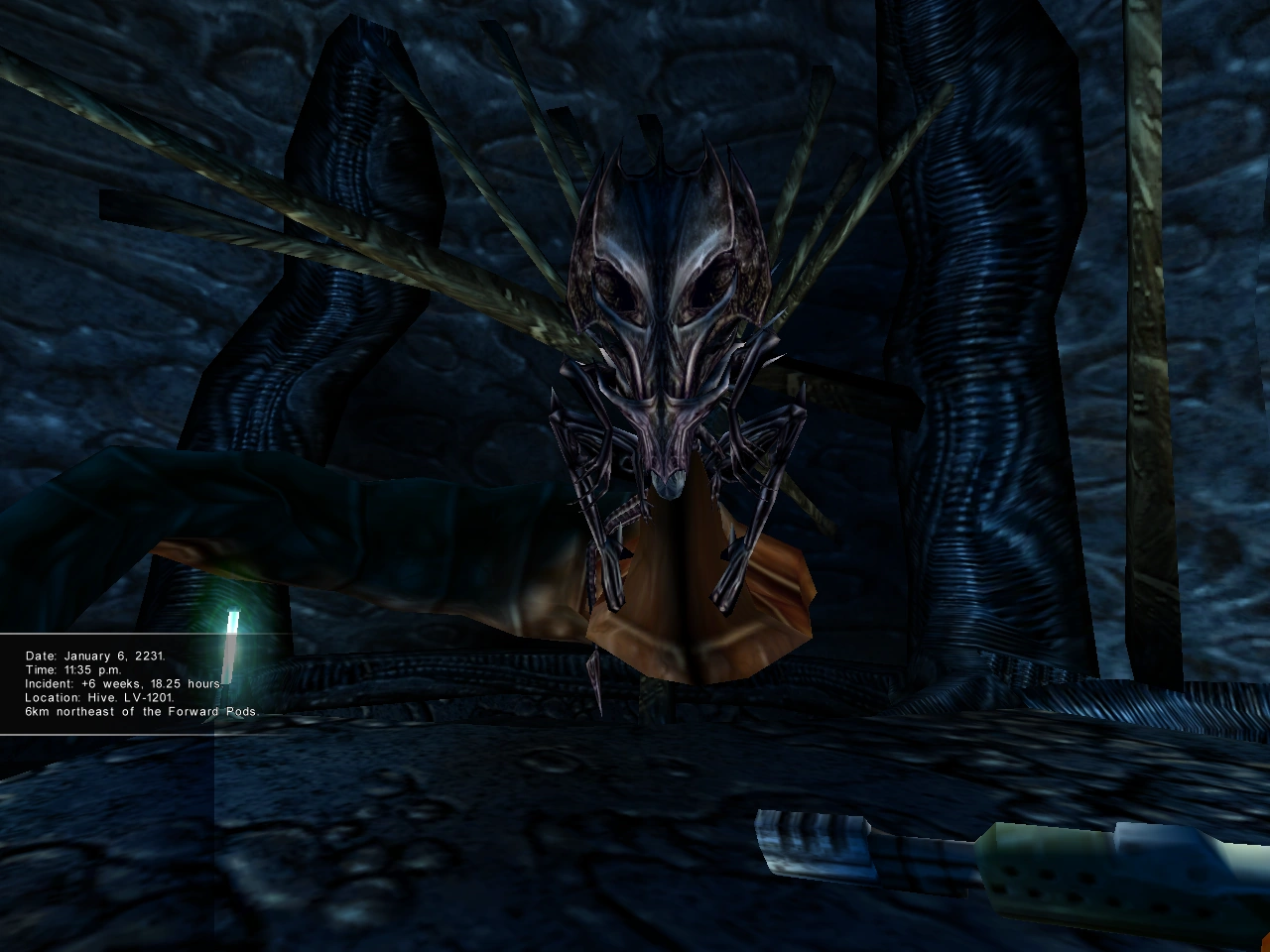
Aliens versus Predator 2 (2001) · archived Empress screenshot
GAME · 2001Aliens versus Predator 2
LV-1201 Empress
The Alien campaign involves protecting the Empress and preserving the hive connection.
- Designation
- Empress
- Visual cue
- Royal hive organism
- Source status
- Released game; archived screenshot
Source details
The campaign guide uses both Queen and Empress terminology. No universal Empress rank is inferred.
Extinction Queen / War Empress
No image available.
GAME · 2003Aliens versus Predator: Extinction
Extinction Queen / War Empress
The Queen creates eggs and develops a hive; War Empress is an optional combat enhancement.
- Designation
- Queen / War Empress upgrade
- Visual cue
- Reproductive unit and combat upgrade
- Source status
- Licensed strategy mechanics
Source details
Original manual and bestiary; the upgrade is game-specific.
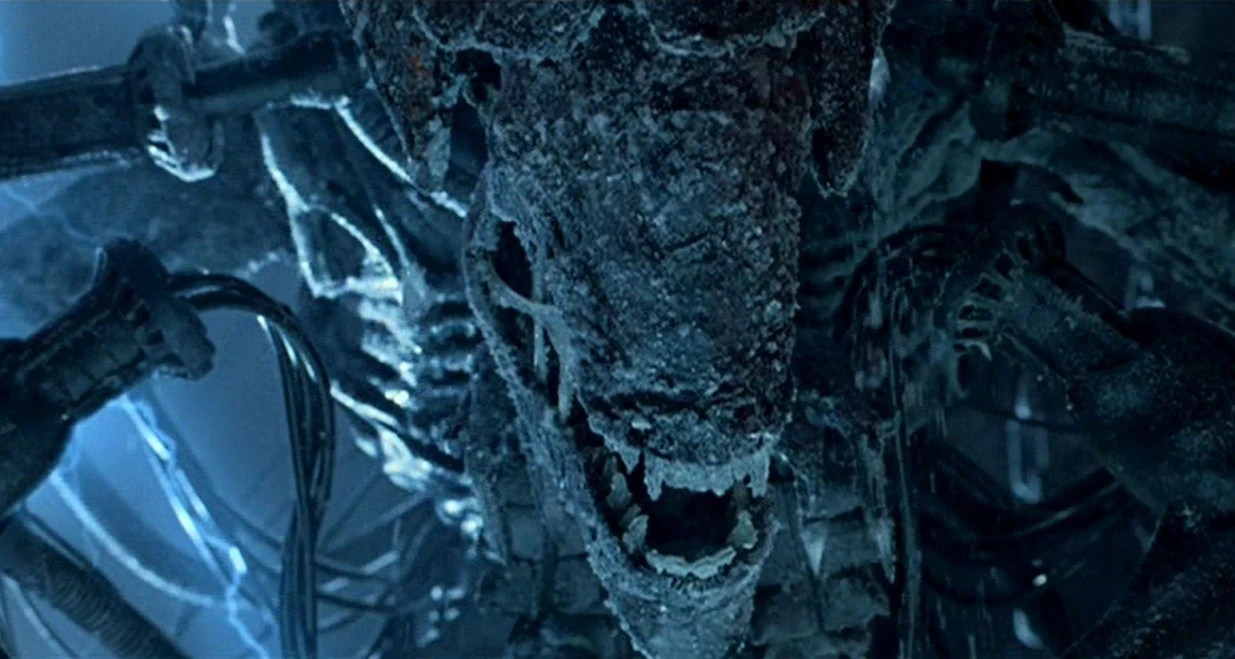
Alien vs. Predator (2004) · film still
1 / 4
FILM · 2004Alien vs. Predator (2004)
Antarctic Queen
The Predators maintain a captive Queen as the source of eggs for their hunting ritual. She breaks free.
- Designation
- Captive Queen
- Visual cue
- Frozen, restrained adult; mobile after escape
- Source status
- Released crossover film
Source details
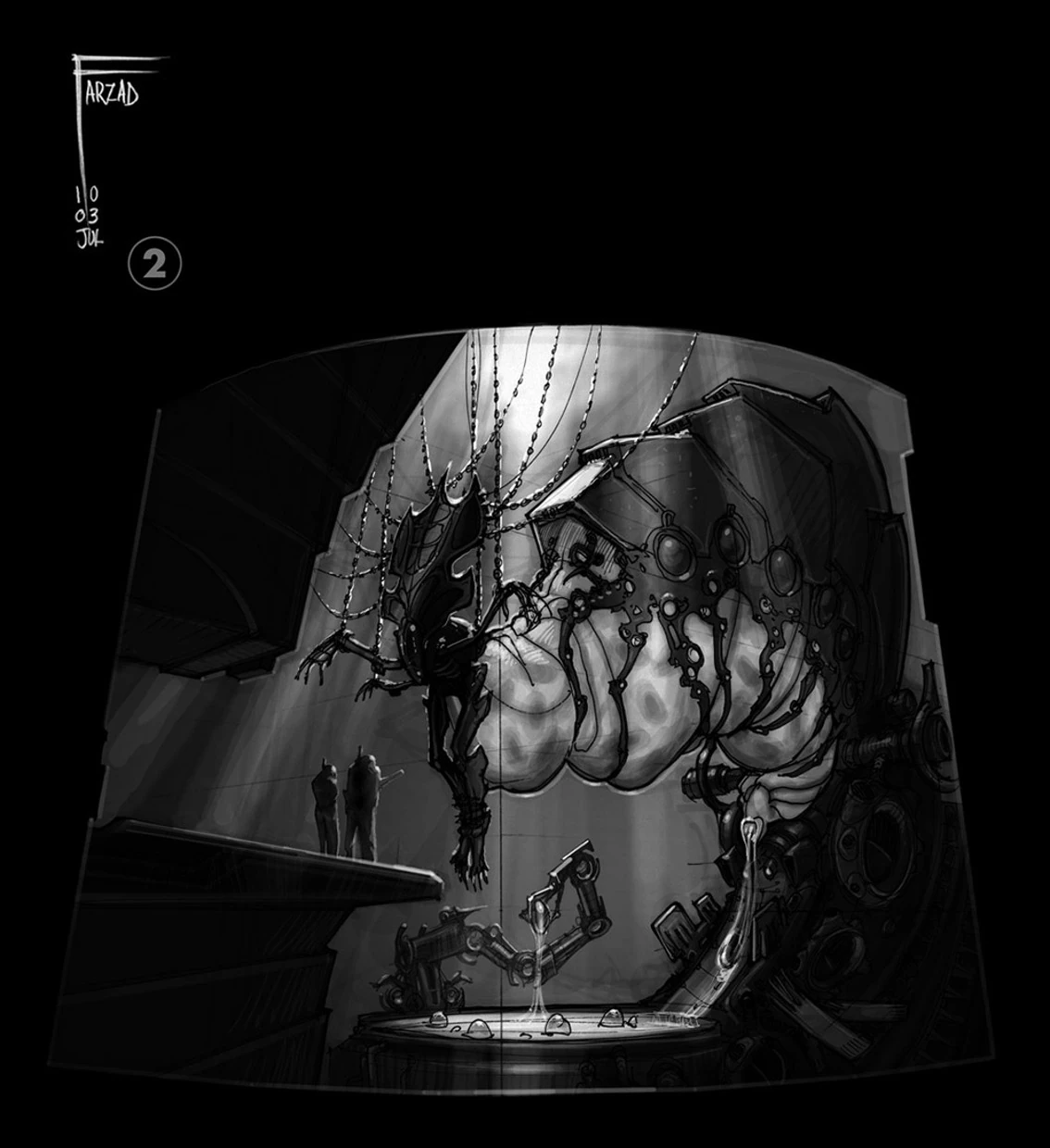
The signed concept illustrations show alternate restraint and chamber designs, not actual film frames.
BG-386 Matriarch
No image available.
GAME · 2010Aliens vs. Predator
BG-386 Matriarch
The Alien campaign frees the Matriarch; the Marine campaign confronts her in the refinery hive.
- Designation
- Matriarch
- Visual cue
- Captive mature Queen
- Source status
- Released game
Source details
2010 campaign and game synopsis; the name identifies this individual rather than a universal caste.
Specimen 6 Queen
No image available.
GAME · 2010Aliens vs. Predator
Specimen 6 Queen
The escaped playable Alien develops into a new Queen in the final cutscene.
- Designation
- Metamorphosed Queen
- Visual cue
- Adult-to-Queen transformation
- Source status
- Released game
Source details
A particular transformation shown by the game; no requirement that all adults follow it.
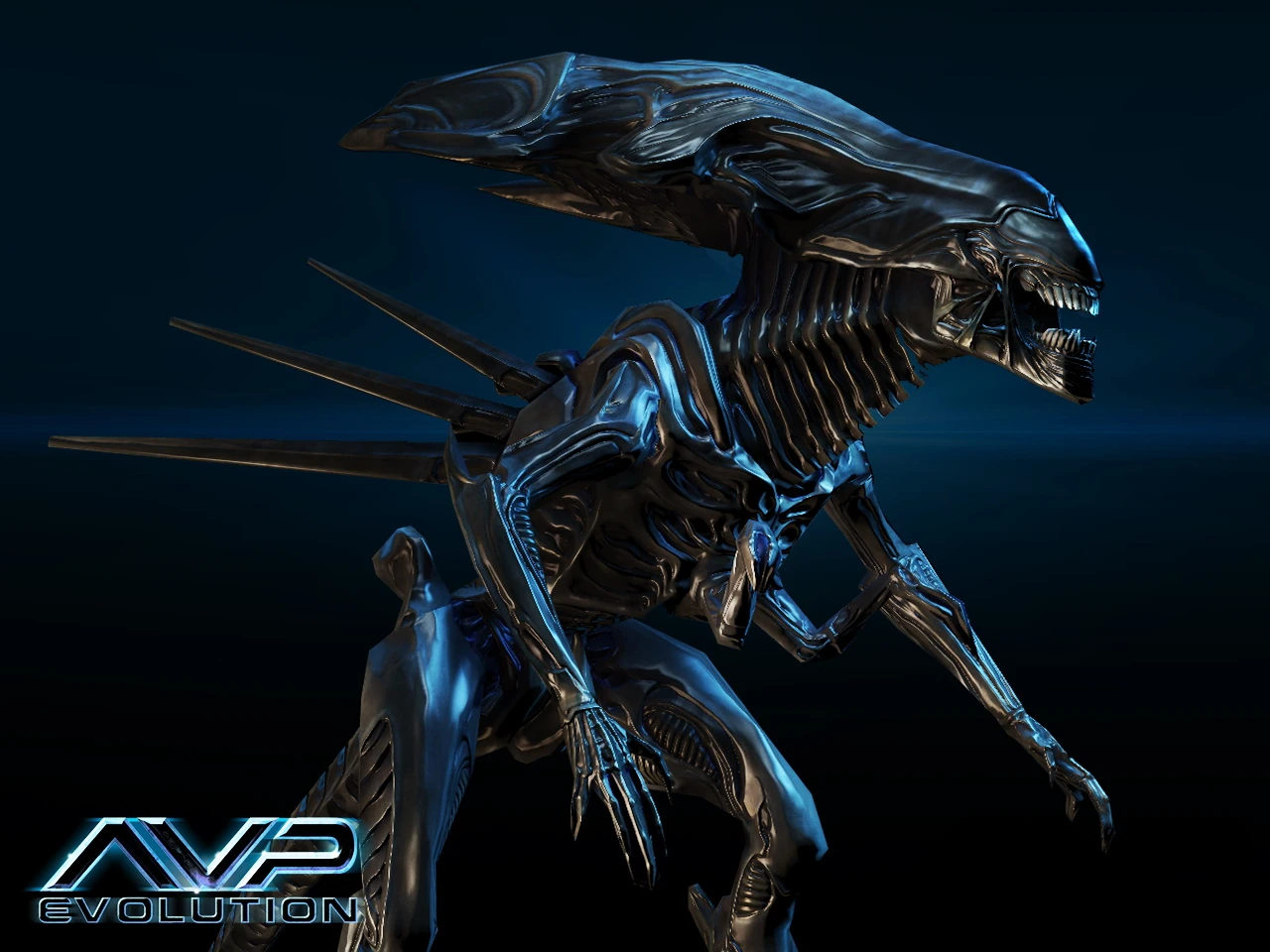
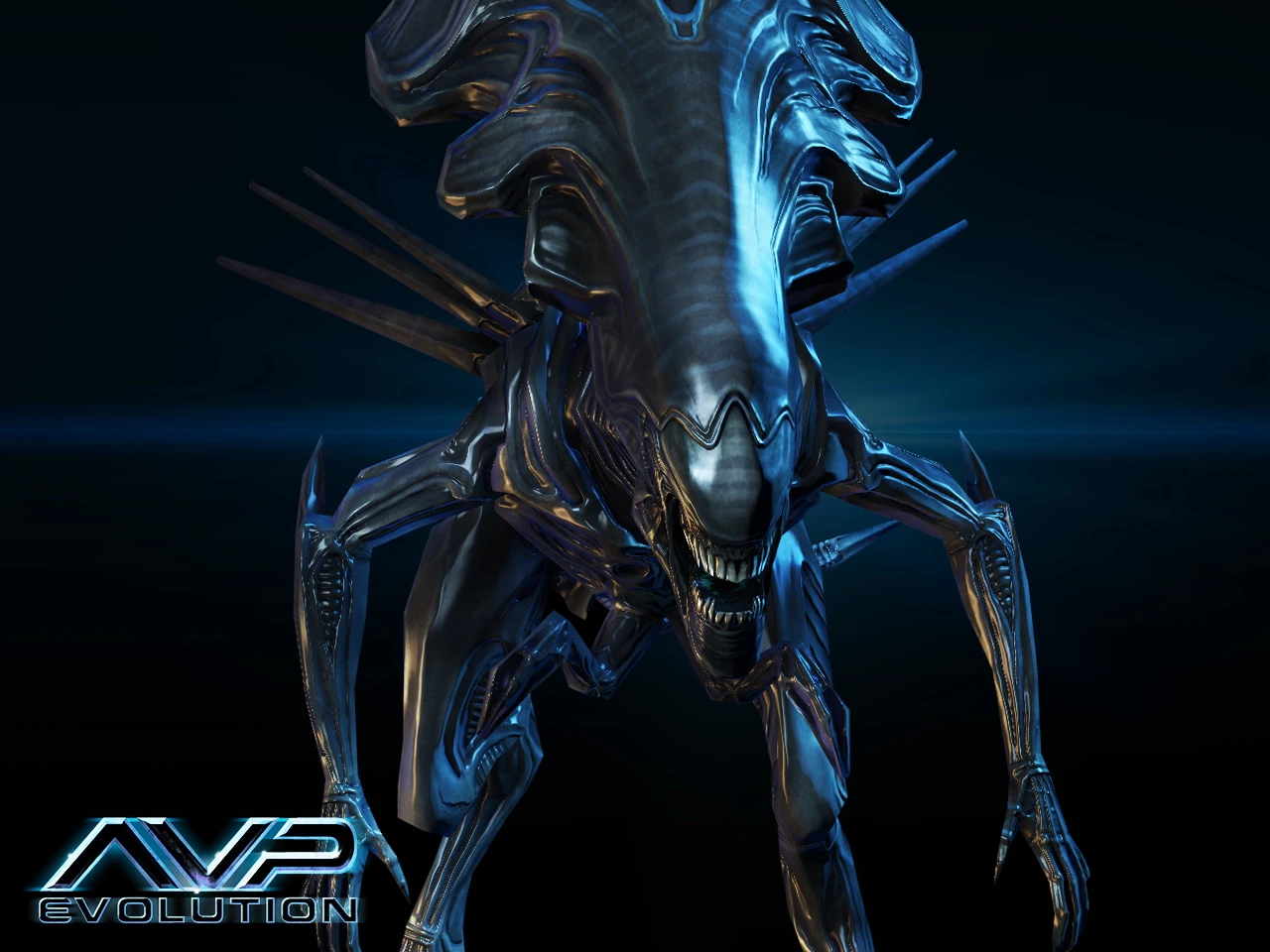
AVP: Evolution (2013) · game-branded model render
1 / 2
GAME · 2013AVP: Evolution
Evolution Queen
The Alien campaign includes rescuing its Queen as a hive objective.
- Designation
- Queen
- Visual cue
- Broad armored crest and secondary arms
- Source status
- Released mobile game
Source details
Game synopsis and two game-branded creature renders in the archive.
Stage VI Queen
No image available.
TABLETOP · 2019ALIEN RPG
Stage VI Queen
The original RPG gives royal development and chemical coordination rules distinct from the films.
- Designation
- Stage VI Queen
- Visual cue
- Royal differentiation and egg production
- Source status
- Licensed original rulebook
Source details
Chapter 11, Alien Species. Later editions require separate treatment.
Pathogen Queen
No image available.
GAME · 2022Fireteam Elite: Pathogen
Pathogen Queen
The DLC's new infestation culminates in a Pathogen Queen encounter.
- Designation
- Pathogen Queen
- Visual cue
- Mutated royal boss
- Source status
- Official expansion
Source details
Cold Iron's official release notes call it the first boss fight in Fireteam Elite.
Lethe Queens
No image available.
GAME · 2023Aliens: Dark Descent
Lethe Queens
Multiple operations on Lethe encounter Queens in the hive and other locations.
- Designation
- Queen
- Visual cue
- Large royal enemy
- Source status
- Released tactical game
Source details
Game enemy guide and campaign records; multiple encounters do not establish a universal hierarchy.
Xenomorph Queen outfit
No image available.
COSMETIC · 2023Dead by Daylight
Xenomorph Queen outfit
The Alien Collection offers a Queen outfit for the Xenomorph Killer.
- Designation
- Legendary outfit
- Visual cue
- Queen-shaped playable cosmetic
- Source status
- Licensed crossover cosmetic
Source details
Behaviour's official announcement documents the outfit, not a separate reproductive gameplay caste.
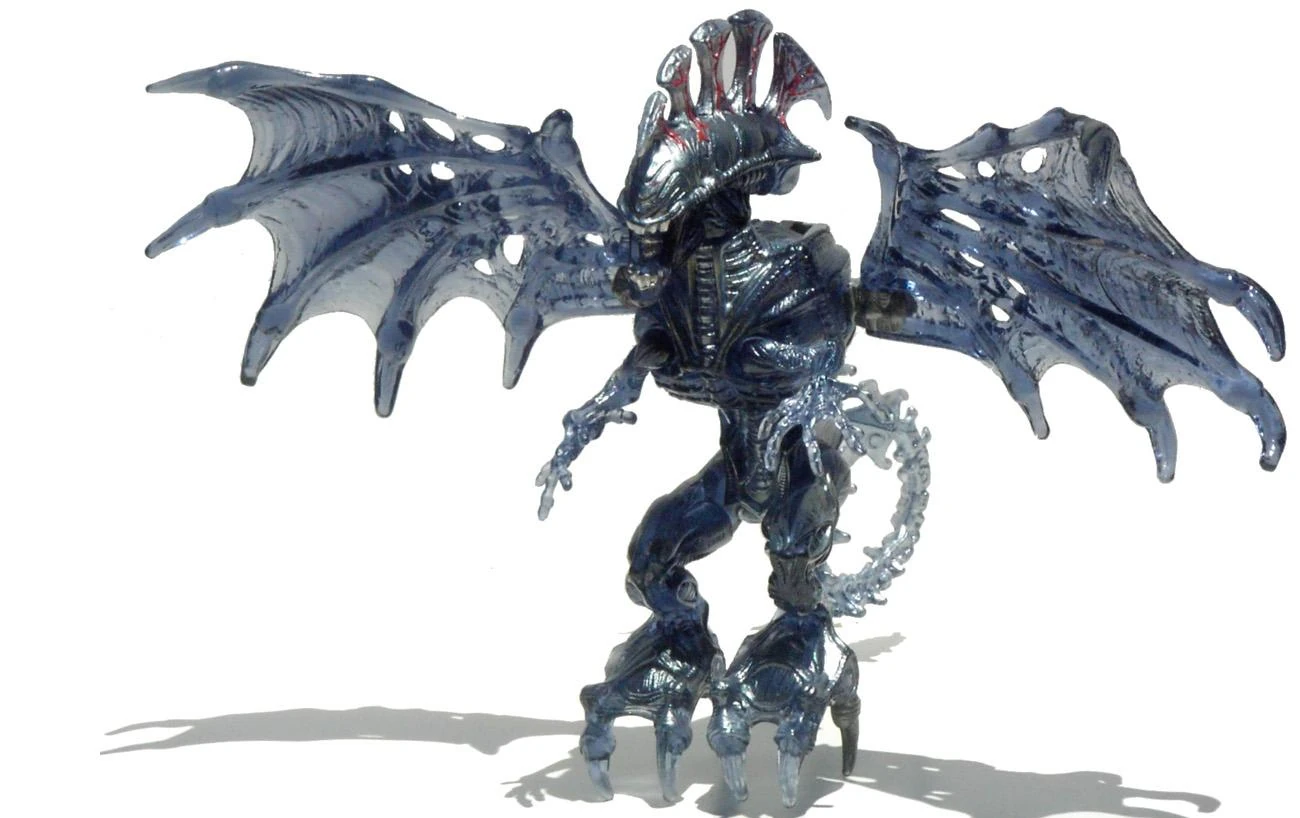
Kenner Flying Queen · licensed toy, not a film creature
MERCHANDISE · 1990sKenner Aliens toy line
Kenner Flying Queen
The winged Queen belongs to Kenner's expanded action-figure concepts and related promotional media.
- Designation
- Flying Queen Alien
- Visual cue
- Membranous wings, stylized royal crest
- Source status
- Licensed toy design
Source details
The archived photo is a toy; the commercial production history confirms the named concept.
Terminology and classification
Section titled “Terminology and classification”The Xenomorph Queen, also called the Alien Queen, is the large reproductive adult introduced on screen in Aliens (1986). She produces eggs and occupies the center of a developed hive. Her broad cranial crest, four arms, powerful tail and enlarged egg-producing structure distinguish her from the familiar Drone and Warrior. 1 5
The word Queen may denote a reproductive caste, a particular individual, a gameplay class or a collectible design. Matriarch is used for the BG-386 individual in the 2010 game; Empress occurs in licensed media including the 2001 PC game, while War Empress is a combat upgrade in Extinction. The Queen Mother and rival monarchs belong to expanded-universe narratives. These terms are not interchangeable, nor do they establish one hierarchy for every continuity. 14 17 18 26 28 41
Earliest documented design
Section titled “Earliest documented design”The 21 September 1983 treatment of Alien II already includes the Queen as the source of the eggs and explicitly distinguishes workers from Warriors. The finished film preserves the Queen but abandons some of the draft’s biological ideas. The first film’s cocoon sequence, restored in 2003, provides a competing reproductive interpretation rather than a depiction of a Queen. 2 3
Design history
Section titled “Design history”Select a year to examine the film, draft and production history. The profiles above provide the appropriate visual reference when an identified image is available.
1983Alien II treatmentUNFILMED
Cameron’s early treatment explicitly introduces the egg-producing mother, with Warriors protecting the colony and small albino Drones attending captives and moving eggs. The Queen eventually tears away from the egg sac to pursue Ripley. The draft’s final confrontation differs in its details from the released film; it is evidence of the concept’s development, not a second screen appearance. 3 4
The 1985 screenplay develops the social-insect analogy. Cameron’s later paintings establish the Queen’s dramatic nonhuman silhouette, with a long crest and four arms.
1986Aliens — Hadley’s HopeFILM
The first released adult Queen is discovered in the atmosphere processor on LV-426, in a chamber filled with eggs and supporting resin. Her size, broad head crest, two large arms and two smaller arms contrast with the ridged hive adults. When Ripley threatens the eggs, the encounter briefly becomes a standoff. Ripley destroys eggs; the Queen tears herself free of the ovipositor and pursues the escaping survivors. She reaches the Sulaco and fights Ripley in a power loader before being expelled into space. 1 5
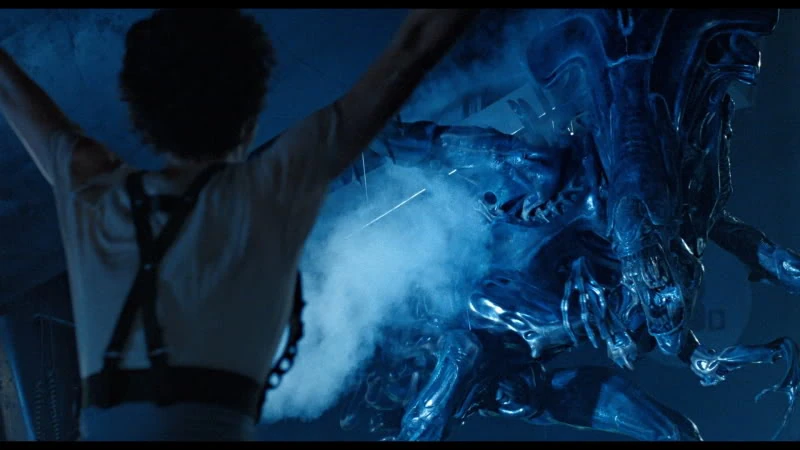
The film neither shows her own birth nor explains how the initial royal embryo was produced. It also does not establish that the Queen survived the airlock. Her role as a reproductive monarch should not be mistaken for evidence of every subsequent expanded-universe hierarchy.
1992Alien 3 — royal embryoFILM / EDITIONS
Ripley’s medical examination establishes that she carries a Queen embryo. The adult Runner does not kill her, suggesting recognition of the embryo or its reproductive significance, although the film does not explain the sensory mechanism. The company wants the creature alive. In the theatrical ending the immature Queen emerges as Ripley falls; the Assembly Cut omits the emergence. 6
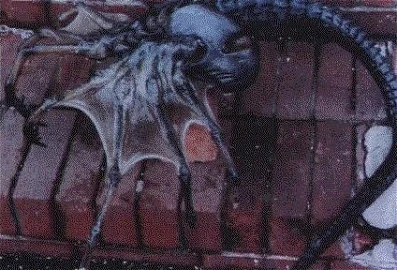
A distinctive webbed facehugger appears briefly in the Assembly Cut. Production imagery reveals more of the design. The idea that a single royal facehugger can implant a Queen and a second protective alien is elaborated in licensed biology, but the placement and origin of the Sulaco egg and the exact sequence of infections remain disputed. 6 12 13 36
1997Alien Resurrection — cloned QueenFILM
The USM Auriga researchers clone Ripley from recovered genetic material to obtain the Queen embryo carried by her predecessor. The Queen is removed from Ripley 8 and used for egg production. The hybridization of human and alien genetic material produces reciprocal changes: Ripley gains alien traits and the Queen develops an exceptional second reproductive mechanism. Instead of producing another ordinary egg, she delivers the Newborn, which rejects and kills her. 7 36
This live birth is an aberration of the cloning program, not a standard reproductive stage. The film does not provide a complete genetic mechanism or demonstrate that the new reproductive route is shared by naturally developing Queens. The effects artists recalled borrowing the 1986 Queen head from Bob Burns for their work on the sequel. 8
2004Alien vs. Predator — Antarctic QueenCROSSOVER FILM
The pyramid beneath Antarctica contains a restrained Queen that is awakened for the Predators’ hunt. Her eggs supply the facehuggers used to infest sacrificial hosts. When the Xenomorphs break the captive Queen free, she becomes an active opponent rather than a stationary egg producer. She pursues the survivors to the surface; Lex and Scar use the heavy industrial structure to pull her into the sea. Her ultimate survival is not shown. 9 8
The film emphasizes captivity, ice, and scars. Farzad Varahramyan’s signed 2003 concept drawings explore the egg chamber, different restraint poses and the damage inflicted on the crest. The drawings document proposed design choices; they do not prove every concept was filmed. 33 34
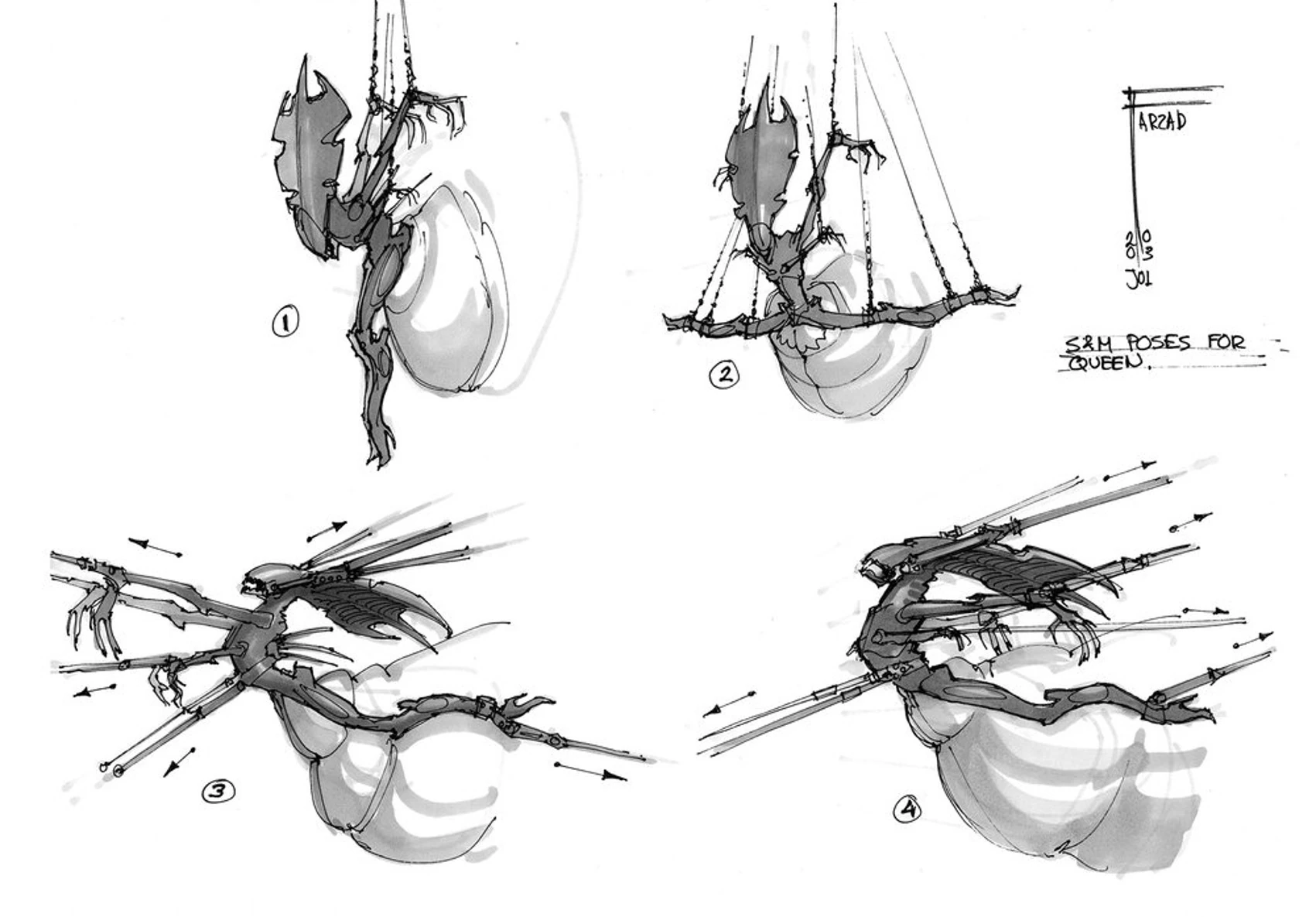
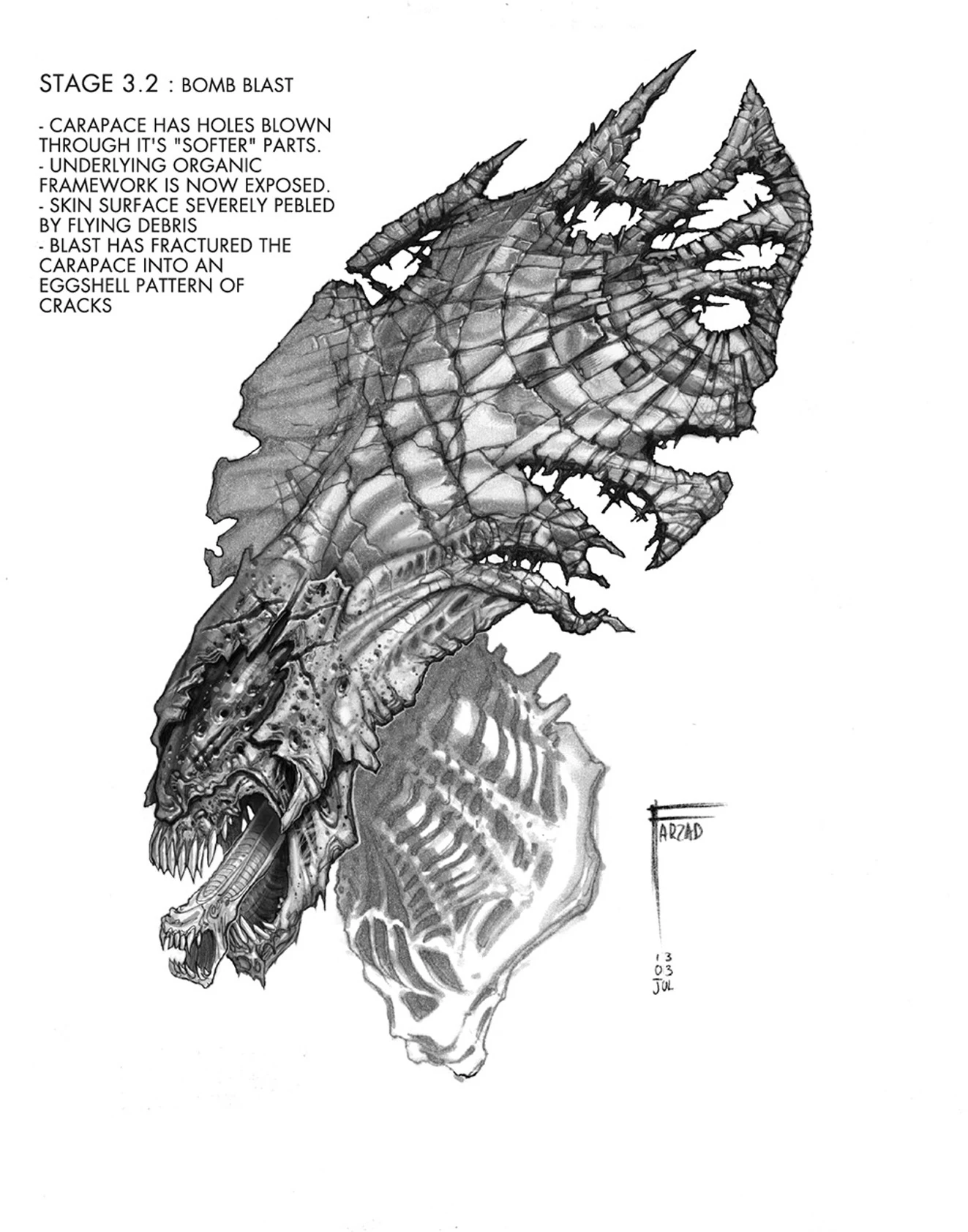
2007Requiem — Predalien reproductionRELATED / CONTESTED
The Predalien in Requiem directly deposits embryos into human hosts without using the conventional egg-and-facehugger route. The organism lacks the fully developed adult Queen silhouette shown in 1986 and 2004. It is therefore a related reproductive form, not another confirmed example of the conventional adult Queen. 10
StudioADI discussed an alternate tail-based implantation concept, an example of the difference between proposed and released reproduction. Interpretations of the Predalien as a young Queen should be attributed to their specific sources; the released behavior alone does not establish a universal juvenile-Queen phase. 11
Biology and life cycle
Section titled “Biology and life cycle”- QueenReproductive adult
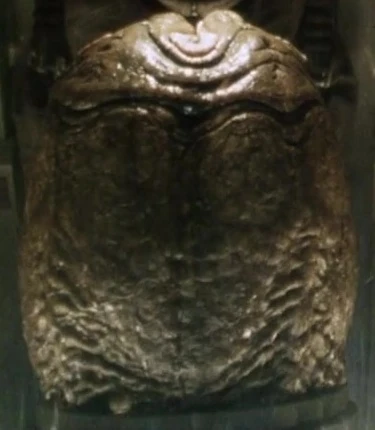 OvomorphEgg
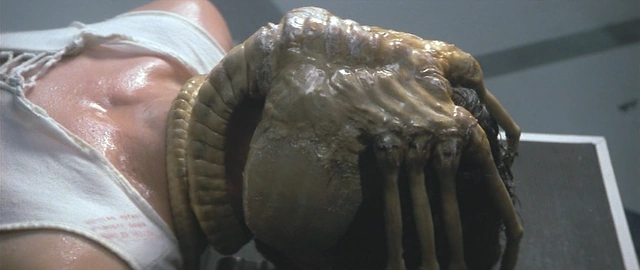 FacehuggerHost implantation
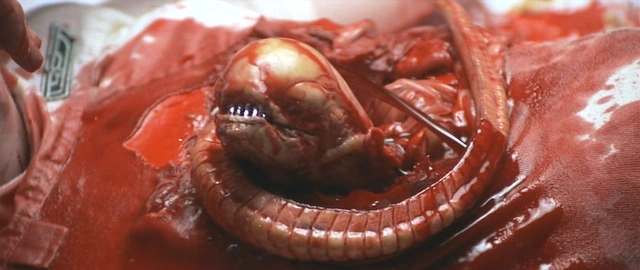 ChestbursterJuvenile
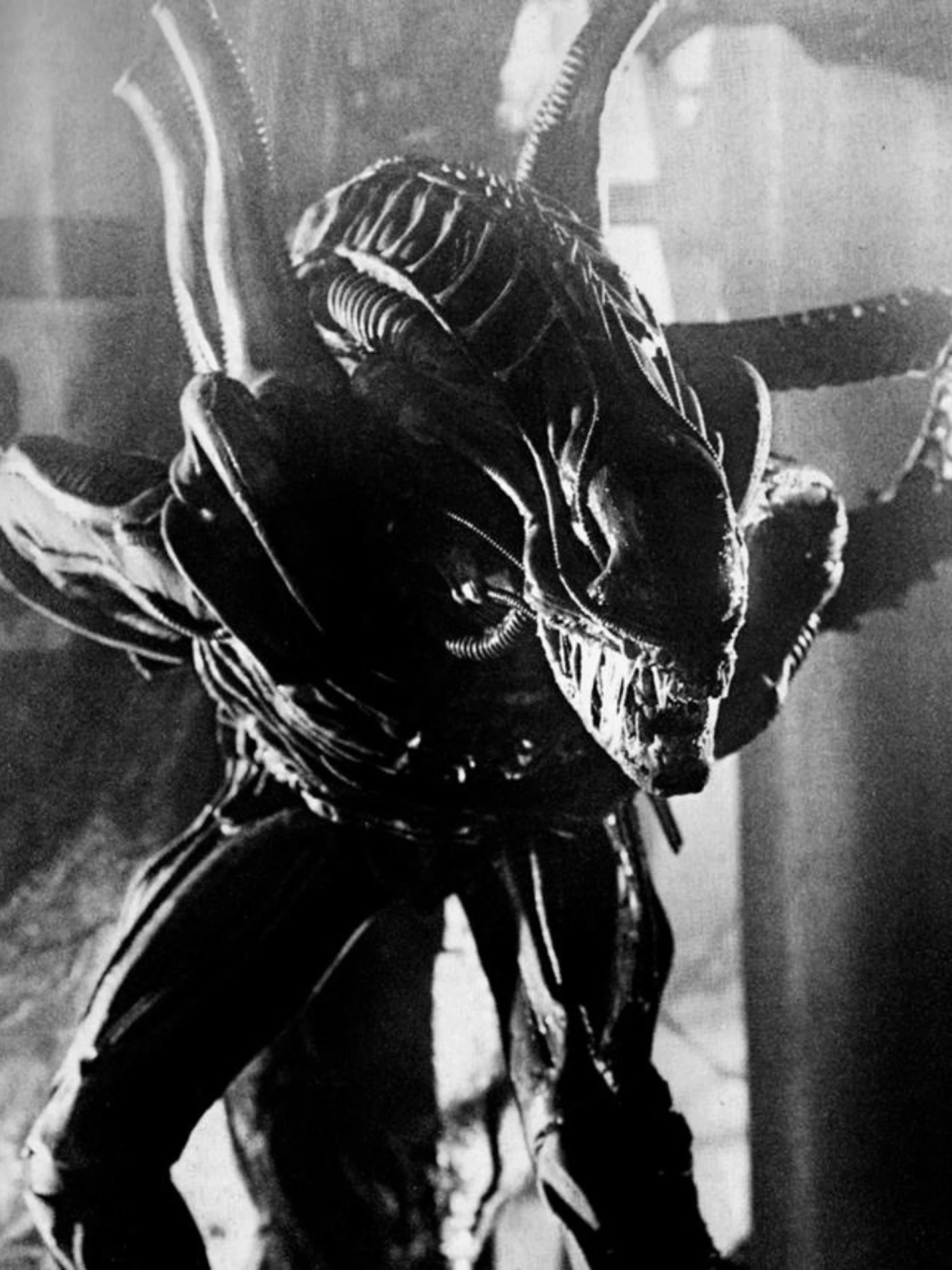 AdultOne possible adult form
This diagram shows the egg-based reproductive route, not an inevitable Queen-to-Queen life cycle. Royal embryos, later metamorphosis and queenless reproduction are distinct interpretations.
01Anatomy and morphology
The standard adult Queen retains the biomechanical vocabulary of the ordinary Xenomorph while altering the body plan dramatically. 1 5 9
| Structure | Screen observation and limits |
|---|---|
| Head crest | Broad, elongated crown with lateral projections; much wider than an ordinary adult’s head. Its exact sensory or signaling function is not established. |
| Jaws | Outer teeth and extendable inner jaws; the power-loader confrontation provides a close view. |
| Arms | Two large grasping limbs and two smaller ventral arms; unlike the usual adult pair. |
| Legs | Large jointed legs support a mobile, forward-leaning stance after detachment. |
| Back and tail | Long dorsal projections and a powerful segmented tail; the tail is used in combat. |
| Egg-laying organ | Enlarged abdominal egg sac/ovipositor, supported by the nest when active. |
Do not use the dimensions of a practical puppet as biological measurements without a source that explicitly makes that connection.
02Egg production and life cycle
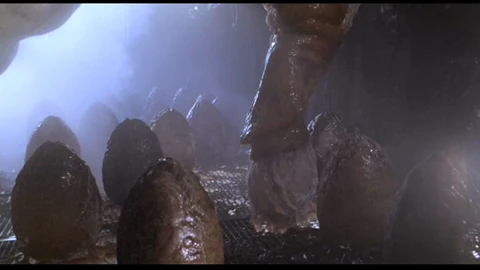
The Queen lays ovomorphs. An egg contains a facehugger, which transfers an embryo into a host. A chestburster emerges, grows and molts into an adult. The Queen is an adult reproductive specialist; she is not the egg, facehugger or chestburster herself. 1 2
Whether every hive needs a Queen is unresolved across the franchise. The 2003 Director’s Cut of Alien restores a cocoon sequence suggesting host-to-egg conversion; the 2019 RPG separately formalizes ovomorphing. Neither the deleted scene nor a licensed alternative should be erased because a Queen appears in the sequel. 2 12 13
03Royal development and succession
The released films establish a royal embryo in Ripley but do not provide a universal sequence from Drone or Warrior to Queen. In AVP (2010), Specimen 6 becomes a Queen after its adult phase. In AVP 2: Primal Hunt, a server option allows players to molt into a Queen after accumulating a configurable number of kills. The latter is a gameplay rule rather than anatomical evidence. 6 15 18
The original 2019 RPG places the Queen in Stage VI alongside the Praetorian and Crusher, and distinguishes royal facehugger reproduction from later caste changes. Its royal jelly and Praetorian succession model is licensed setting biology; it is not evidence that every filmed Queen must once have been a Praetorian. 12 13
04Ovipositor, mobility and regeneration
The 1986 Queen occupies an enlarged egg-laying structure held within the nest. Under threat she tears herself away from it, enabling rapid movement. The 2004 Queen is held by external restraints as well as her reproductive apparatus. The films do not show an unambiguous complete cycle of regrowing a detached ovipositor. Strategy-game mechanics that permit a Queen to establish a new laying position should be identified as such. 1 9 16 17
05Intelligence, coordination and signaling
In Aliens, Ripley’s threat to the eggs is followed by the Queen appearing to restrain the surrounding adults. The Queen also follows the fleeing humans and confronts Ripley again aboard the Sulaco. The scene supports flexible behavior and apparent coordination, but neither telepathy nor a particular pheromone concentration is directly measured on screen. 1
In the 2019 RPG, chemical signals and royal jelly influence caste development and colony behavior. Expanded-universe stories present more far-reaching hive coordination, including disruptions after the death of a Queen. These mechanisms vary by source. 12 13 28
06Strength, attacks and defenses
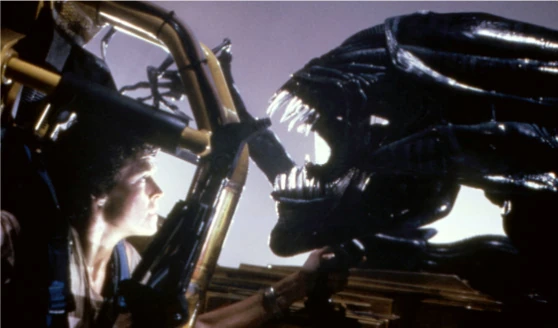
A mobile Queen uses her reach, claws, inner jaws and tail. In the Sulaco hangar she withstands substantial physical resistance from a powered industrial loader. Her size grants obvious leverage, but she can be injured and overcome. The wider Xenomorph lineage’s corrosive blood is an additional hazard; the film does not quantify Queen-specific acid strength. 1 2
The licensed Aliens tabletop game abstracts the encounter into claw, tooth and tail attacks, charge and melee options. These are separate game rules, not numerical film statistics. 31
07Genetic influence and unusual reproduction
The Auriga Queen is altered through the cloning of a human host and alien embryo. The Newborn is the result of this exceptional experiment. The Predalien’s direct implantation in Requiem is another distinct route shown in a crossover; the Pathogen Queen belongs to a mutated infestation in the 2022 game expansion. These examples should not be combined into a single mechanism without supporting evidence. 7 10 22 23
The biological sex of non-reproductive castes, fertilization, chromosome system and rules governing genetic inheritance are not comprehensively established by the films. The label Queen indicates an observed reproductive role; parthenogenesis or other reproductive mechanisms require source-specific qualification.
08Dormancy, age and survival
The Antarctic Queen survives prolonged captivity and periodic awakening in the crossover film. The BG-386 Matriarch is also presented as a long-held captive in the 2010 game. Both support the possibility of extraordinary persistence in those stories. Exact ages, universal maximum lifespan, oxygen requirements and metabolic details are not consistently established. 9 18 39
The Hadley’s Hope Queen is expelled into space; the Antarctic Queen is pulled below the water. Neither ending is proof of a return in a later story.
09Royal jelly and colony products
Royal jelly becomes a major resource in licensed works. The Hive / Alien Harvest storyline involves an attempt to obtain a valuable substance produced by royal organisms. The 2019 RPG connects royal jelly with further caste specialization. Treat those uses as named fictional substances within their respective publications, rather than proof that the films show jelly production or that each strain produces an identical compound. 12 13 27 28
Caste system and social role
Section titled “Caste system and social role”The ordinary Queen is central to the hive in the films: she produces the eggs while other adults capture hosts and protect the colony. This is a behavioral division, not a complete filmed taxonomy. Some licensed works expand it into formal castes and larger royal structures. 1 3 12
| Source | Royal mechanism or hierarchy | Scope |
|---|---|---|
| Alien Director’s Cut | Host conversion into an egg-like form | Restored alternate reproductive sequence; no Queen shown. |
| Alien II treatment | Queen, Warriors and small albino workers | Unfilmed draft. |
| Aliens | Queen, eggs and ridged hive adults | Released film; no formal rank chart. |
| Alien 3 | Royal embryo within Ripley | Released film; implantation sequence unresolved. |
| Alien Resurrection | Cloned Queen and exceptional live birth | Specific genetic experiment. |
| AVP 2 | Queen, Empress and multiplayer Queen molt | Licensed PC game and expansion. |
| AVP: Extinction | Queen production unit and War Empress upgrade | Licensed strategy game. |
| AVP (2010) | Matriarch and Six’s adult-to-Queen development | Individual campaign events. |
| ALIEN RPG (2019) | Royal facehugger, Stage VI Queen and succession | Licensed developmental model. |
| Earth War / Female War and Genocide | Queen Mother, royal conflict and hive disruption | Licensed comics and prose narratives. |
A Queen’s ability to influence a colony does not necessarily mean every individual is under constant conscious control. Nor should the name Queen Mother be applied to an ordinary Queen simply because she is large, old or powerful. The Praetorian, Crusher, royal guard, King and artificial royal hybrids will require their own records where source-specific evidence warrants them.
Appearances across media
Section titled “Appearances across media”Film appearances are covered in design history. The entries below distinguish named Queens, implied Queens and adaptations from game mechanics and cosmetics.
Licensed video games
Section titled “Licensed video games”2001Aliens versus Predator 2GAME
The campaigns on LV-1201 intersect around scientific exploitation, Predator hunting and a native alien colony. The campaign guide distinguishes Queen encounters from the Empress and the attempt to disrupt her connection with the colony. The Empress title is preserved as a game-specific identity. 14
The 2002 Primal Hunt readme additionally documents the configurable multiplayer Queen molting rule. This is important evidence about what the game permits, not an experiment demonstrating Xenomorph development. 15
2003Aliens versus Predator: ExtinctionGAME
The real-time strategy game treats the Queen as the central production unit of a growing colony. Egg production and the acquisition of hosts underpin the growth of the Alien faction. The game distinguishes Drones from Warriors according to hosts and unit roles, rather than adopting the 2019 RPG’s adult differentiation model. 16
The War Empress upgrade improves the Queen’s combat capabilities in a hive at war. The bestiary also describes special upgraded interactions with other Alien units. War Empress is a specific gameplay upgrade, not evidence that the 1986 Queen was an incomplete Empress. 17
2007AVP: Requiem — PSPGAME
Rebellion’s handheld adaptation includes a Queen. Developer Alex Moore notes that the game followed elements of earlier film development and did not feature the Predalien that appeared in the completed film. The game’s Queen is therefore a particularly clear example of adaptation divergence, rather than proof that the theatrical film contained a separate adult Queen. 19
2010Aliens vs. Predator — Matriarch and SixGAME
On BG-386 the Matriarch is held in a Predator-built structure and exploited by Weyland-Yutani. Specimen 6 escapes confinement, frees the Queen and serves the colony. The Marine storyline leads to a confrontation with the Matriarch in the refinery hive. The Alien ending later depicts Six as a new Queen aboard a human ship. These are two distinct individuals and the final transformation belongs to this particular narrative. 18 39
The conclusion is an explicit example of adult-to-Queen development, but does not establish that every adult can follow the route under the same circumstances.
2013AVP: EvolutionGAME
The mobile action game follows competing Alien and Predator campaigns. The Alien’s objectives include freeing its Queen and protecting the colony. Two archived game-branded renders provide the frontal and side views of the creature, including the expanded crest, dorsal spines and smaller secondary arms. 20
2014Alien: Isolation — implied QueenIMPLIED
The game depicts eggs, facehuggers and a large infestation aboard Sevastopol, but does not present an adult Queen encounter. Lead designer Gary Napper explained in a post-release interview that the team wanted to imply a Queen without introducing a boss battle, consistent with the game’s survival-horror focus. The presence of a Queen is an authorial implication, not a photographed individual whose anatomy or death can be catalogued. 21
2021Aliens: Fireteam EliteGAME
The base game’s final campaign culminates in a hive escape with a Queen threat. The encounter emphasizes escape rather than a conventional boss victory. The later official DLC notes explicitly describe the Pathogen Queen as the game’s first boss fight; the distinction matters when cataloguing the ordinary Queen and the mutated variant. 22 40
2022Fireteam Elite: PathogenGAME EXPANSION
The expansion introduces a new pathogen-infested region, new enemy forms and the Pathogen Queen boss. Cold Iron’s developer feature explicitly identifies her as the concluding threat in the new campaign, while the release notes distinguish the encounter from the base game. Her origin belongs to the expansion’s pathogen storyline, not the standard film Queen developmental sequence. 22 23
2023Aliens: Dark DescentGAME
The tactical game features multiple Queen encounters on Lethe, including early and later operations. Queens are unusually powerful enemies requiring squad coordination. The game distinguishes ordinary hive adults, specialized combat forms and Queens. Their occurrence in several operations should not be turned into an unsupported claim that a single planet-wide Empress controls every nest. 24
2023Dead by Daylight — Alien CollectionCOSMETIC
Behaviour Interactive’s official collection identifies a legendary Xenomorph Queen outfit alongside the Grid and Clone outfits. The Queen is represented within the Xenomorph Killer’s existing mechanical framework. A cosmetic model is valid licensed visual evidence, but it does not show the Queen laying eggs or establish new reproductive biology. 25
2026Aliens: Fireteam Elite 2GAME / SECONDARY
A published walkthrough describes a Queen confrontation during the final battle. This entry is retained as a secondary game record pending direct inspection of the final campaign, creature model, and terminology in the game’s own materials. It is not assigned an image from the earlier Fireteam titles. 37
Additional games and appearance leads
The Queen also has a long history in older arcade, console and mobile titles. The following media records are priorities for checking boss sprites, stage names, manuals and exact appearances; this list is not a claim that every version uses the same Queen or that every port preserves the encounter.
- Aliens — Konami arcade
- Alien Trilogy
- Aliens: Infestation
- Aliens: Colonial Marines
- Aliens: Armageddon — investigate the arcade Flying Queen separately from the Kenner toy.
Additional sprites, handheld adaptations and regional releases require exact identification before their images are assigned to a profile.
Tabletop, RPGs and miniature games
The 2019 ALIEN RPG places the Queen in Stage VI and provides an explicit developmental framework, including different facehugger and adult castes, royal jelly, and hive formation. Its distinction between royal implantation and subsequent adult specialization provides a useful comparison with the films. Chapter 11, particularly pp. 302–315, is the relevant printed source. The Evolved Edition is a separate 2025 rules edition; changes need their own audit. 12 13 38
The original licensed Aliens tabletop rulebook includes section 2.3, Ripley vs. the Queen. It has three phases: Ripley, Queen and combat. The Queen moves up to three spaces, seeks adjacency and rolls for charge, attack or melee. Ripley can sweep, defend, move or open the airlock under specific conditions. The claw, tooth and tail results are game abstractions of the film encounter. 31
Comics — Queen Mother and Earth War
Marvel’s collection of the early Dark Horse stories identifies the Queen Mother in the synopsis of Aliens: Earth War (later published as Female War). The original four-issue 1990 storyline involves a plan to capture a powerful royal organism to confront the infestation on Earth. This is a distinct expanded-universe continuation, not the events of Alien 3. The titles Earth War and Female War refer to the same underlying comic storyline, though the prose adaptation and revised character names differ. 26 29
The Queen Mother is an important profile in her own right. Terms such as Supermother, Great Mother, and proposed ranks above an Empress need verification in the actual editions before being presented as universally equivalent. 29 41
Genocide, Hive and Alien Harvest
Genocide explores competing Xenomorph strains after the death of a leading royal organism. Titan Books’ novel omnibus explicitly identifies the resulting struggle for dominance. The red and black colonies and their monarchs offer a distinct account of royal conflict and succession. Secondary accounts identify a Red Queen or Red Queen Mother; the exact wording, coloration and individual appearances should be checked in the original four-issue comic and novel before assigning them to a universal taxonomy. 28 30
In Hive (also published as Harvest) and its prose counterpart Alien Harvest, royal jelly becomes a target of human exploitation, including an effort to use a cybernetic Alien to obtain the substance. Marvel’s collection synopsis names the Queen Mother as its source. 27 28
Novels, novelizations and audio
Alan Dean Foster’s film novelizations are relevant alternate descriptions of the Hadley’s Hope Queen, royal embryo and Auriga Queen. They should be checked independently against the respective films; passages from the novelizations are not automatically filmed dialogue. Earth Hive, Nightmare Asylum, The Female War, Genocide and Alien Harvest adapt or develop earlier licensed comic narratives. The Titan omnibus publication record confirms the premise of the rival-strain conflict and royal jelly storyline. 26 27 28
The Hadley’s Hope story also appears in novel and audio adaptations, including River of Pain. The Queen’s exact appearances and terminology in these editions remain to be verified before quoting or adding new individual profiles.
Crossovers and hybrid royal concepts
The AVP films, Extinction, the PSP adaptation and 2010 game provide several distinct royal interpretations. The Predalien’s reproductive behavior should be kept separate from the 2004 Queen and from game-specific Predator-hosted royal forms. Comic crossovers such as Aliens/Vampirella, Alien vs. X-Men and Aliens vs. Avengers contain further royal or hybrid leads. They require issue-specific review before their names, host identities and biology are treated as established.
The Dead by Daylight Queen is a confirmed licensed cosmetic. Other crossover appearances and finisher animations should be catalogued as their own media evidence, not retroactively added to a film chronology. 9 10 17 18 25
Merchandise, Flying Queen and toy-line continuity
Kenner’s Flying Queen expands the royal body plan with large wings, an example of licensed toy-line invention. An interview about the Operation: Aliens promotional history identifies the animated Flying Queen/Atax commercial. This is a separate visual and commercial continuity, not a deleted winged form from Cameron’s film. 32
Later Queen collectibles may reproduce the 1986 silhouette or the 2004 creature, depict battle damage, or introduce stylized forms. A toy photograph is evidence of that toy’s interpretation, not an original film still.
Production history, artistic influence and artifacts
The 1986 practical Queen
Section titled “The 1986 practical Queen”Cameron designed a larger creature that extended the reproductive cycle and exceeded the limits of a single performer suit. The effects team constructed a rough full-size demonstration using foam-core structure and dark plastic bags, suspended from a crane. Two performers inside operated the four arms, with external rods, wires and hydraulics controlling other functions. A quarter-scale maquette refined the design before construction of the full-size creature. 5
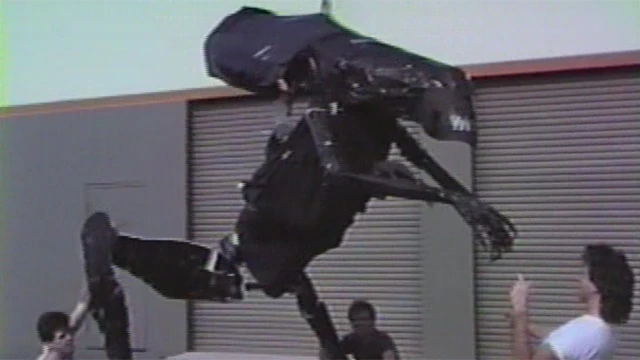
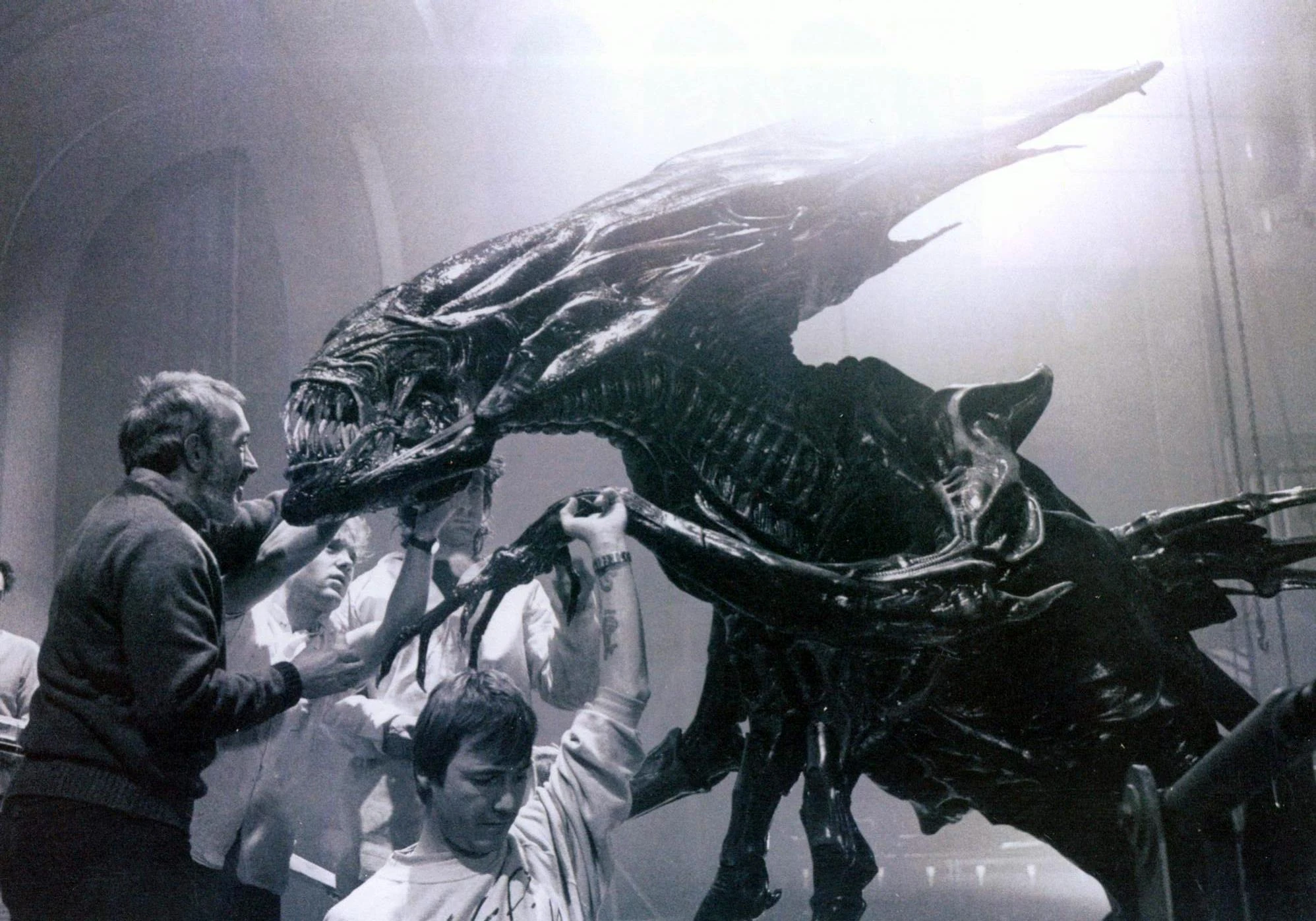
The Winston Studio account identifies John Rosengrant among the body sculptors, Alec Gillis and Willie Whitten on the legs, Greg Figiel on the arms, Brian Penikas and Shawn McEnroe on the tail and Shane Mahan on the head. The head, limbs, tail, miniature effects and full-scale puppet are real production artifacts rather than different in-universe organisms. 5 35
Returning to the design
Section titled “Returning to the design”For Resurrection, ADI drew on the original Queen head held by Bob Burns. For AVP, signed concepts explore alternate restraints, an elaborate egg chamber and progressive damage to the crest. The concept images reveal design possibilities that should not be confused with an additional filmed Queen. 8 33 34
Evidence still needed
Section titled “Evidence still needed”Correctly identified images of the Auriga Queen, the royal chestburster, Extinction Queen and War Empress, the 2010 Matriarch and Six, the Pathogen Queen, Lethe Queens and licensed comic monarchs are priorities for further visual expansion. Fan art, anonymous renders and unrelated toys are not used as substitutes.
Related records
Section titled “Related records”- Xenomorph Chestburster — juvenile development and emergence.
References
Section titled “References”Primary works, production testimony, licensed rules, official publication records and clearly identified secondary research. Film release and edition are stated where relevant.
- Primary released film: James Cameron, Aliens (1986), 20th Century Fox; theatrical release and Special Edition. Queen, ovipositor, eggs, hive and confrontation with Ripley.
- Primary released film: Ridley Scott, Alien (1979), and 2003 Director’s Cut; the restored cocoon sequence provides an alternative reproductive image.
- Original unfilmed treatment: James Cameron, Alien II, 21 September 1983.
- Original screenplay: James Cameron, Aliens, first draft dated 26 February 1985; archived screenplay listing.
- Effects-studio testimony: Stan Winston School, Aliens 30th Anniversary (2016), Queen design, crane-supported puppet, mockup and sculpting crew.
- Primary released film and editions: David Fincher, Alien 3 (1992), theatrical cut and Assembly Cut. Royal embryo and alternate ending; edition comparison.
- Primary released film: Jean-Pierre Jeunet, Alien Resurrection (1997), USM Auriga cloned Queen and Newborn.
- Effects artists interview: Alec Gillis and Tom Woodruff Jr., AvP Galaxy interview; reused original Queen head for Resurrection and AVP design work.
- Primary crossover film: Paul W. S. Anderson, Alien vs. Predator (2004), Antarctic pyramid Queen.
- Primary crossover film: Colin and Greg Strause, Aliens vs. Predator: Requiem (2007), Predalien reproduction.
- Effects artists interview: StudioADI interview (2021), alternate Predalien reproduction concept and design decisions.
- Licensed RPG rules: Free League Publishing, ALIEN The Roleplaying Game Core Rulebook (2019), Alien Species, pp. 297–315; Stage II, Stage IV, Stage VI and hive. Publisher record.
- Rulebook text cross-check: 2019 core rulebook, chapter 11, reproduced pages 301–350; verify edition against printed source.
- Primary licensed game and campaign guide: Monolith, Aliens versus Predator 2 (2001); Alien campaign walkthrough records Queen and Empress on LV-1201.
- Original licensed game documentation: Aliens versus Predator 2: Primal Hunt (2002), English Windows readme, Queen molting server setting.
- Primary game and manual: Zono, Aliens versus Predator: Extinction (2003), original instruction manual archived by Gaming Alexandria.
- Game bestiary transcription: Extinction in-game Alien bestiary, Queen and War Empress upgrade; secondary transcription to cross-check against game.
- Primary game and plot reference: Rebellion, Aliens vs. Predator (2010), Alien and Marine campaign conclusions; AvP Galaxy game synopsis.
- Developer interview: Alex Moore, Rebellion; design work on AVP: Requiem PSP and 2010 AVP.
- Game reference: Angry Mob Games, AVP: Evolution (2013); AvP Galaxy campaign overview.
- Developer testimony: Gary Napper, Alien: Isolation post-launch interview, 2014; intended implication of a Queen.
- Official expansion notes: Cold Iron Studios, Aliens: Fireteam Elite release notes; Pathogen Queen identified as the game’s first boss fight.
- Official developer feature: Cold Iron Studios, Pathogen Deep Dive: An Exhilarating New Story (2022).
- Licensed game reference: Tindalos Interactive, Aliens: Dark Descent (2023); AvP Galaxy enemy register.
- Official licensed crossover: Behaviour Interactive, Alien Collection (2023), Xenomorph Queen legendary outfit.
- Publisher collection: Marvel, Aliens Epic Collection: The Original Years Vol. 1, collecting Earth War #1–4 and earlier Dark Horse comics; Queen Mother identified in synopsis.
- Publisher collection: Marvel, Aliens Epic Collection: The Original Years Vol. 2; royal jelly and cybernetic Alien in synopsis.
- Publisher novel collection: Titan Books, The Complete Aliens Omnibus: Volume Two (Genocide, Alien Harvest); rival strains after Queen’s death.
- Secondary research lead: AvP Central, Queen Mother and higher-rank terminology; verify each against original panels.
- Secondary research lead: AvP Central, Red Queen; account of opposing monarchs in Genocide.
- Licensed tabletop primary rules: Aliens rulebook, section 2.3, Ripley vs. the Queen, printed pp. 23–25; project-supplied complete rulebook PDF.
- Toy-line production interview: AvP Galaxy, The Truth Behind the Operation: Aliens Cartoon Myth; Flying Queen/Atax animated commercial.
- Production-art research: Farzad Varahramyan early AVP Queen designs; gallery record. Archive images carry signed July 2003 designs.
- Production-art research: Additional Farzad Queen design gallery entry.
- Production archive research: Monster Legacy, Monster Gallery: Aliens (1986); Cameron concepts and effects photographs.
- Film overview: AvP Galaxy, Alien Queen biology and film history; secondary reference, distinguish film from theories.
- Game research lead: Fireteam Elite 2, Final Battle walkthrough; secondary coverage of Queen confrontation, model and details pending direct check.
- Edition publisher: Free League, ALIEN RPG Evolved Edition Core Rulebook (2025); not assumed identical to 2019.
- Comparative creature research: AvP Central, Matriarch; secondary source for 2010 game identity.
- Comparative creature research: AvP Central, Alien Queen; leads for individual Queens and game designs.
- Comparative creature research: AvP Central, Empress; higher-rank interpretation, not a universal film taxonomy.
We use optional analytics cookies to understand which pages are useful. Privacy policy